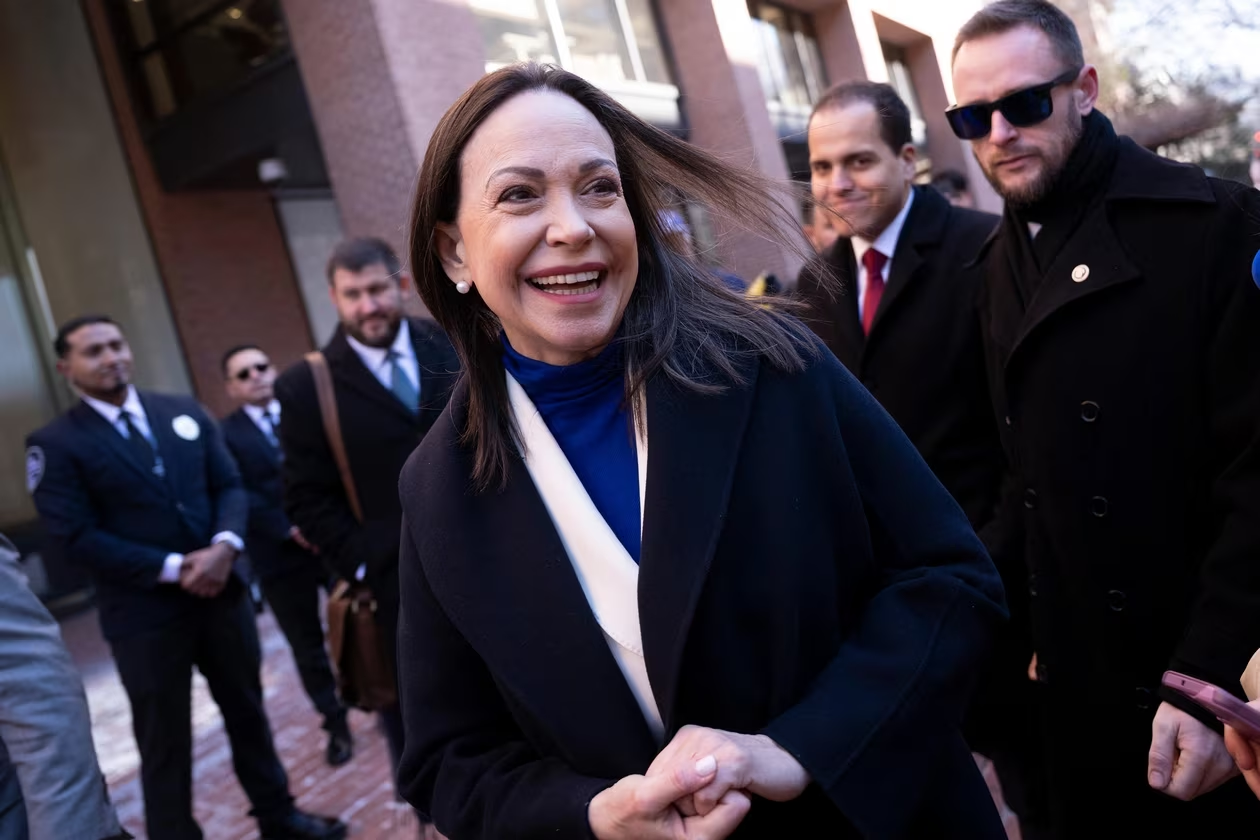
On March 1, Maria Corina Machado said she intends to return to Venezuela in the coming weeks, expecting to take part in the country’s process of democratic transition. The opposition leader made the announcement amid efforts to define her own role in the future political order of the state.
In December, Machado appeared in public for the first time in nearly a year, emerging from hiding to receive the Nobel Peace Prize in Oslo. In January, she handed the award to U.S. President Donald Trump during a meeting at the White House, calling it a gesture of gratitude for his support, despite a statement from the Nobel Committee that the prize is not transferable.
“Now the world knows: a democratic transition in Venezuela is inevitable,” Machado said in a video posted on social media in Spanish. “For years we have said that this regime would leave only under pressure from real force and a credible threat. First, it was necessary to defeat them spiritually, then politically, then at the ballot box, and ultimately by military means. We said this would happen—and it has happened.”
Machado has repeatedly sought Trump’s backing for her movement, even as his administration engages with Venezuela’s acting president, Delcy Rodriguez—a former vice president and close ally of the ousted Nicolas Maduro. In recent months, however, Machado’s chances of assuming the presidency have visibly diminished—as irritation in the White House has grown over her increasingly sharp rhetoric.
In an interview with Politico in February, Machado said that new democratic elections in Venezuela could be held in less than a year. The remarks unsettled allies of the U.S. administration, who feared such statements could undermine the White House’s working plan for Venezuela.
In the same interview, she said she hoped to return to the country “as soon as possible,” adding that “the time will come” when she can help Venezuela prepare for a democratic transition. “All these years, I have constantly asked myself where I am most useful to our cause,” Machado said. “And after 16 months, I realized that I have to do part of the work from abroad—which is not what I wanted, because I believe, and continue to believe, that it is important to be close to our people.”
In public appearances, Machado has sought to strike a balance—thanking the Trump administration for its role in Maduro’s detention, while at the same time consistently criticizing Rodriguez and Maduro’s allies who remain in power.
Machado won the primaries and became the opposition’s candidate in the 2024 presidential election, but the Maduro regime barred her from running. Maduro ultimately declared a third term after Machado’s place on the ballot was taken by opposition figure Edmundo Gonzalez. Independent observers deemed the vote unfair and questioned the credibility of the official results.
“The regime currently in power in Venezuela has not changed in its essence—it is the same people who tortured, persecuted, imprisoned, carried out enforced disappearances, killed, expropriated, and lied,” Machado said in a video address. “They are trying to buy time so that nothing changes. But everything has already changed. Now they must follow instructions—roll back repression, launch the country’s economic recovery, and move toward a transitional period.”