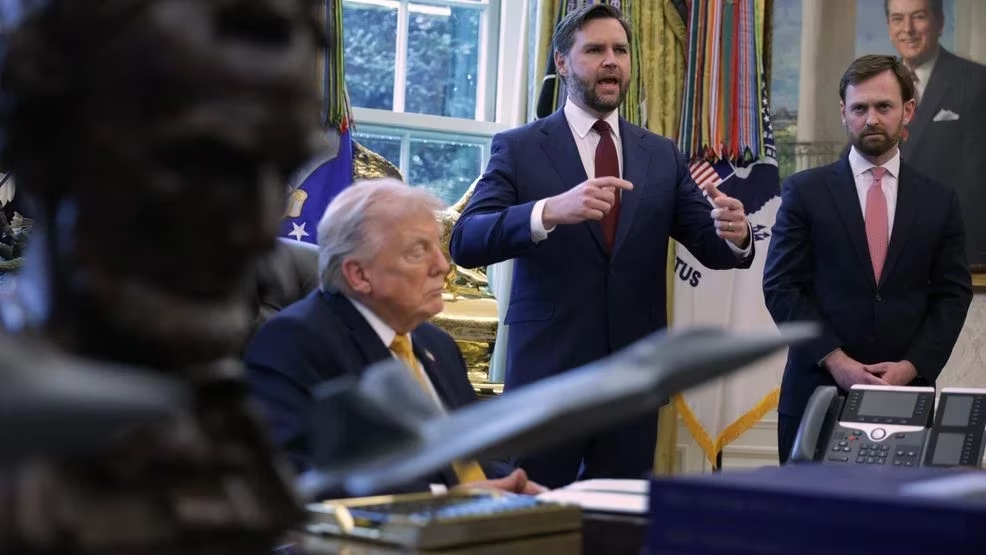
Vice President JD Vance on Monday, March 16, dismissed suggestions that he harbors doubts about the U.S. military operation against Iran because of his past criticism of American intervention abroad.
Responding to reporters’ questions in the Oval Office, where he stood alongside Donald Trump, Vance said attempts to portray his position as a disagreement within the administration were artificial. “You’re trying to drive a wedge between members of the administration—between me and the president. The president has said this consistently since 2015, and I agree with him: Iran should not possess a nuclear weapon,” he said.
According to the vice president, the current operation is being conducted under the president’s leadership. “We have undertaken this military action under the president’s leadership. I believe all of us—whether we are Democrats or Republicans—should pray for its success and for the safety of our troops. That is the approach I have taken—to make this operation as successful as possible,” Vance added.
When asked again whether he had any hesitation about the operation in light of his earlier statements, Vance replied that the current situation differs from past periods. “The difference is that we now have a smart president, whereas in the past we had dumb presidents,” he said.
The vice president stressed that he trusts Donald Trump. “I trust President Trump—he is capable of accomplishing the task, doing the right job for the American people and ensuring that the mistakes of the past are not repeated,” Vance said.
Trump, in turn, praised his deputy’s position. “I think JD understands better than most: if Iran is allowed to obtain a nuclear weapon, at least a significant portion of the world will be destroyed—and it will be used almost immediately,” the president said.
Vance has previously spoken out repeatedly against prolonged U.S. involvement in overseas conflicts. Trump himself said last week that at the outset of the operation in Iran the vice president had been “perhaps less enthusiastic” about the war, although, he added, they generally “see eye to eye on the issue.”