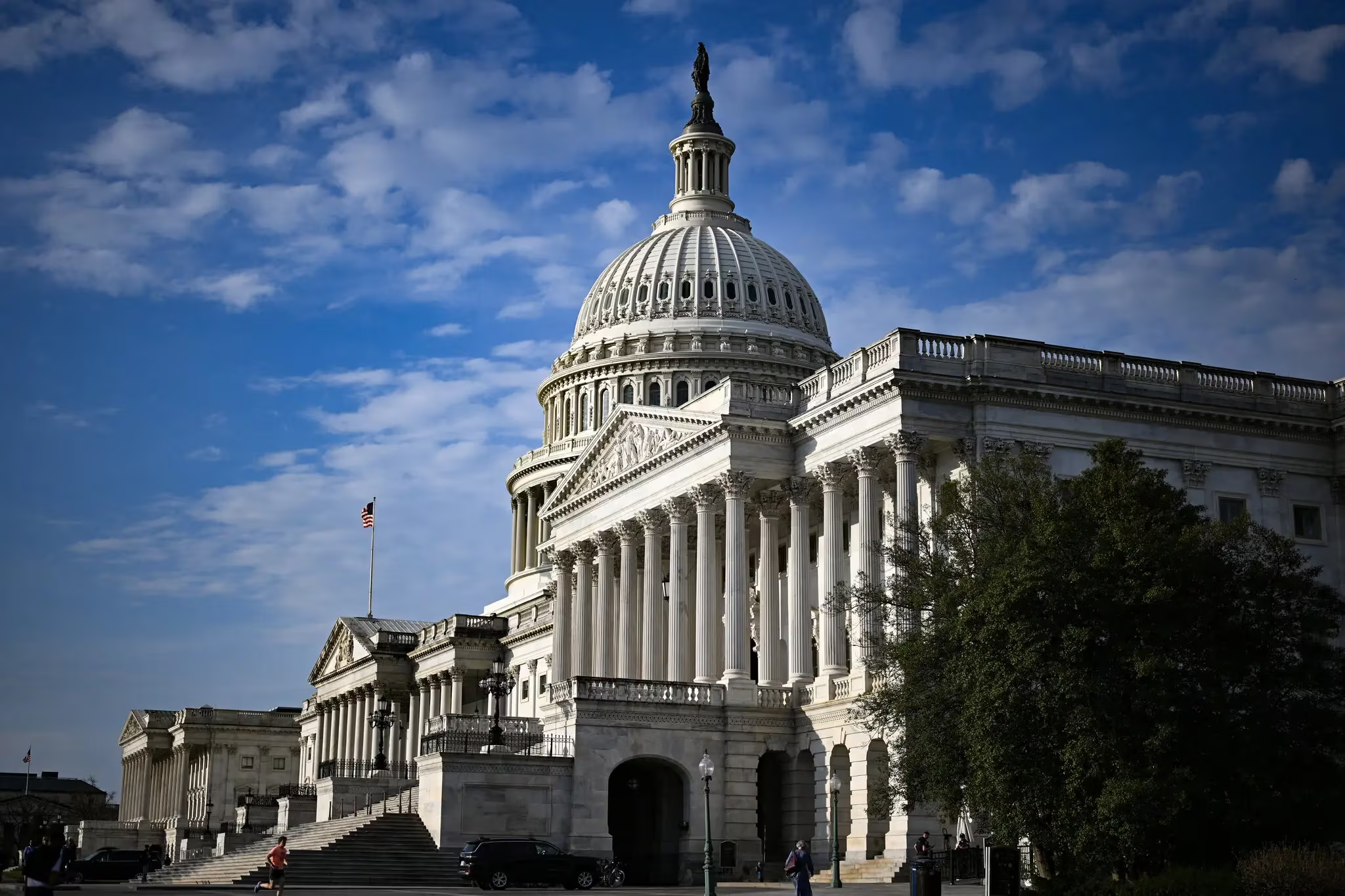
According to three sources familiar with the contents of a closed-door briefing, Pentagon officials told lawmakers on Capitol Hill that the cost of the war against Iran had already exceeded $11.3 billion in the first six days.
This estimate does not include a substantial share of the costs associated with the operation, including the deployment of military hardware and the movement of personnel ahead of the first strikes. For that reason, lawmakers expect the final total to rise significantly—while the Pentagon continues to calculate the expenses that accumulated during the first week of combat alone.
Even so, the figure appears to be the most comprehensive financial assessment Congress has received so far amid mounting questions about the objectives, scope, and timeline of the war. Earlier, The New York Times and The Washington Post reported that in previous briefings to lawmakers, defense officials said $5.6 billion worth of munitions had been expended in just the first two days of the conflict.
This far exceeds both the sums and the rate of weapons expenditure previously disclosed publicly. According to estimates by the Center for Strategic and International Studies, the first 100 hours of the operation cost roughly $3.7 billion—or about $891.4 million per day.
The first wave of bombardment used, among other weapons, AGM-154 glide bombs, which cost between $578,000 and $836,000 per unit. Nearly two decades ago, the U.S. Navy purchased around 3,000 of these munitions. Later, the U.S. military said it intended to shift to significantly cheaper strike options—such as Joint Direct Attack Munition bombs. The smallest version of the warhead costs about $1,000, while the guidance kit runs at roughly $38,000.
Some Republicans—including Kentucky Senator Mitch McConnell, who leads the subcommittee responsible for Pentagon funding—have for several administrations urged the United States to increase spending on munitions production.
However, other members of the party oppose further increases in military spending and in recent days have voiced doubts about approving a costly supplemental funding package for a conflict that, they fear, could drag on indefinitely. Democrats, for their part, have also indicated they are not prepared to support emergency funding for the operation until administration officials provide Congress with a clearer explanation of the U.S. strategy and the expected endgame of the war.