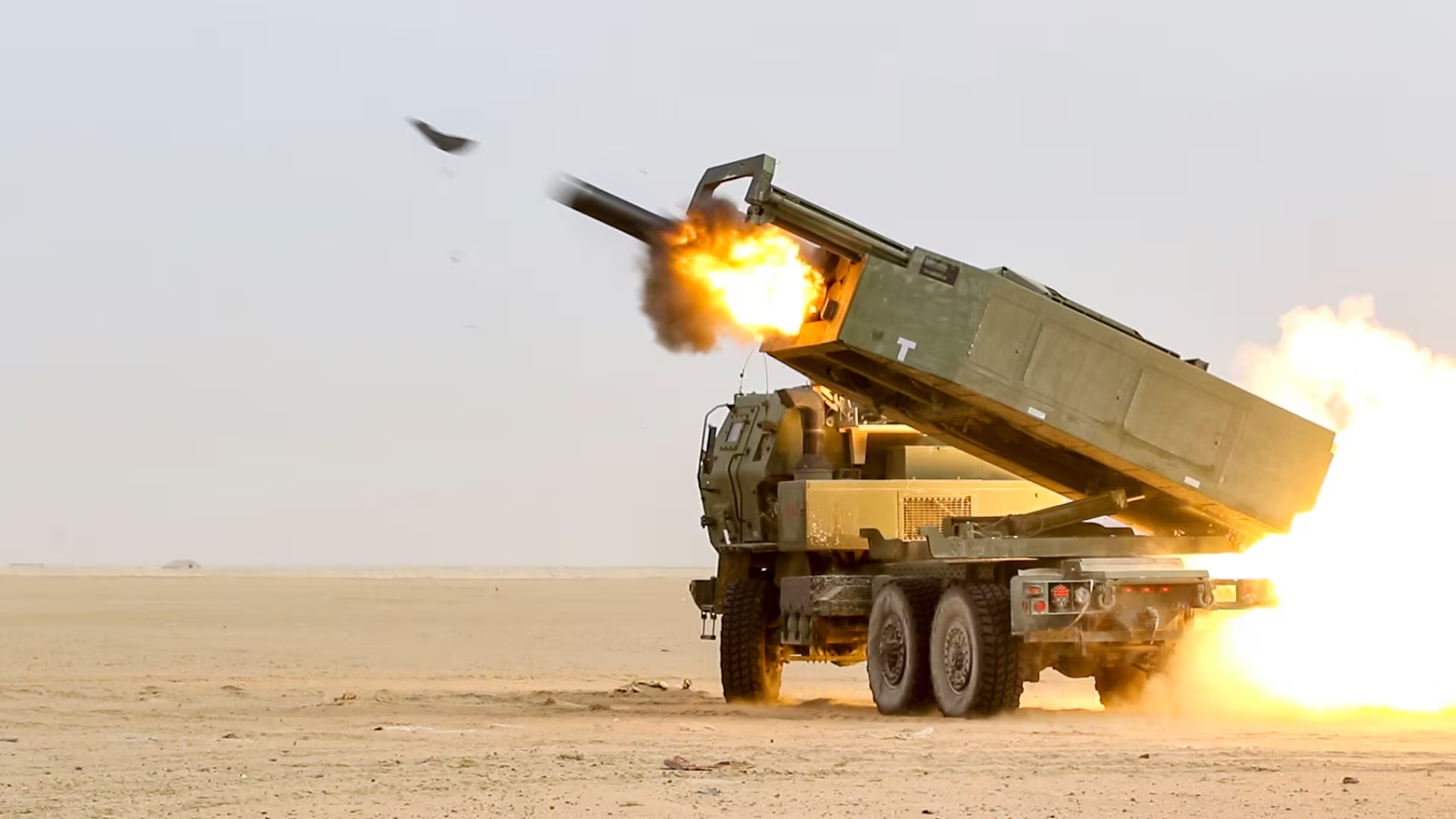
The United States is facing a growing shortage of tungsten—a critical metal used in modern weapons production—after the large-scale expenditure of munitions during the war with Iran, NBC News reports. China meanwhile dominates the global tungsten market.
Tungsten is used in the production of fighter jets, aerial bombs, artillery shells, and missile systems. Thanks to its high density and resistance to extreme temperatures, it is considered virtually irreplaceable for the defense industry.
However, domestic tungsten mining in the United States effectively ended in 2015, when the country’s last mines shut down. The Donald Trump administration is now attempting to reduce dependence on Chinese supplies of strategic raw materials.
There are few major tungsten deposits worldwide. One of the only significant mines outside China—Sangdong in South Korea—is owned by an American company and resumed operations only in March after more than 30 years of inactivity caused by competition from Chinese producers.
The problem was further aggravated by the U.S.-Israeli war against Iran. According to Mark Cancian, a senior adviser at the Center for Strategic and International Studies, rebuilding American munitions stockpiles to prewar levels could take up to four years. In an April report, he warned that this creates serious risks in the event of a potential conflict with China.
The shortages of weapons and raw materials are affecting not only the United States but also its allies, including Japan, South Korea, and Taiwan.
China spent decades strengthening its control over the industry through state subsidies and looser regulation. It now accounts for more than 80% of global tungsten production, while consuming over half of the world’s supply itself.
The United States largely relies on recycling and imports to meet its tungsten needs.
Amid the trade confrontation with Washington, Beijing last year imposed export controls on several critical minerals, including tungsten. The move triggered a sharp rise in global prices.
Against this backdrop, calls have resurfaced in the United States to revive the domestic tungsten industry. But industry representatives say the problem is not limited to mines and investment—it also includes the loss of expertise.
“There’s no knowledge. There are no consultants you can turn to. There are no books you can refer to. All of that knowledge died in the 1990s,” Almonty Industries CEO Lewis Black told NBC News.
According to him, China gained not only market control during its years of dominance in the industry, but also “captured the human capital.”
Black believes it will take at least a decade for the West to significantly reduce its dependence on Chinese tungsten.
“You will not become fully self-sufficient in less than 20 years. And honestly, 20 years can easily turn into 30,” he said.
As early as April, American media outlets were reporting that the war against Iran had exposed the critical dependence of the U.S. defense industry on tungsten supplies.