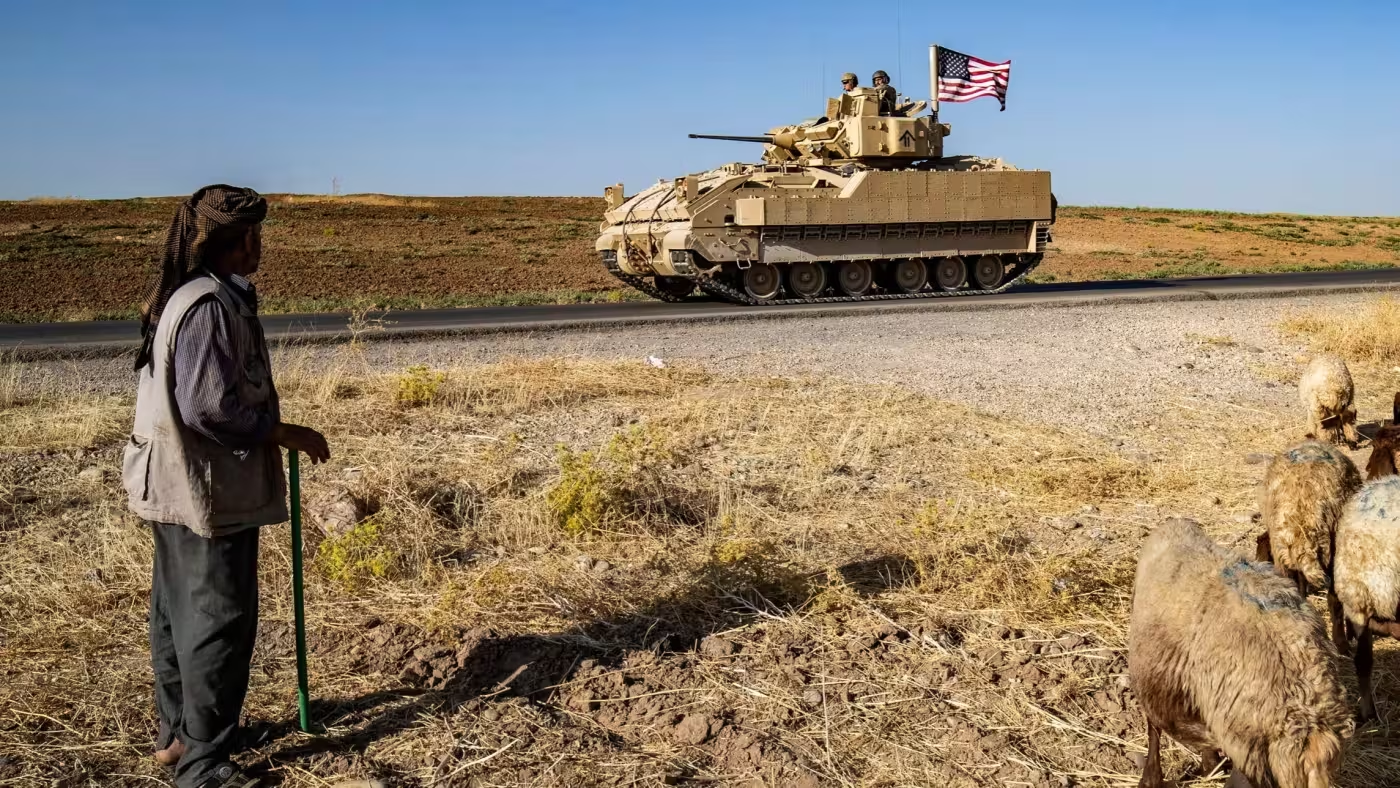
Two US service members and a civilian interpreter working with the American military were killed in an attack in Syria. Three other US soldiers were wounded. The Pentagon said the assault took place on Saturday during a counterterrorism operation. It marks the first US fatalities in Syria since the fall of former president Bashar al-Assad more than a year ago.
According to Pentagon spokesperson Sean Parnell, the troops were attending a meeting with local representatives, which he described as a “key leader engagement.” He stressed that the mission was part of ongoing operations against Islamic State and other terrorist groups in the region.
US forces have maintained a presence in Syria since 2014, including at the Al-Tanf base in the country’s south-east, where they train partner forces-including units of the Free Syrian Army-as part of the campaign against IS. These units have been targeted in previous attacks.
US President Donald Trump described the incident as an “IS attack” in a “highly dangerous part of Syria that is not fully controlled” by the government, and promised “very serious retaliation.”
Syria’s interior ministry said two members of the country’s security forces were also wounded in the attack. State media reported that US helicopters evacuated the injured to the Al-Tanf base.
The Pentagon said the attack took place in Palmyra, a city in the desert region of central Syria. Syria’s interior ministry, for its part, pointed to the country’s eastern desert areas, which are formally under government control but where Islamic State militants remain active. Syrian media published video footage of a колонна of armoured US vehicles that they said was moving through Palmyra on Saturday. The Financial Times was unable to verify the date of the footage.
US Central Command said the assault amounted to an “ambush carried out by a lone IS militant,” who was subsequently killed. Nour al-Din al-Baba, a spokesperson for Syria’s interior ministry, said the attacker was a rank-and-file member of the Syrian security forces and did not hold a leadership position. He said an internal review conducted several days earlier had concluded that the individual “may have held extremist views,” and that a decision on his continued service was due to be taken next week.
Syria’s security forces are a fragmented structure made up of various rebel factions that helped the Islamist movement led by President Ahmed al-Sharaa overthrow the Assad regime last year. The country’s defence ministry is recruiting new personnel as part of an effort to build a national army.
Al-Baba said the Syrian side had warned international partners about “possible breaches or attacks” by IS, but added that “these warnings were not taken into account.”
IS previously controlled Palmyra and its renowned archaeological sites. Although the group suffered a territorial defeat in 2019, its fighters have continued to operate in Syria and over the past year have carried out smaller-scale attacks, including against forces loyal to President Ahmed al-Sharaa’s government, fuelling concerns that the organisation is seeking to reassert itself.
The primary mission of US forces in Syria is the fight against IS. As of December 2024, the contingent numbered about 2,000 troops, but in April the Pentagon said it intended to cut the force to “fewer than 1 000” personnel, citing the diminished capabilities of the terrorist group. In recent months, the US has stepped up engagement with Damascus on counter-IS efforts.
Washington’s key ally in the fight remains the Syrian Democratic Forces, a Kurdish-led formation that controls the country’s north-east. Talks on integrating the SDF into Damascus’s security forces have stalled, despite pressure from the US.
Last month, Ahmed al-Sharaa became the first Syrian president to visit the White House since the country gained independence in 1946. During the meeting with Trump, he formally joined a coalition of 89 countries fighting IS, and the US president described him as a “very strong leader.” Following criticism from parts of his political base, however, al-Sharaa said his government would cooperate with the coalition only at the political level.
Syria’s new leader has been actively rebuilding ties with Western and Arab states which, at Washington’s urging, have lifted most of the economic sanctions imposed on Syria under Assad and begun forging closer relations with the new leadership. At the same time, since the fall of the previous regime the country has seen periodic outbreaks of sectarian violence, including clashes between pro-government forces and armed groups from the Alawite and Druze minorities, in which hundreds of civilians on both sides have been killed.
US defence secretary Pete Hegseth said: “Let this be known—if you target Americans anywhere in the world, you will spend the remainder of your short and troubled life knowing that the United States will hunt you down, find you, and kill you without mercy.”