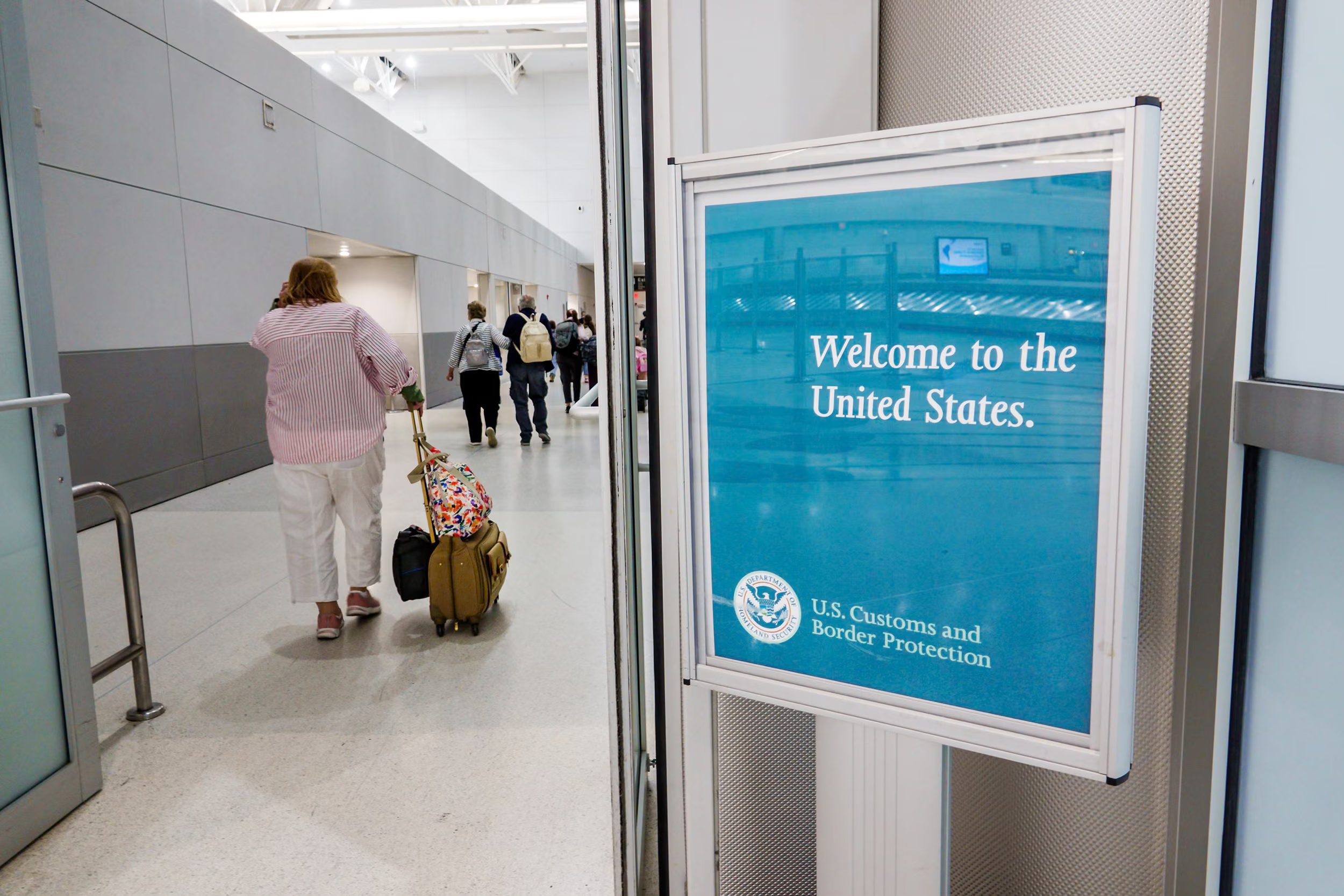
All foreign tourists entering the United States would, under the Trump administration’s plans, be required to disclose their social-media activity from the past five years. Customs and Border Protection, part of the Department of Homeland Security, also intends to request any email addresses and phone numbers used during that period, as well as information about relatives, including their names and addresses.
These requirements are set out in a Federal Register notice published on Tuesday. The document states that such disclosures become “mandatory” for entry into the country. The new rules would apply to citizens of all states, whether they obtain visas or enter under the Esta system. This includes visitors from Britain, Australia, Germany and Japan, who previously did not need a tourist visa.
The public has been given two months to comment on the proposal. The agency itself has not responded to journalists’ requests for comment.
The plan could create serious complications for the football World Cup, which the United States will host next year in partnership with Canada and Mexico, when a surge of foreign fans is expected.
Tourist flows to the United States have already fallen sharply during Trump’s second term amid stringent measures against migrants, including recent decisions to bar all asylum claims and, in effect, shut off entry from more than 30 countries. California’s tourism bodies forecast a 9% drop in foreign visitors this year, while Hollywood Boulevard in Los Angeles recorded a 50% decline in foot traffic over the summer. Las Vegas has also seen a pronounced downturn, exacerbated by the rise of mobile gambling apps.
According to Statistics Canada, the number of Canadians who traveled to the United States by car and returned in July 2025 fell by 36.9% compared with the same month in 2024. Commercial air travel between the two countries dropped by 25.8% in July, reflecting deteriorating bilateral relations.
The United States has already imposed additional restrictions on tourists, adding to standard national-park entrance fees — including those for the Grand Canyon and Yosemite — a supplementary charge of $100 per person for each day of a visit. Free entry to parks on Martin Luther King Jr Day has also been eliminated — unrestricted access is now granted only on Trump’s birthday.
The administration has also launched expansive reviews of visa applications from those seeking to live and work in the United States. Since August, the US Citizenship and Immigration Services has said it will look for “anti-American” views — including on social media — when evaluating such petitions.
Prospective foreign students are already being required to grant access to their accounts so that diplomats can examine their online activity before issuing study or exchange visas. A refusal is treated as an attempt to conceal information. In several cases, students born outside the United States have been detained for publicly expressing support for Palestinians.
Last week, the administration instructed consular officers to deny visas to anyone who might work in fact-checking or content moderation — including for social-media platforms — arguing that such specialists “bear responsibility for censorship or attempts at censorship of legally expressed opinion in the United States.”
The administration has also proposed reducing the validity of visas for foreign journalists from five years to eight months, prompting protests from international media organizations.
CBP maintains that it has the authority to inspect the devices of anyone attempting to enter the United States. In theory, travelers may refuse, but doing so sharply increases the likelihood of being turned away. In 2024, the agency reported examining roughly 47,000 devices out of 420 million border crossings, though experts believe that under the current administration the true scale of such inspections may be far higher.