The European Union and a number of its largest corporations chose not to escalate into open confrontation after the US administration issued threats of direct retaliatory measures. Late on December 16, the Office of the US Trade Representative said it was prepared to deploy “every tool at its disposal” to counter what Washington describes as “unreasonable” EU rules that, in its view, disproportionately harm American companies operating in Europe.
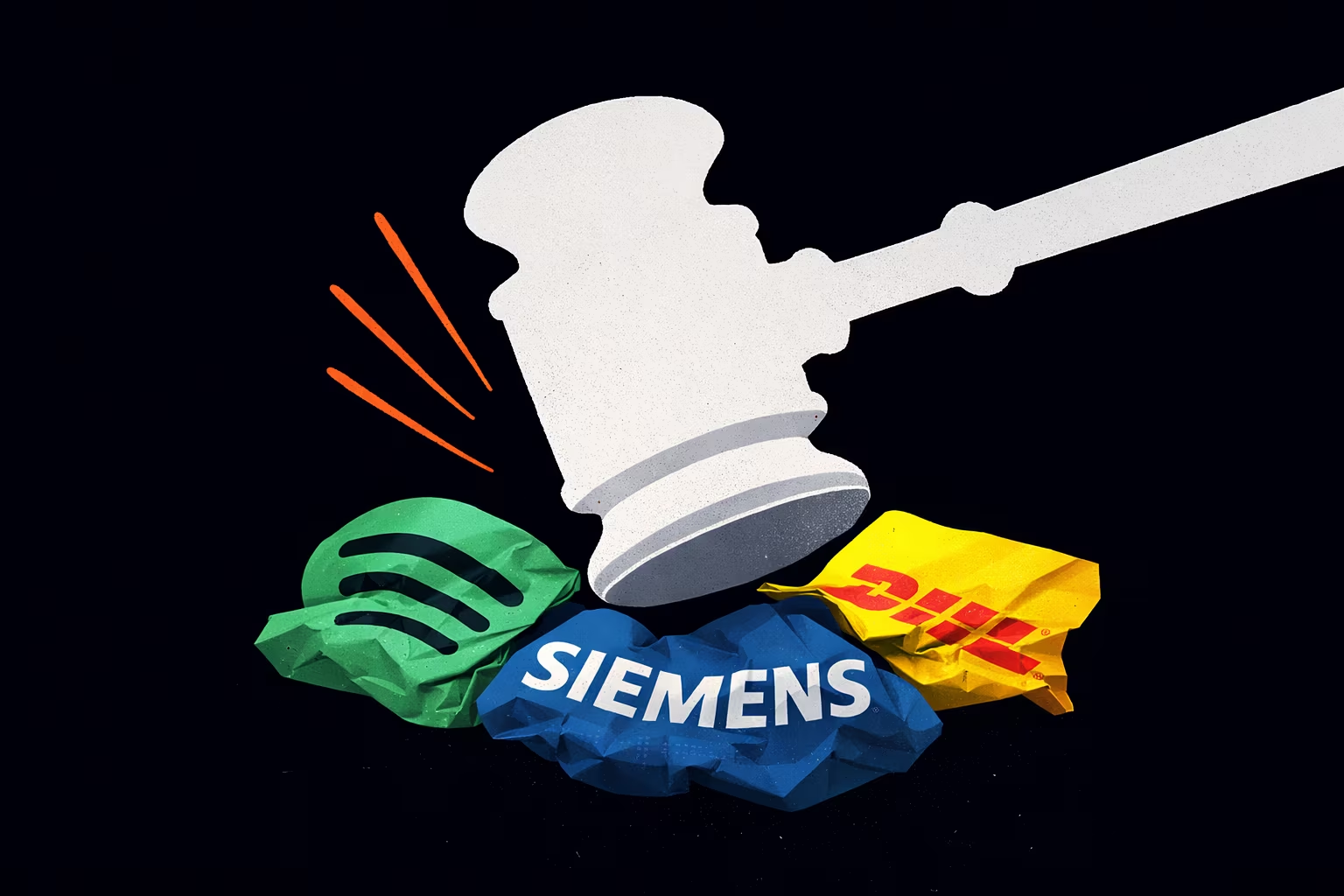
Hinting at possible countermeasures, the US side for the first time publicly named specific European companies that it says have “hitherto enjoyed extensive access” to the American market. The list includes Ireland’s Accenture; Spain’s Amadeus; France’s Capgemini, Publicis and the artificial-intelligence-focused Mistral; Germany’s DHL, SAP and Siemens; and Sweden’s Spotify.
Although this marks another episode in a long-running exchange of grievances between the two jurisdictions, individual European companies had not previously been singled out in public. The sharper tone from Donald Trump’s administration reflects growing frustration in Washington with Europe’s technology regulations. One trigger for the US backlash was a recent €120m fine imposed by the EU on Elon Musk’s platform X for failing to meet transparency requirements.
The European Commission, which is responsible for enforcing digital legislation, responded by saying it would not back down. “As we have repeatedly underlined, our rules are applied equally and fairly to all companies operating in the EU,” said commission spokesperson Thomas Regnier. Mistral, SAP, Siemens and Spotify declined to comment, while the remaining companies did not respond to the publication’s request.
The combined market capitalisation of the companies on the list exceeds €800bn, excluding Mistral’s €12bn valuation. Speaking on Wednesday in Strasbourg ahead of a meeting with the US ambassador to the EU, the European Parliament’s chief negotiator on relations with Washington, Brando Benifei, said: “I believe such statements do not help the negotiations we will have to conduct. This is an attack on our regulatory autonomy, and it must be firmly rejected by our leaders. I will tell my American counterparts directly that steps like these are not helpful. We are trying to move forward on the agenda, while this kind of rhetoric only fuels debate and, quite rightly, will not be received positively by public opinion—the very voters who expect us to defend European interests.”
Earlier this week, the EU’s trade commissioner, Maroš Šefčovič, said in an interview that the EU and the US are “very closely aligned in their views on economic security, global overcapacity and approaches to non-market policies,” when asked how the fine imposed on X affects ongoing trade talks. Despite the fact that in July Donald Trump and European Commission president Ursula von der Leyen reached a broad trade understanding at the Turnberry golf resort in Scotland, many of its details remain unresolved and negotiations are continuing. The EU is seeking to shield a wide range of European goods from US tariffs, but has yet to deliver on its side of the bargain, including the removal of duties on US industrial products and some agricultural goods.
Commenting on the statement by the Office of the US Trade Representative, Swedish politician Karin Karlsbro, the Renew liberal group’s trade coordinator and a leading figure on relations with the United States, said it “runs entirely counter to the spirit of the agreement reached this summer.” Recalling that the EU had pledged to lower tariffs, including on agricultural products and lobsters, she added: “We are currently working on this in the trade committee. That is why signals like these from the United States are a cause for serious concern.”