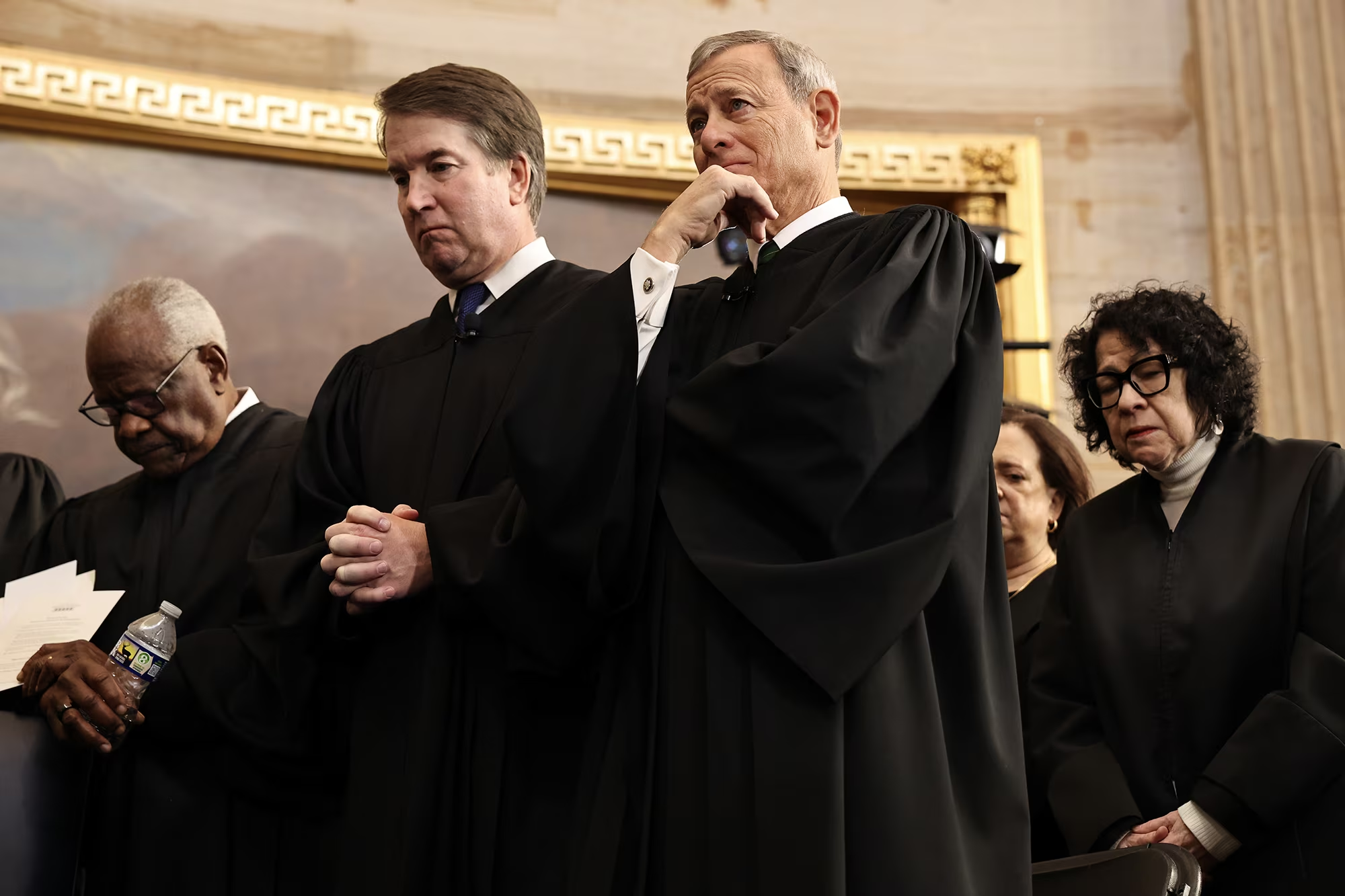
The U.S. Supreme Court has allowed Donald Trump’s administration to strip hundreds of thousands of Syrians and Haitians of protection from deportation, CBS News reports.
The court ruled that the administration may proceed with ending Temporary Protected Status (TPS) for more than 356,000 immigrants from Syria and Haiti. The status allowed them to live and work legally in the United States.
A majority of the justices concluded that the TPS law does not provide for judicial review of such decisions under federal law.
The dispute began after the Department of Homeland Security decided to end TPS for more than 6,000 Syrians and 350,000 Haitians. Lower courts had previously blocked the termination of those programs, but the Supreme Court overturned those decisions.
The court ruled by six votes to three that immigrants do not have the right to seek court orders delaying the end of their temporary protection from deportation.
“The TPS statute expressly bars review of the plaintiffs’ claims in this case,” Justice Samuel Alito wrote for the majority.
According to CBS News, the decision could affect more than one million immigrants from 17 countries who were previously granted TPS because of wars, natural disasters or other extraordinary circumstances.
The White House welcomed the court’s decision, saying it confirmed Trump’s position: Temporary Protected Status should remain temporary.
“It was never intended as a path to permanent residency or legal status in the United States,” White House spokeswoman Abigail Jackson said.
Syria first received TPS in 2012. Haiti received such protection in 2010 after a devastating earthquake, and it was later extended repeatedly amid political and humanitarian crises.
After Trump returned to the White House, Homeland Security Secretary Kristi Noem concluded that neither Syria nor Haiti still met the criteria for TPS and began the process of ending the program.
The Supreme Court had earlier already allowed the Trump administration to end a similar program for more than 600,000 Venezuelans while litigation continues.
Trump Administration Speeds Up Deportations by Skipping Legal Procedures
Donald Trump Promised the Largest Deportation Operation in U.S. History
U.S. Immigration Crackdown Pushes ICE Over Budget by $1 Billion
Trump Administration May Begin Deporting Iranians and Other Migrants to the Central African Republic