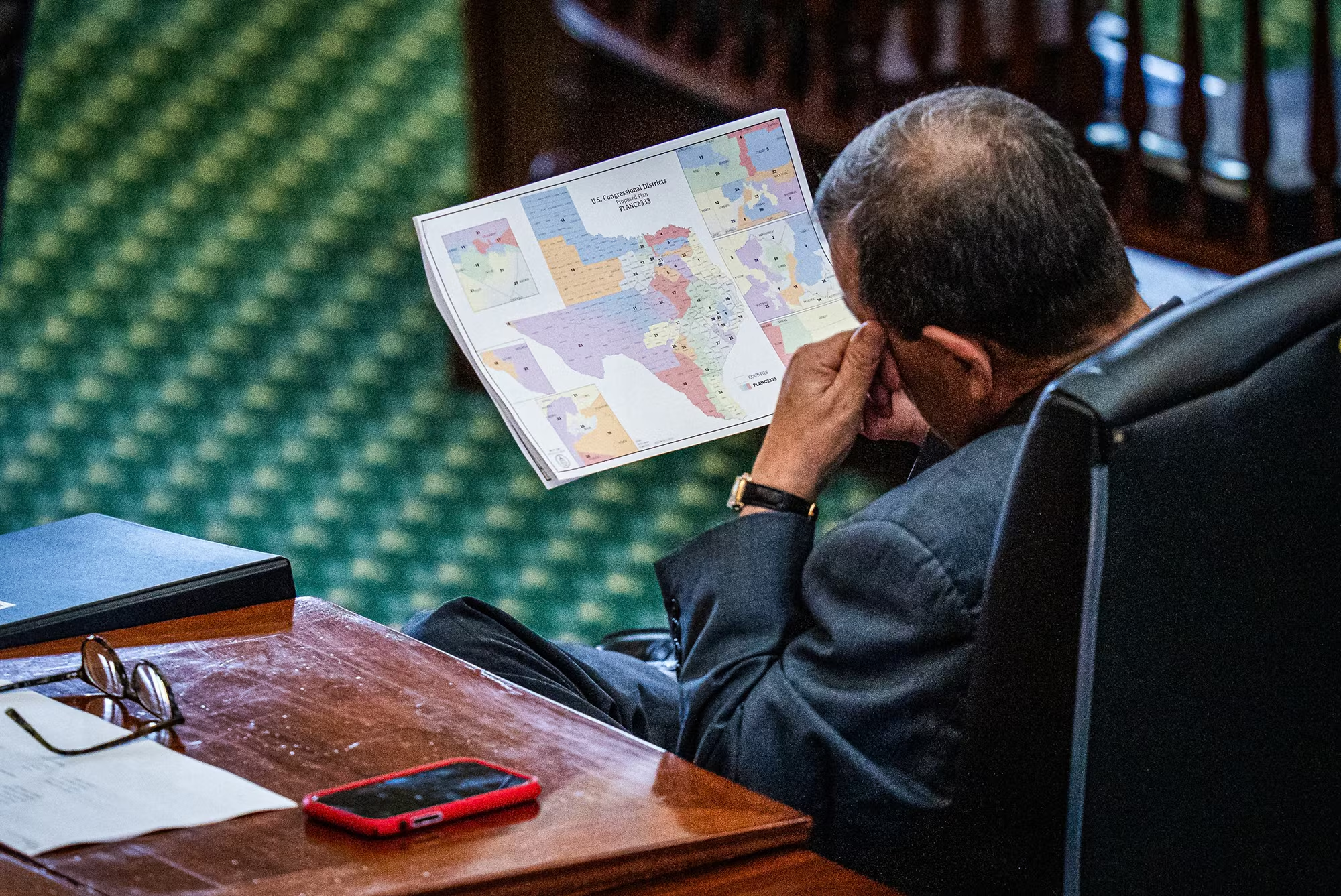
The US Supreme Court has allowed a new congressional district map in Texas to be used, overturning a federal court ruling in the state and upholding the redistricting approved by the local legislature. The autumn congressional elections will proceed under the updated map, which is widely seen as favouring the Republican Party. Six of the nine justices supported the decision.
The case concerns the practice of gerrymandering—redrawing district boundaries to secure an electoral advantage. One common method is known as cracking, in which areas with strong support for one party are “diluted” by redistributing their voters across multiple districts where the majority already belongs to the opposing party. This allows victories to be secured across several districts at once.
An alternative approach—packing—involves concentrating supporters of one party into a limited number of districts, ensuring them guaranteed victories there while reducing their chances elsewhere.
Texas has applied the first method. District boundaries were redrawn so that areas with concentrated Black and Latino populations—traditionally more likely to support Democrats—were split across districts dominated by Republican voters. Estimates suggest this could deliver Republicans an additional two to three seats in Congress.
A federal court had previously found the redistricting to violate minority voting rights, but the Supreme Court took the opposite view and allowed the new map to stand.
Gerrymandering, however, remains a widespread practice in the United States and is used by both parties. Republicans, in particular, argued that the changes were intended to “correct” districts previously redrawn by Democrats to their own advantage.