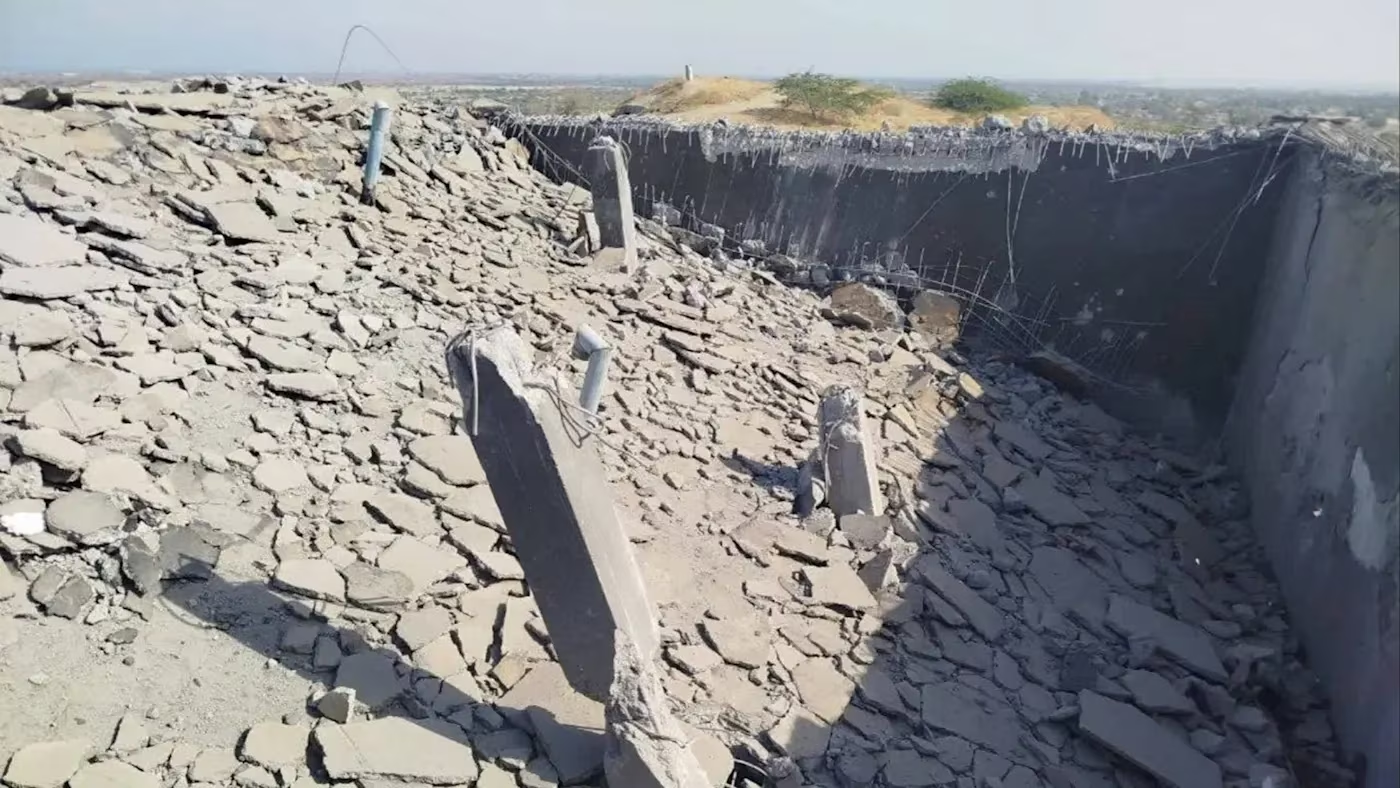
Iranian authorities said U.S. airstrikes on the southern province of Hormozgan left 20,000 people without water. According to Tehran, two water-storage reservoirs were destroyed in the strike.
The escalation followed Iran’s downing of a U.S. helicopter over the Strait of Hormuz. In response, the United States carried out overnight strikes on sites in southern Iran.
U.S. Central Command said American fighter jets used “precision munitions” against Iranian air-defense facilities, ground-control stations and surveillance radar systems in the area of the Strait of Hormuz. Washington described the operation as a “proportionate response” to recent Iranian attacks on U.S. forces and commercial vessels.
Hormozgan authorities, however, said two water reservoirs with a combined capacity of 2,500 cubic meters were destroyed early Wednesday morning. They supplied water to residents of the city of Kuhestak and 10 nearby villages in the Bemani district.
A U.S. Defense Department spokesperson said Wednesday that the department was “aware of reports” of strikes on water-infrastructure facilities.
It was the most serious confrontation between the United States and Iran since April 8, when the two sides agreed to a fragile ceasefire. The new exchange of strikes could complicate diplomatic efforts to extend the truce, reopen the Strait of Hormuz and lay the groundwork for negotiations over Iran’s nuclear program.
Over the course of the 40-day war, the United States and Israel carried out strikes that damaged several civilian sites. They included the B1 bridge in Karaj, the Pasteur Institute in Tehran—one of the country’s leading medical research centers—and several universities.
Abdolhamid Hamzepour, director of the Hormozgan Water and Wastewater Company, told local media that “more than 20,000 local residents living in the harshest climatic conditions and extreme heat lost access to safe drinking water” as a result of the attack.
The Islamic Revolutionary Guard Corps said Iranian forces responded to the U.S. strikes by attacking the U.S. Navy’s Fifth Fleet in Bahrain and firing missiles at an American air base in Jordan.
By Wednesday, the exchange of strikes appeared not to have continued: there were no reports of new attacks.
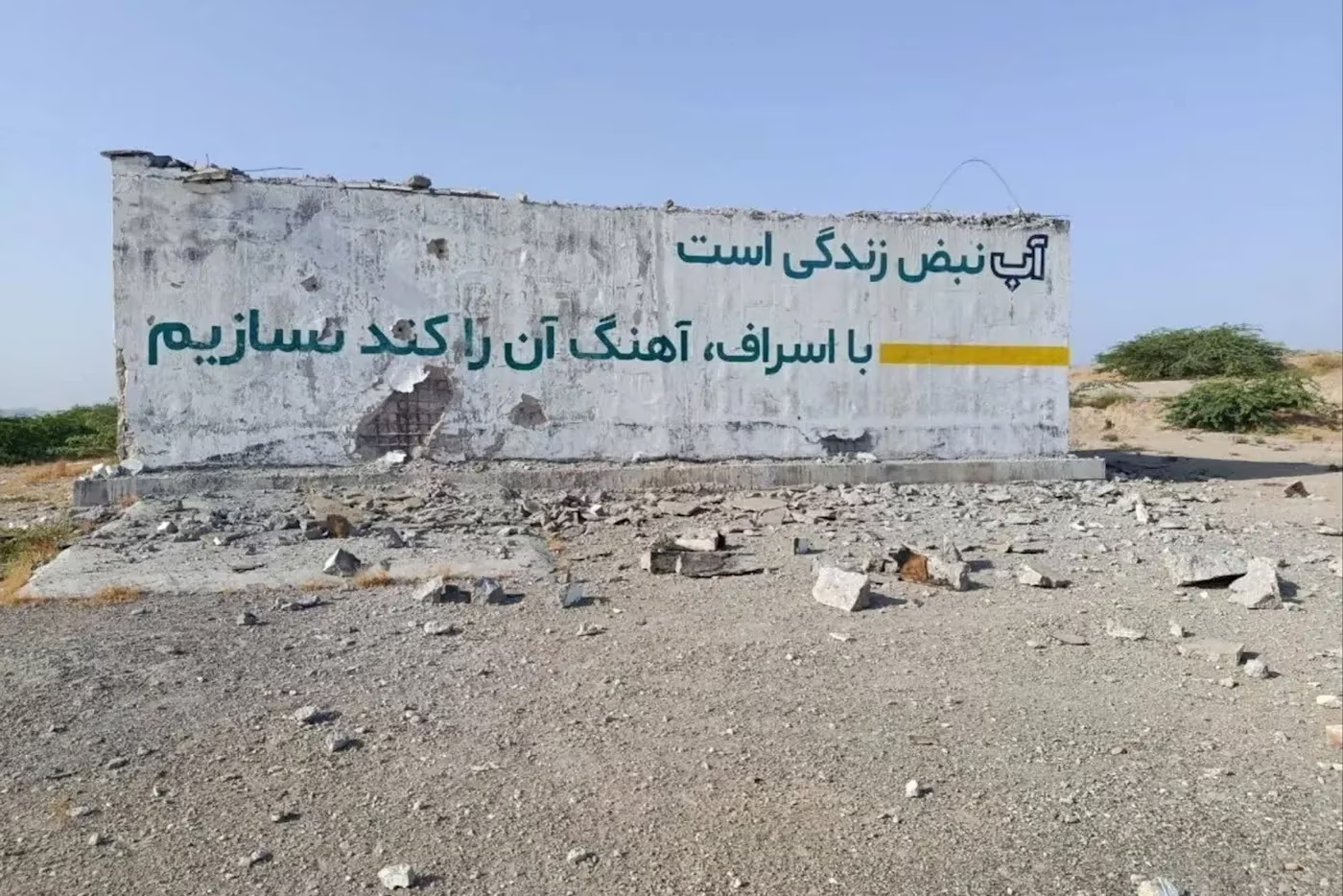
According to Iranian authorities, U.S. strikes destroyed two water-storage reservoirs with a combined capacity of 2,500 cubic meters.
Iranian Foreign Ministry spokesperson Esmaeil Baghaei said the United States was undermining the diplomatic process with “contradictory statements and repeated violations of the ceasefire.” He said Israel was also obstructing the process through regular breaches of the truce in Lebanon.
Baghaei added that Iran’s military would defend the country “without hesitation.”
Local authorities in Hormozgan said they were taking emergency measures to supply the population with water. Tanker trucks and temporary pumping systems are being sent to the affected areas.
Temperatures in the region are currently ranging from 45°C to 50°C, sharply worsening conditions for local residents.
The company said the destruction of the reservoirs had created a serious problem for the local water-supply system. Underground water reserves in the area are not sufficient to quickly replace the lost capacity.
Damage to the region’s water infrastructure was estimated at IR1.4 trillion—about $800,000. The company acknowledged that rebuilding the reservoirs would take time, but said it was mobilizing all resources to restore a stable water supply as quickly as possible.
In March, Iran had already accused the United States of striking a desalination plant on Qeshm Island. Tehran said the attack disrupted water supplies to 30 villages. The United States denied involvement in that attack.