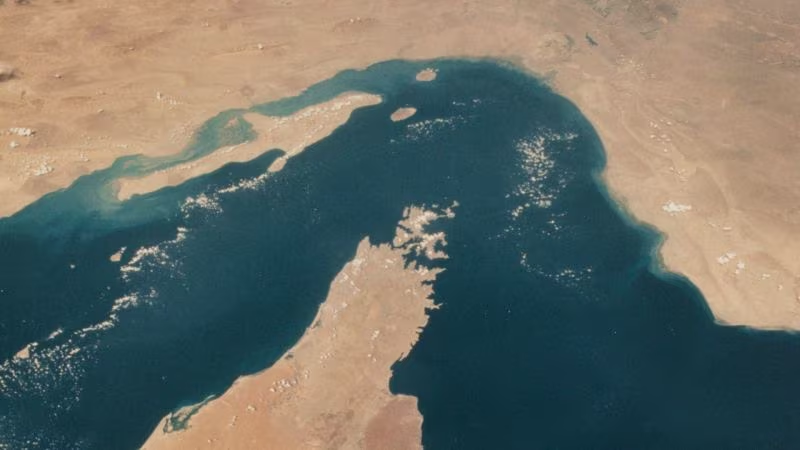
On Tuesday, March 17, U.S. forces carried out strikes on Iran’s coastal areas near the Strait of Hormuz, deploying multiple 5,000-pound bunker-buster bombs against “fortified” anti-ship missile positions.
“Iranian anti-ship cruise missiles at these sites posed a threat to international shipping in the strait,” U.S. Central Command (Centcom) said.
The munitions in question are designed to penetrate hardened targets and are used against Coastal Defense Cruise Missile systems. Their deployment comes amid Iranian attacks on vessels in the strait, through which roughly 20% of global oil supplies pass.
Iran’s new supreme leader, Mojtaba Khamenei, previously stated that the strait would remain closed in response to U.S. and Israeli airstrikes—a joint operation launched on February 28.
Since the start of the war, gasoline prices have risen both in the United States and elsewhere, reflecting disruptions in oil markets.
Iran’s ability to deploy low-cost drones, lay naval mines, and use anti-ship cruise missiles is one of the reasons why U.S. allies in Europe and other regions have been reluctant to join an operation to reopen the Strait of Hormuz.
On Tuesday, Senator Lindsey Graham (Republican of South Carolina), known for his hawkish stance on Iran and a close ally of Donald Trump, sharply criticized European partners for refusing to commit military forces to reopen the strait, warning of “broad and deep” consequences for allied relations.