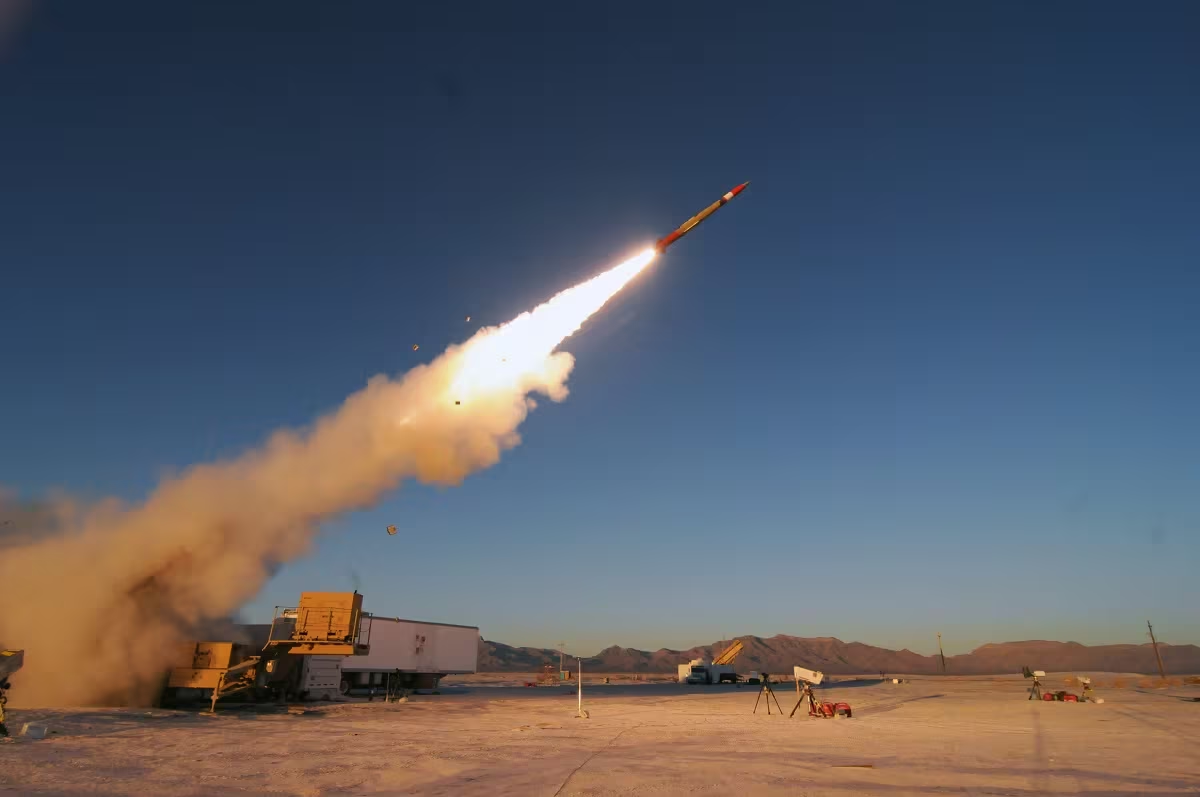
The war with Iran is rapidly draining U.S. stockpiles of costly missiles, and if the current intensity of fighting continues they could shrink significantly within just a few days, Bloomberg reports.
Iran is carrying out attacks in waves of Shahed-136 drones costing about $20,000, while the United States and its allies intercept them with Patriot PAC-3 missiles, each priced at roughly $4 million. According to the UAE, the effectiveness of such interceptions exceeds 90%, yet this very model of defense accelerates the depletion of American stockpiles.
Sources told the agency that at the current pace of attacks the number of Patriot interceptor missiles in the region could decline significantly within the coming days. Lockheed Martin said that about 600 such missiles were produced in 2025.
In Qatar, according to an internal analysis, existing Patriot stockpiles could last for about four days at the current rate of use. The country’s authorities, however, say their arsenals remain sufficient.
Experts interviewed by Bloomberg say the United States likely did not deploy enough munitions to the region to sustain a four-week campaign—the timeframe previously mentioned by Trump.
According to Bloomberg Economics estimates, Iran possesses roughly 2,000 ballistic missiles and a far larger number of attack drones. Since the start of the year, analysts calculate, Tehran has already used more than 1,200 missiles and drones. About 90% of them are drones, while the missiles appear to be reserved for higher-priority targets.
“As a result, both Iran and the United States could face weapons shortages within days or weeks. The side that can hold out longer will gain a significant advantage,” the agency writes.
Experts note that a strategy of attrition could play to Iran’s advantage: the calculation is that the United States and its partners may run out of costly interceptors sooner, while political support for continuing the war in the Persian Gulf countries could begin to weaken.