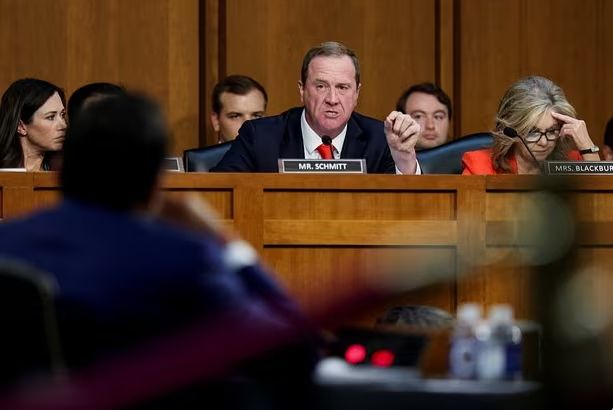
Republican senator Eric Schmitt of Missouri used a Senate hearing to criticise discussion of further aid to Ukraine, casting doubt both on the scale of funds already allocated and on what he said was the lack of proper oversight over how they have been used.
“I find it interesting that Ukraine has come up again,” he said. “We hear from colleagues on the other side about the need for continued American aid, but there has never been a serious conversation about the fact that we have already sent more than $200 billion to a country that is not even a member of NATO. When amendments were proposed for an independent audit of those funds, there was bipartisan opposition to any oversight. And now we are hearing complaints that we are not helping enough.”
Schmitt separately noted that, by his estimate, about $30 billion in US taxpayer money had gone to payments for Ukraine’s public sector—including salaries, pensions, and the maintenance of the state apparatus. Against that backdrop, he stressed, an initiative to allocate $1.5 trillion for domestic US needs is meeting resistance.
“I have seen Ukrainian flags all over the Capitol for three straight years, while those same people call the president of the United States a ‘Nazi’. I am sorry, but it seems to me that we have lost our bearings a little,” the senator added.
He also stressed that he supports an “America First” course, insisting on a reassessment of priorities and of national-security strategy, in which the key concerns remain the defence of US territory, the situation in the Western Hemisphere, and the growing threat from China.
Schmitt’s position was backed by US defense secretary Pete Hegseth. “First of all, I completely agree with the first two and a half minutes of your remarks and very much appreciate that point of view. I would note that $30 billion for bureaucracy in Ukraine is more than the bill we are discussing today on an existentially important war to ensure that Iran does not obtain a nuclear weapon. That is worth noting,” he said.
The remarks come as Congress continues to debate the scale and terms of further support for Ukraine, with questions of oversight over spending and the priorities of American foreign policy increasingly becoming a matter of domestic political dispute.