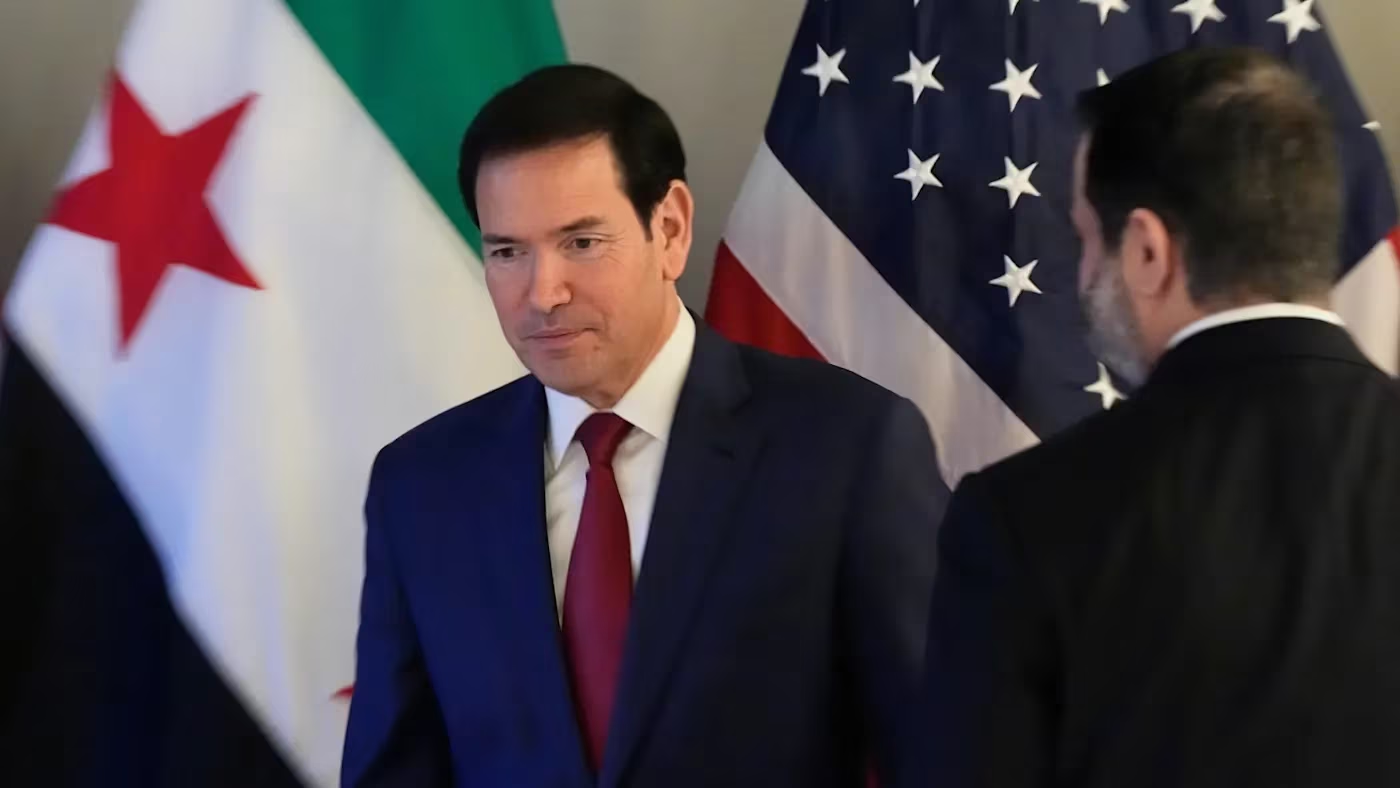
U.S. Secretary of State Marco Rubio pulled out at the last moment from a meeting with European leaders on the war in Ukraine—a move that was interpreted in European capitals as a signal of waning interest from Washington in working jointly with its allies on resolving the conflict.
Rubio had been scheduled to meet in Munich on Friday, February 13, in the afternoon with representatives of Germany, Poland, Finland, and the European Commission, but canceled his participation citing scheduling constraints. According to a U.S. official, the secretary of state was unable to attend the Berlin Format meeting due to an overlap with other talks, though the Russian-Ukrainian war was said to have been discussed in several other meetings he held in Munich.
One European official described the cancellation as “madness.” It came amid an increasingly visible distancing of Donald Trump’s administration from its European allies and efforts to push Ukraine toward an agreement with Russia to bring an end to the nearly four-year war. Another European representative said that without U.S. participation, the meeting was effectively stripped of substance.
After Munich, Rubio plans to travel to Budapest for talks with Hungarian Prime Minister Viktor Orban—the most pro-Russian leader in the EU, who has repeatedly blocked deeper support for Kyiv. The State Department said the trip to Hungary is intended to “strengthen” ties with a European country that, unlike the EU’s mainstream position, shares the Trump administration’s view on peace in Ukraine.
On Saturday morning, Rubio is set to speak at the Munich Security Conference—a forum that for many years has served as a barometer of the transatlantic alliance. European officials are awaiting his address with apprehension, hoping to discern signals about how Donald Trump’s approach to America’s traditional allies is evolving, several weeks after he first threatened—and then withdrew the threat of—an invasion of Greenland.
“This confirms our allies’ worst fears. They are being left on their own…and are reluctantly coming to accept that when Trump tells Europe it is on its own, he means it,” said Democratic Senator Peter Welch. He added that many in the United States find it hard to believe that a country which played a central role in liberating Europe, implemented the Marshall Plan, and built a system of alliances is now turning away from them—while making concessions to Russia.