The astronauts of the Artemis II mission recently returned to Earth—the first people in half a century to reach the Moon and fly around its orbit. This same week, NASA for the first time presented how it plans to develop a future permanent base on Earth’s satellite.
The project is expected to unfold in three stages. The first runs through 2029, the second from 2029 to 2032, and the third from 2032 onward. So far, only the initial phase has been described in detail, which means not everything is yet known about how the future lunar station will be built and how it will operate.
At the same time, more concrete details have emerged about preparations for the landing of the crewed Artemis IV mission, whose launch is expected in 2028. We have compiled the main things now known about the future base on the Moon and NASA’s other plans.
The Lunar Base Is Part of the Preparation for Returning Humans to Earth’s Satellite Under the Artemis Program
Less than two months ago, the Artemis II mission was completed: American astronauts Reid Wiseman, Victor Glover and Christina Koch, along with Canadian astronaut Jeremy Hansen, flew around the Moon for the first time since the Apollo program. During the flight, they set a new record for the greatest distance humans have traveled from Earth, took a series of photographs of the far side of the Moon, held live communications sessions and even spoke from space with Donald Trump.
But the mission’s main purpose was not simply to demonstrate that humans could return to the Moon. It was to test the spacecraft systems on which a future landing will depend. NASA tested Orion’s equipment for sustaining the crew and, more broadly, prepared the next phase of the program. In that sense, the agency is already halfway toward the goal it has set.
NASA has divided the return of humans to the Moon into four stages.
The first was the Artemis I mission in 2022. Then, the Orion spacecraft was sent to the Moon without a crew: instead of astronauts, mannequins were on board. The main task was to test the new SLS super-heavy rocket and the spacecraft itself, including its heat shield. That is crucial: returning from a lunar trajectory takes place at a speed well above that of flights in near-Earth space, so the heat shield must withstand far greater loads than, for example, Soyuz or Dragon spacecraft returning crews from the ISS.
In April 2026, during Artemis II, NASA tested Orion with a crew on board for the first time. The agency once again tested the system for placing the spacecraft into orbit, deep-space communications and the reliability of the same heat shield. At the same time, the astronauts tested life-support systems in practice, including a space toilet—equipment the Apollo crews did not have and without which a long flight to the Moon would be far less comfortable.
The next stage is Artemis III, whose launch is scheduled for 2027. This mission is expected to take place in low Earth orbit, without a flight to the Moon. Its main objective is to test Orion’s docking with two alternative landing modules. They are being developed by rival companies: Elon Musk’s SpaceX is building Starship HLS, while Jeff Bezos’s Blue Origin is developing Blue Moon MK2. The crew of Orion’s next flight is expected to test docking with both modules. The timeline, however, remains uncertain: both SpaceX and Blue Origin are running well behind their previously agreed schedules.
Finally, Artemis IV, planned for 2028, is supposed to mark the return of humans to the lunar surface. Astronauts will fly to the Moon along the trajectory already tested in the April mission, then transfer near the Moon into one of the landing modules—the winner will be chosen between the third and fourth missions—descend to the surface and, after completing their work, return to Earth by the same route.
Until recently, the future of the lunar program remained somewhat uncertain because of repeated revisions to the plans and a recent change in NASA’s leadership. The agency’s central task now is to return astronauts to the lunar surface before 2030. If that schedule slips, the United States risks falling behind in the new space race with China, which also intends to send its astronauts to the Moon before the end of the decade.
It is in this context that the lunar-base project presented this week should be understood. Everything that must happen before the crewed landing under Artemis IV is above all tied to technical preparation of the site for that mission. The longer-term plans still look like preliminary sketches: they may change both because of data gathered during the crewed flight and because of political decisions on Earth.
When Will We See Bases on the Moon?
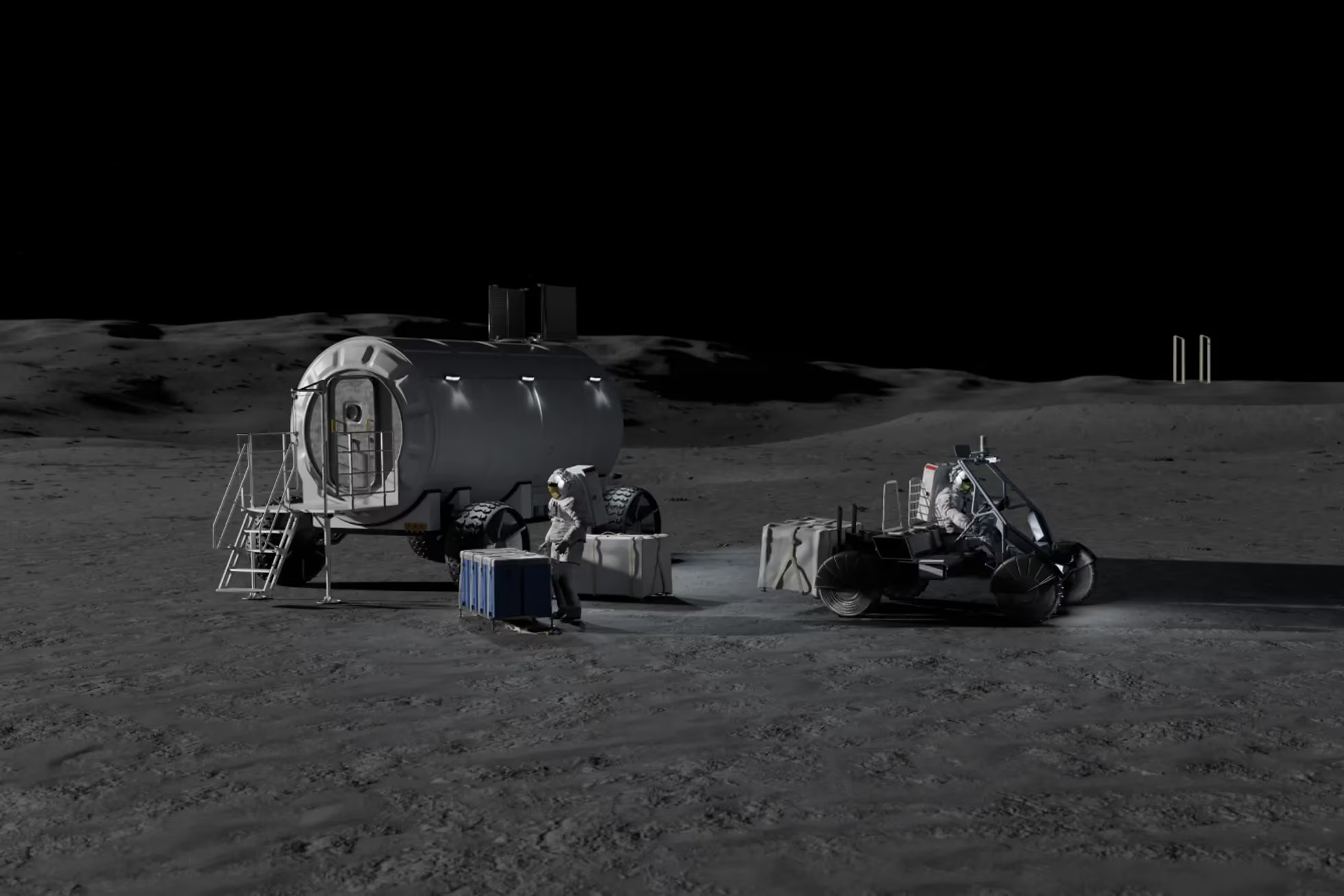
The future base is planned for an area near the Moon’s south pole. Unlike the satellite’s equatorial regions, these areas have been studied far less thoroughly.
In the first stage of building the station, NASA expects to carry out 25 launches by 2029. Of these, 21 will be connected with the delivery of cargo and equipment. Their combined mass will still be relatively modest—about four tonnes, roughly equivalent to two or three large research probes or rovers. In practice, almost the entire mass of the base at the initial stage will consist of two rovers.
Later, the scale of the site is expected to grow substantially: to 60 tonnes in the second stage and to 150 tonnes in the third.
The first step in construction will be the launch of Blue Origin’s Blue Moon MK1 cargo lander. Its next version, MK2, as noted above, is supposed to be tested as a crewed vehicle for astronauts. The MK1 flight can therefore also be seen as an additional test of elements of the future Artemis mission.
The module will also carry its own payload. It will deliver retroreflectors for laser rangefinders, which are expected to be used in the navigation of lunar spacecraft, as well as stereo cameras. Their task is to collect additional data on how lunar soil responds to the exhaust plumes of landing vehicles.
The Blue Moon MK1 launch is expected in the near future. NASA has not yet named an exact launch window, limiting itself to the phrase “no earlier than fall 2026.”
The next step is expected to be the launch of Astrobotic’s Griffin-1 lander. It will deliver the small FLIP-1 rover and other payloads to the Moon. A specific window for that flight has also not yet been set, but under the plan the launch should take place in late 2026 or early 2027.
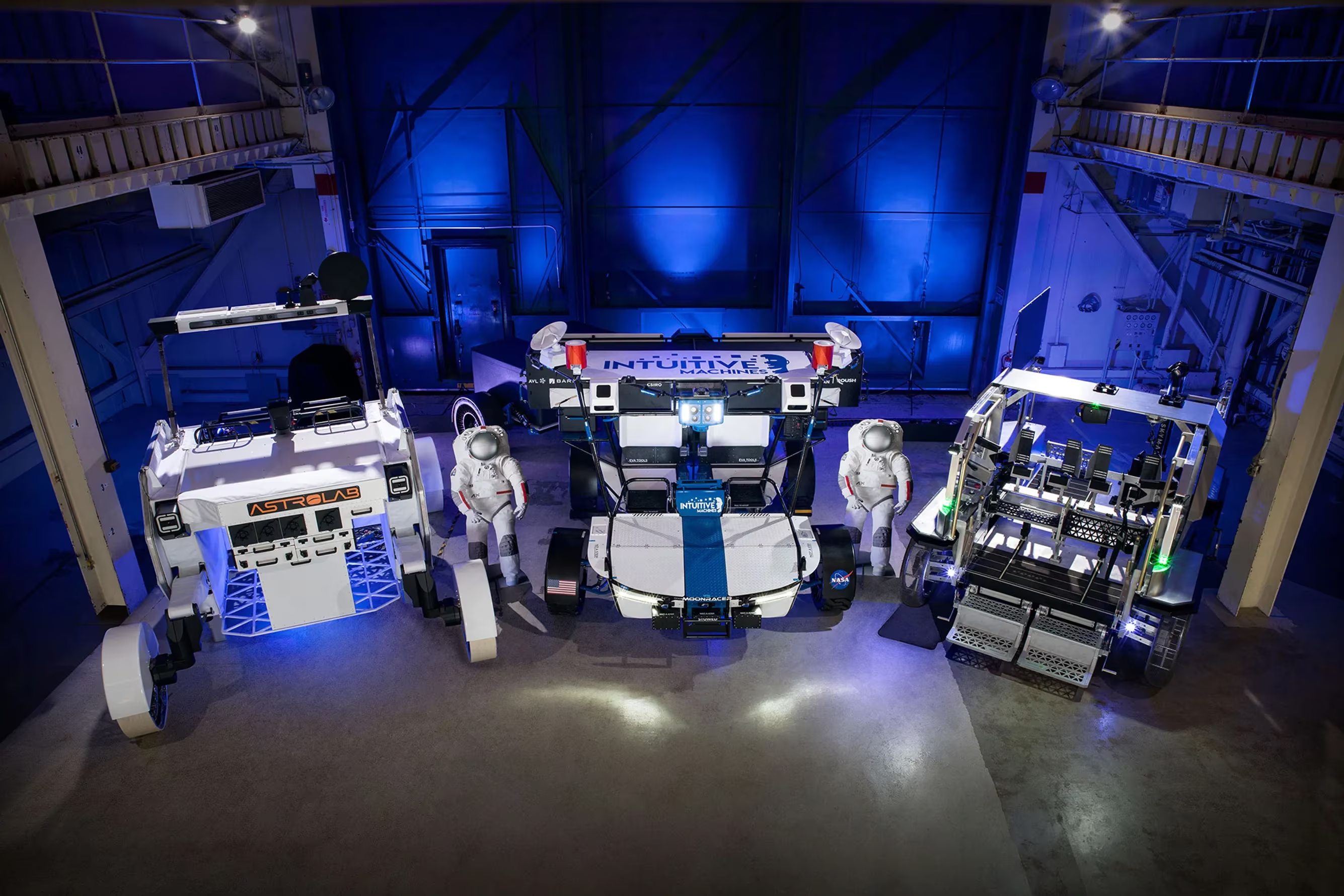
Prototypes of lunar rovers, from left to right: Astrolab’s FLEX, Intuitive Machines’ Moon RACER and Lunar Outpost’s Eagle. The vehicles sent to the Moon will be based on the first and third prototypes: CLV-1 is developed from FLEX, while Pegasus is based on Eagle. Intuitive Machines, which lost the competition, will receive a separate NASA contract to build the Nova-C lander.
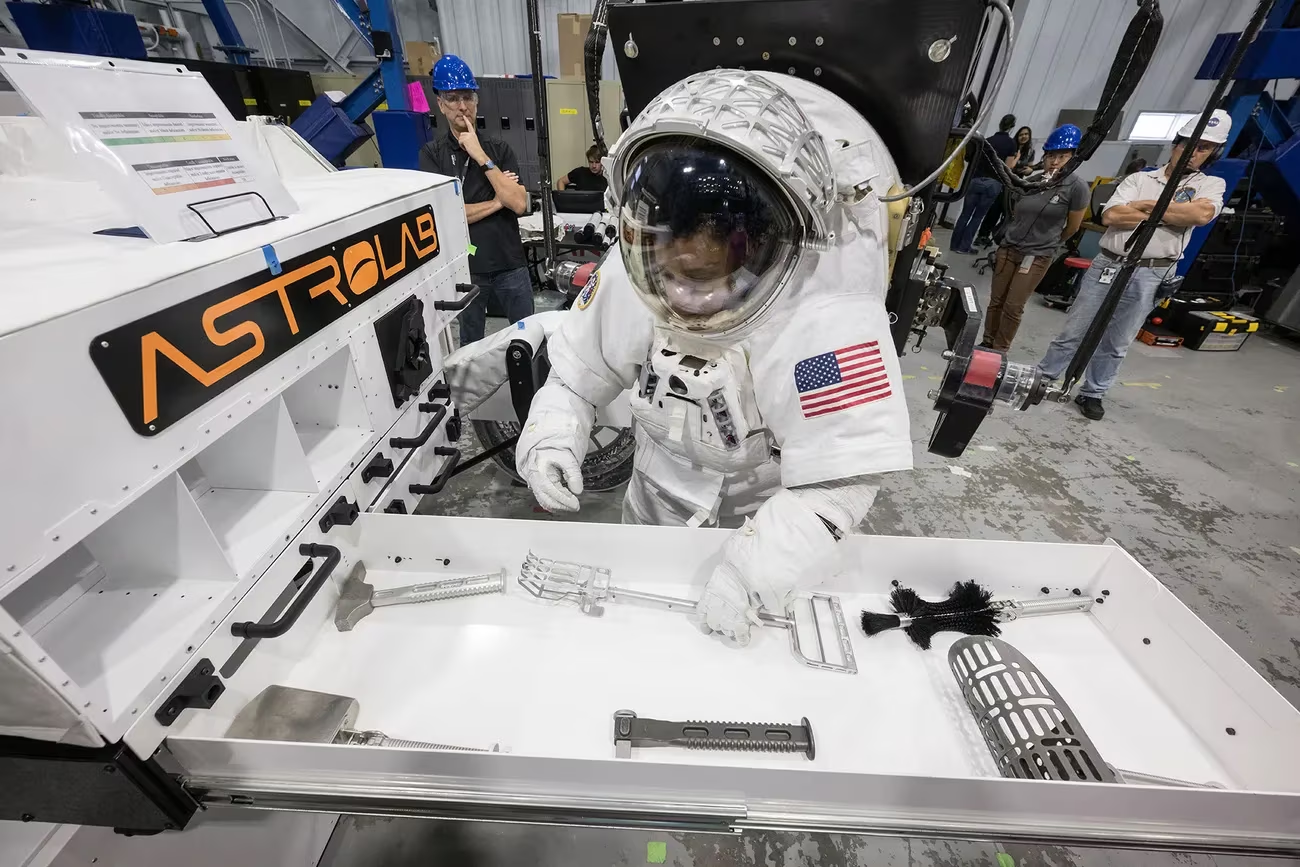
Astronaut Jessica Watkins retrieves a tool for lunar geology from a storage box on the FLEX rover. The tests took place at Johnson Space Center.
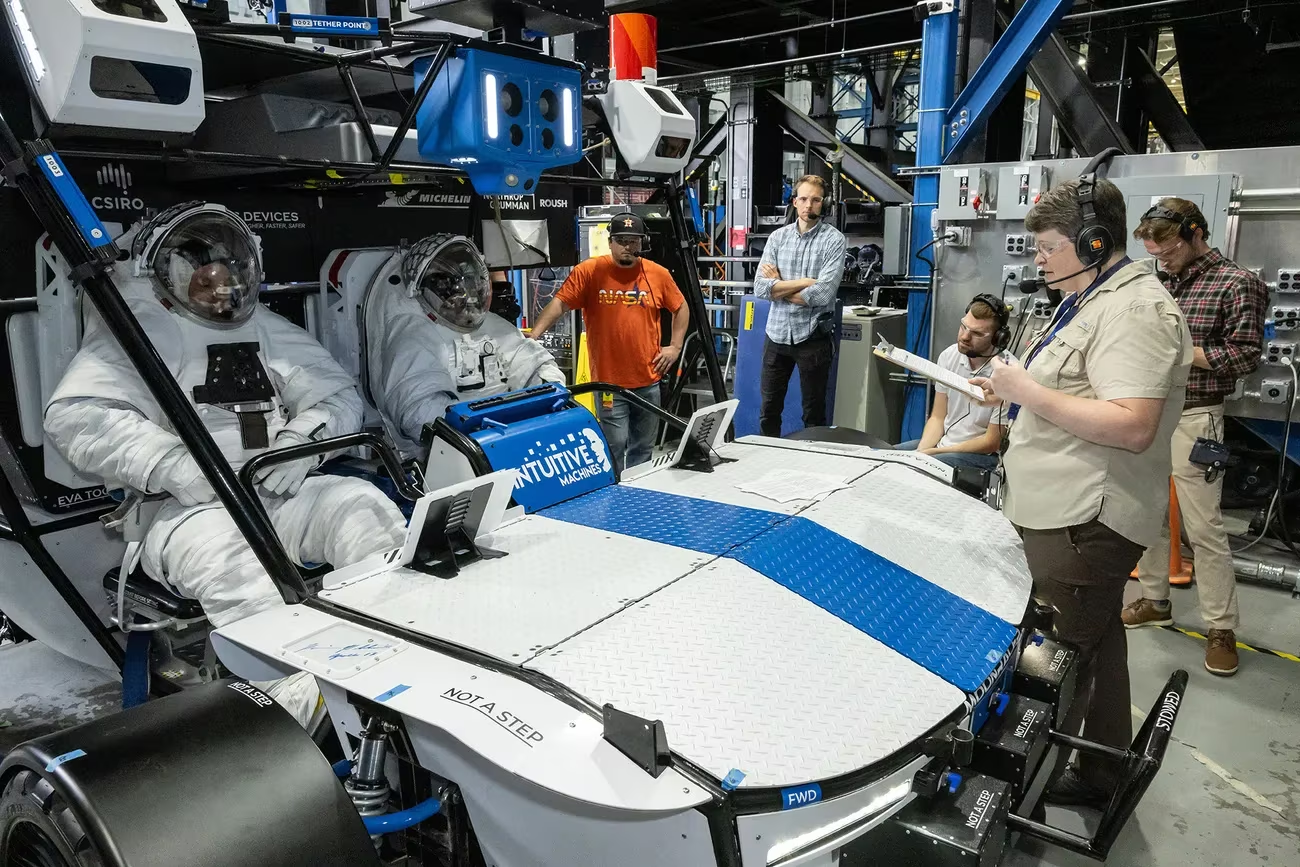
Engineer Dave Cowan and astronaut Jessica Watkins in Intuitive Machines’ Moon RACER rover, which was not selected in the lunar terrain vehicle competition.
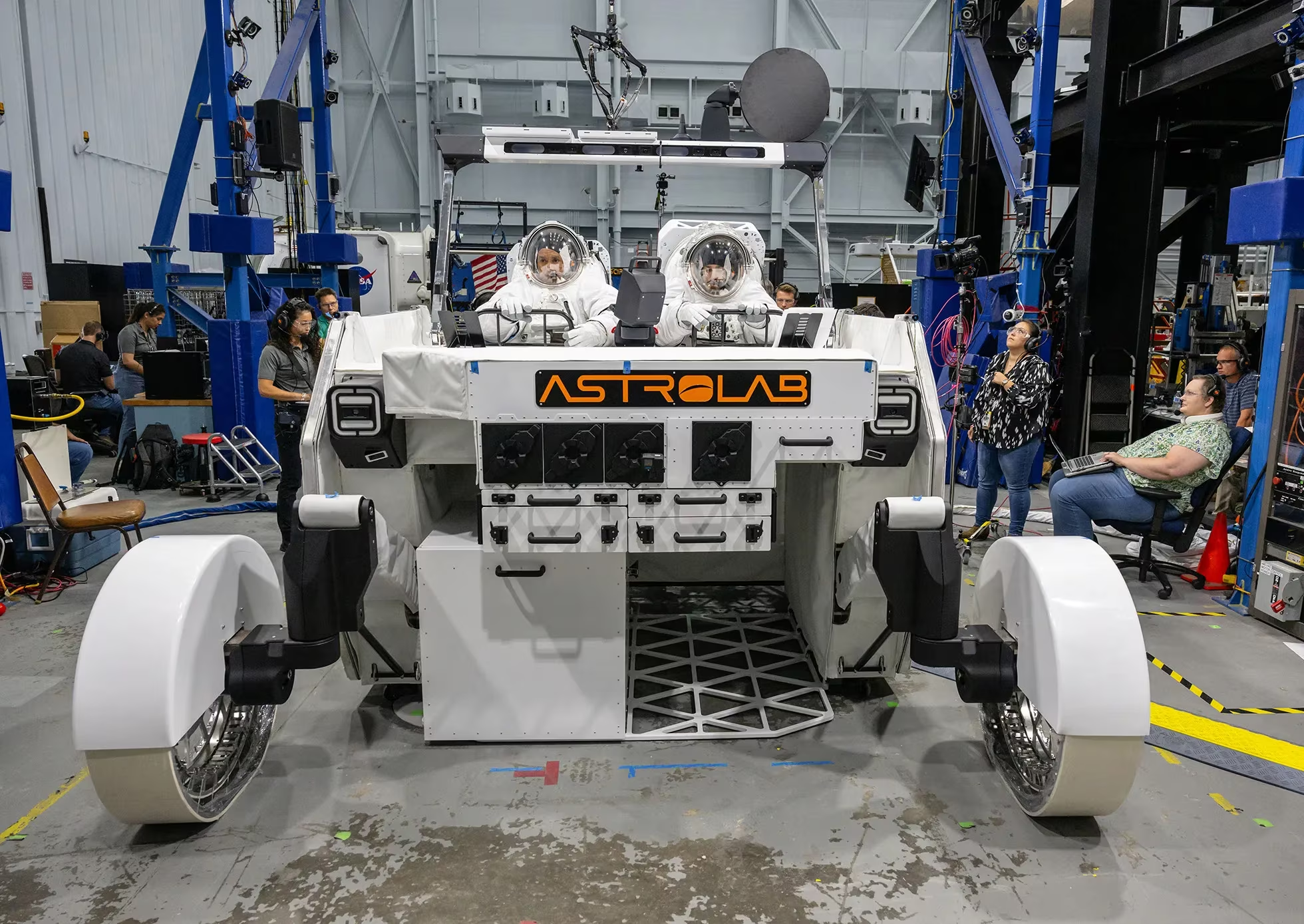
Astronaut Frank Rubio and engineer Zach Tezral test Astrolab’s FLEX rover. FLEX is the direct prototype of the CLV-1 rover, which is expected to be sent to the Moon before 2028.
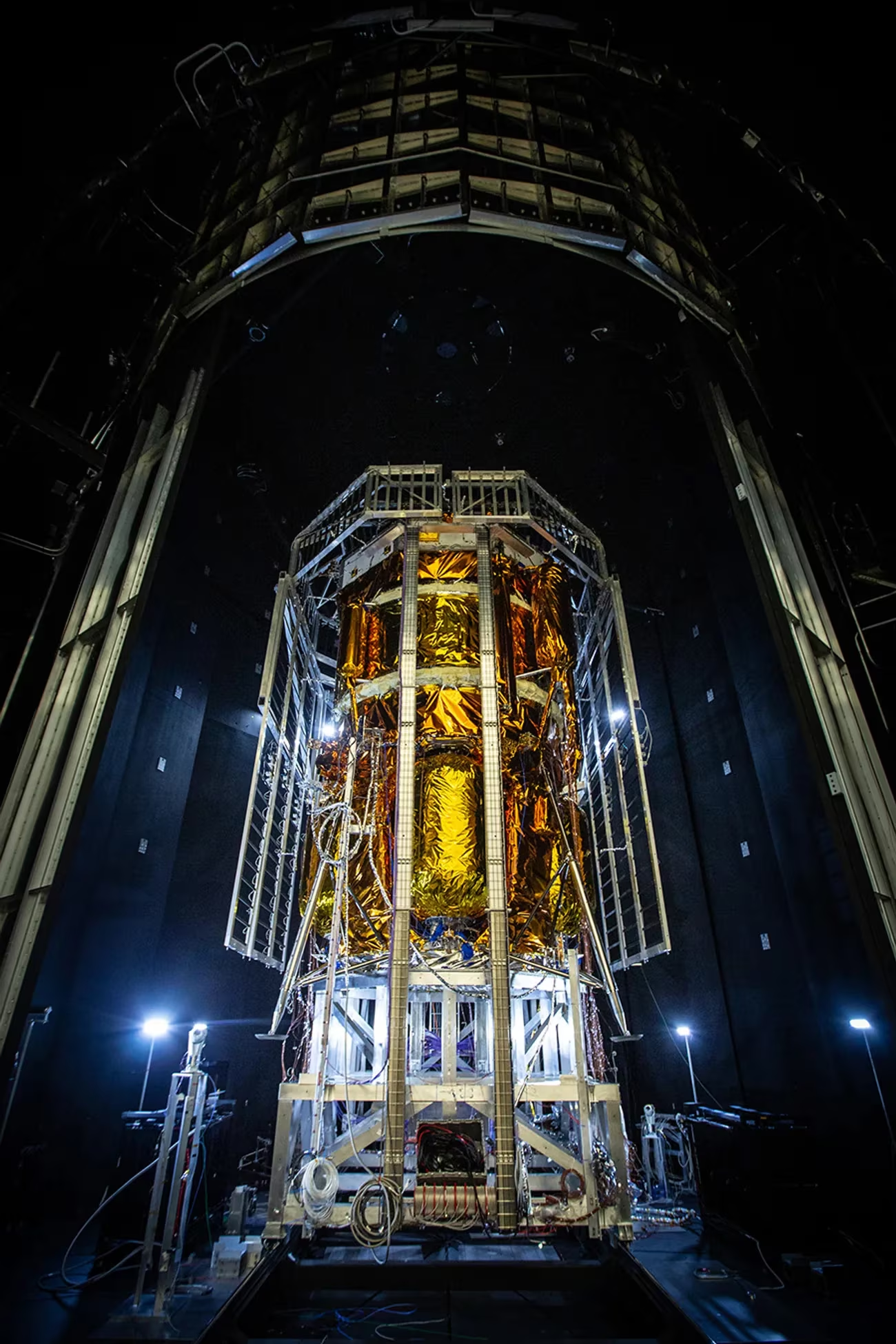
Blue Origin’s Blue Moon MK1 lander is expected to deliver the first components of the lunar base to the Moon’s south-pole region.
The most concrete elements of the future base that NASA announced this week are two rovers for moving astronauts across the lunar surface.
The first vehicle, CLV-1—Crewed Lunar Vehicle—was developed by Astrolab. It is designed to carry astronauts and equipment, while also being able to operate without a crew. The rover’s maximum speed will be up to 10 kilometers per hour. Its dimensions are about four meters long, 2.3 meters wide and 2.2 meters high. It will, however, be sent to the Moon folded up: that will reduce its largest dimension by roughly half. NASA’s contract for delivery of the rover was worth $219 million.
The second vehicle will be Pegasus, a lighter and faster rover developed by Lunar Outpost. It will be able to accelerate to about 15 kilometers per hour, with a comparable payload capacity of one tonne and a range of up to 200 kilometers. Like CLV-1, Pegasus will be sent to the Moon in a folded configuration.
Both rovers are expected to be ready for delivery by late 2027 or early 2028. Blue Origin received the $188 million contract to deliver them.
Another notable NASA announcement concerns the MoonFall mission—a project to create four “lunar drones.” These are jet-propelled vehicles that the agency is developing in-house at the Jet Propulsion Laboratory, JPL.
By the standards of space missions, these are fairly large vehicles. Each will be equipped with cameras, neutron-radiation sensors and laser retroreflectors. The mass of one such “drone” will be about a quarter of a tonne, with a substantial share of that mass taken up by fuel. It is the fuel and propulsion system that will allow the vehicles to hop above the lunar surface and collect data on possible future landing sites for a crewed spacecraft.
NASA separately noted that once the fuel is exhausted and the main program is complete, the MoonFall vehicles will not stop operating. They are expected to remain on the Moon for many more months as autonomous stations. In the agency’s conception, this will provide a “visible, permanent U.S. presence at the south pole” of the Moon.