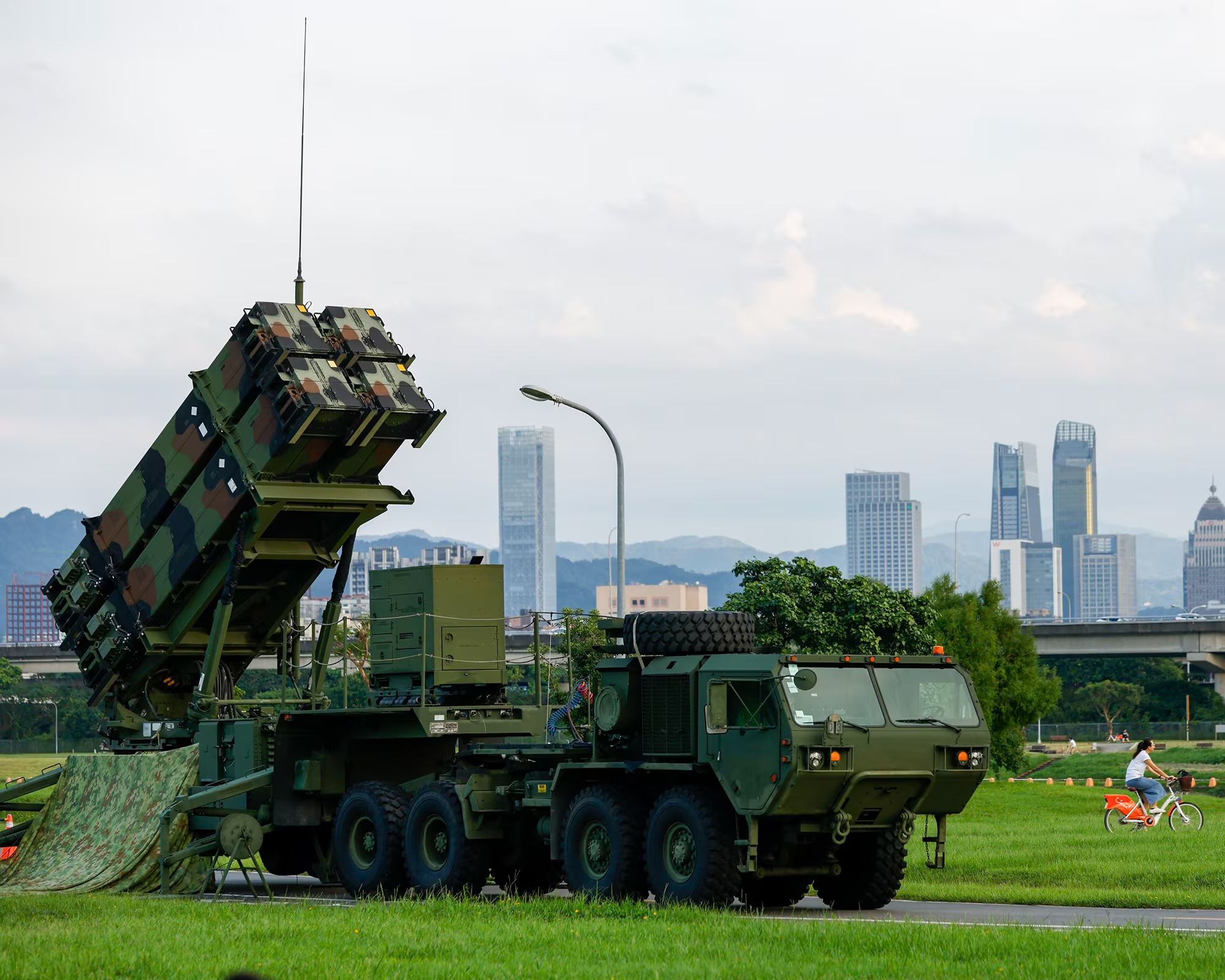
The United States has temporarily paused weapons deliveries to Taiwan in order to preserve sufficient stockpiles for operations against Iran, acting U.S. Navy Secretary Hung Cao said during a congressional hearing.
The pause concerns a $14 billion weapons package for Taiwan that has been awaiting Donald Trump’s approval for several months.
“Right now, we have a pause in place to make sure we have enough munitions for Epic Fury [the war with Iran],” Cao said. “We have enough, but we want to be absolutely certain. After that, foreign military sales will continue when the administration deems it necessary.”
When Senator Mitch McConnell asked whether he ultimately expected the Taiwan deliveries to be approved, Cao replied that the decision would be made by Secretary of State Marco Rubio and Pentagon chief Pete Hegseth. “Yes, and that’s exactly what is concerning,” McConnell responded.
Concern is growing in Washington over the state of American missile and ammunition stockpiles following the outbreak of war with Iran on February 28. Despite the current ceasefire, the conflict remains unstable.
Taiwan’s administration said it had not received any official notification about a review of the deliveries.
“We have no information indicating that the United States intends to make any changes to this arms sale,” said Karen Kuo, spokesperson for Taiwan’s presidential office.
The announcement of the pause came a week after Donald Trump met Xi Jinping in Beijing. According to Western media reports, U.S. arms supplies to Taiwan were one of the key topics of the talks.
China has consistently opposed U.S. military support for Taiwan and regards the island as part of its territory despite lacking actual control over it. Beijing has also not ruled out the use of force to establish control over Taiwan.
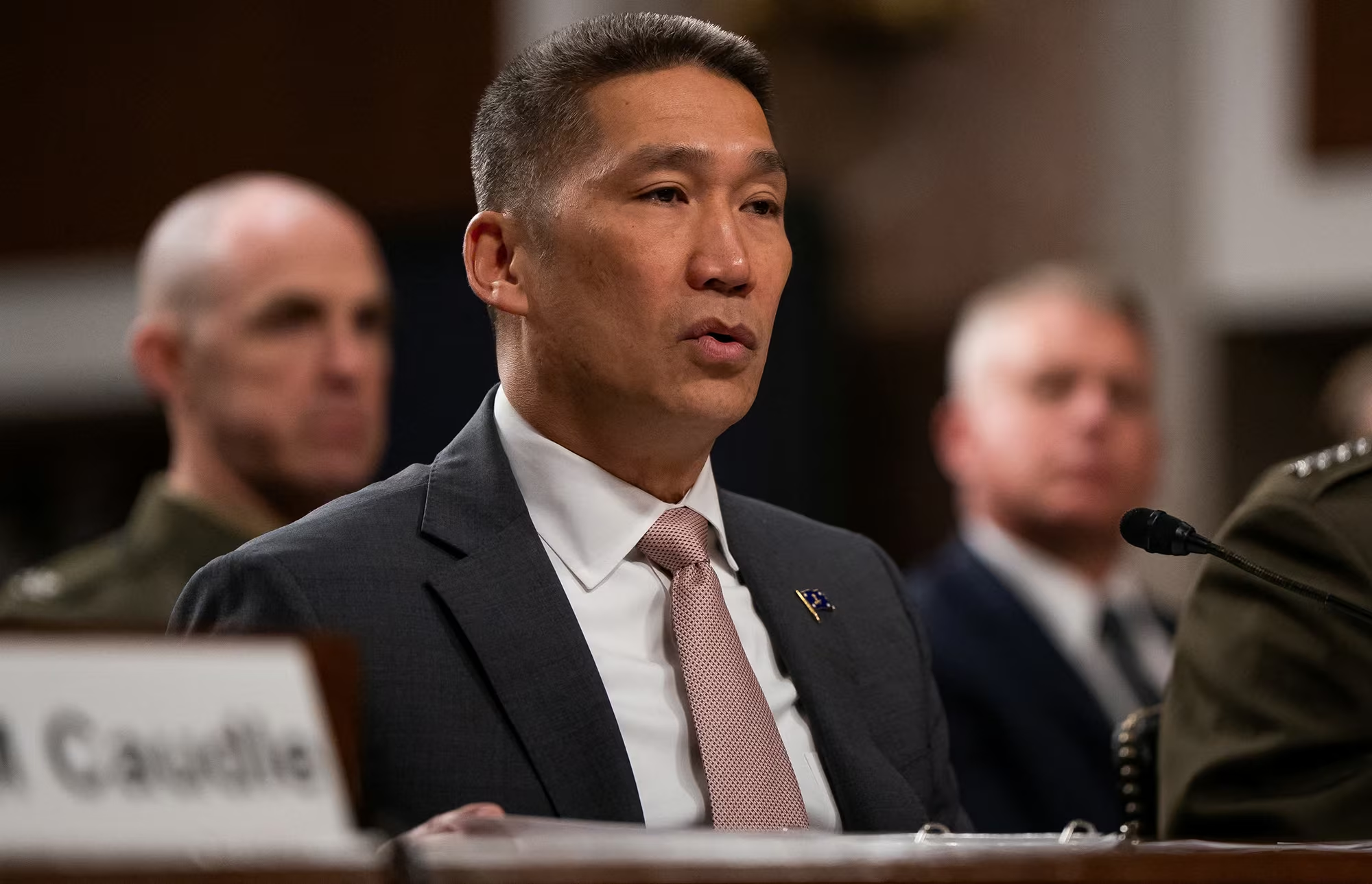
Hung Cao.
During the talks, Xi Jinping warned that the United States and China could “collide or even enter into conflict” if the Taiwan issue “is not handled properly.”
The United States maintains strategic ambiguity over whether it would directly defend Taiwan in the event of an invasion. However, under the Taiwan Relations Act, Washington is obligated to provide the island with sufficient means for self-defense.
After meeting Xi, Trump made several remarks that raised questions about the future nature of U.S. support for Taiwan.
In an interview with Fox News, the president described arms deliveries to Taiwan as “a very good subject for negotiations,” effectively suggesting the issue could be discussed with Beijing—a departure from previous U.S. policy.
Later aboard Air Force One, Trump told reporters that he had discussed Taiwan in detail with Xi Jinping and would soon “make a decision” regarding the pending arms deliveries.
The U.S. president also said he intended to speak with Taiwanese President Lai Ching-te. Taipei said it was open to such contact, though such a move would almost certainly provoke a harsh reaction from Beijing.
No sitting U.S. president has spoken directly with a Taiwanese leader since 1979, when Washington formally recognized the government of the People’s Republic of China instead of Taipei. The only exception was Trump’s conversation with then-Taiwanese President Tsai Ing-wen after his 2016 election victory.