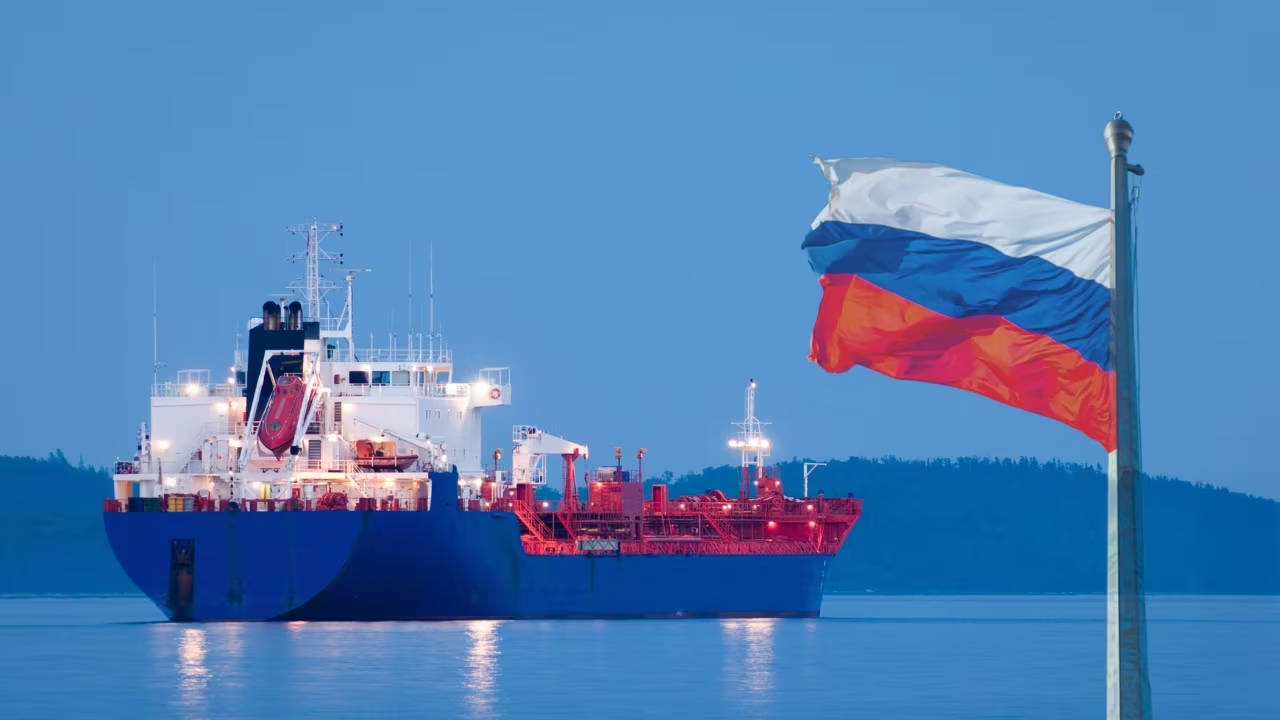
The United States has partially eased the sanctions regime governing trade in Russian oil. The Treasury Department issued a special license allowing the completion of deliveries of Russian crude oil and petroleum products that had been loaded onto vessels as of March 12, 2026.
The document authorizes transactions related to the sale, transportation, and unloading of such fuel through April 11, 2026. The authorization also covers related services—vessel management, insurance, bunkering, registration, piloting, and other operations necessary for the delivery and discharge of the cargo.
Following the publication of the license, oil prices began to ease gradually. According to industry sources, Brent crude slipped 0.38% to $100.10 a barrel, while WTI fell 0.58% to $95.17.
U.S. Treasury Secretary Bessent stressed that the measure applies exclusively to cargoes already in transit and “will not provide the Russian government with any significant financial benefit.”
The easing is intended to relieve shortages on the market caused by disruptions to shipments through the Strait of Hormuz. Earlier, the United States announced the release of 172 million barrels from the Strategic Petroleum Reserve, while the International Energy Agency agreed to inject another 400 million barrels from reserves worldwide. Those measures, however, proved insufficient—amid continuing risks to supply, Brent crude on the eve of the announcement once again climbed above $100 a barrel for the first time since 2022.