On Thursday, March 19, the United States lifted sanctions on three Belarusian companies that produce a key component of fertilizers—a move that amounts to a notable concession amid the US and Israel’s war with Iran, which has driven a sharp rise in fertilizer prices and intensified pressure on farmers’ incomes.
The administration of Donald Trump agreed to the step in exchange for Belarus releasing 250 political prisoners—another episode in the ongoing thaw in relations between Washington and the authoritarian leadership in Minsk.
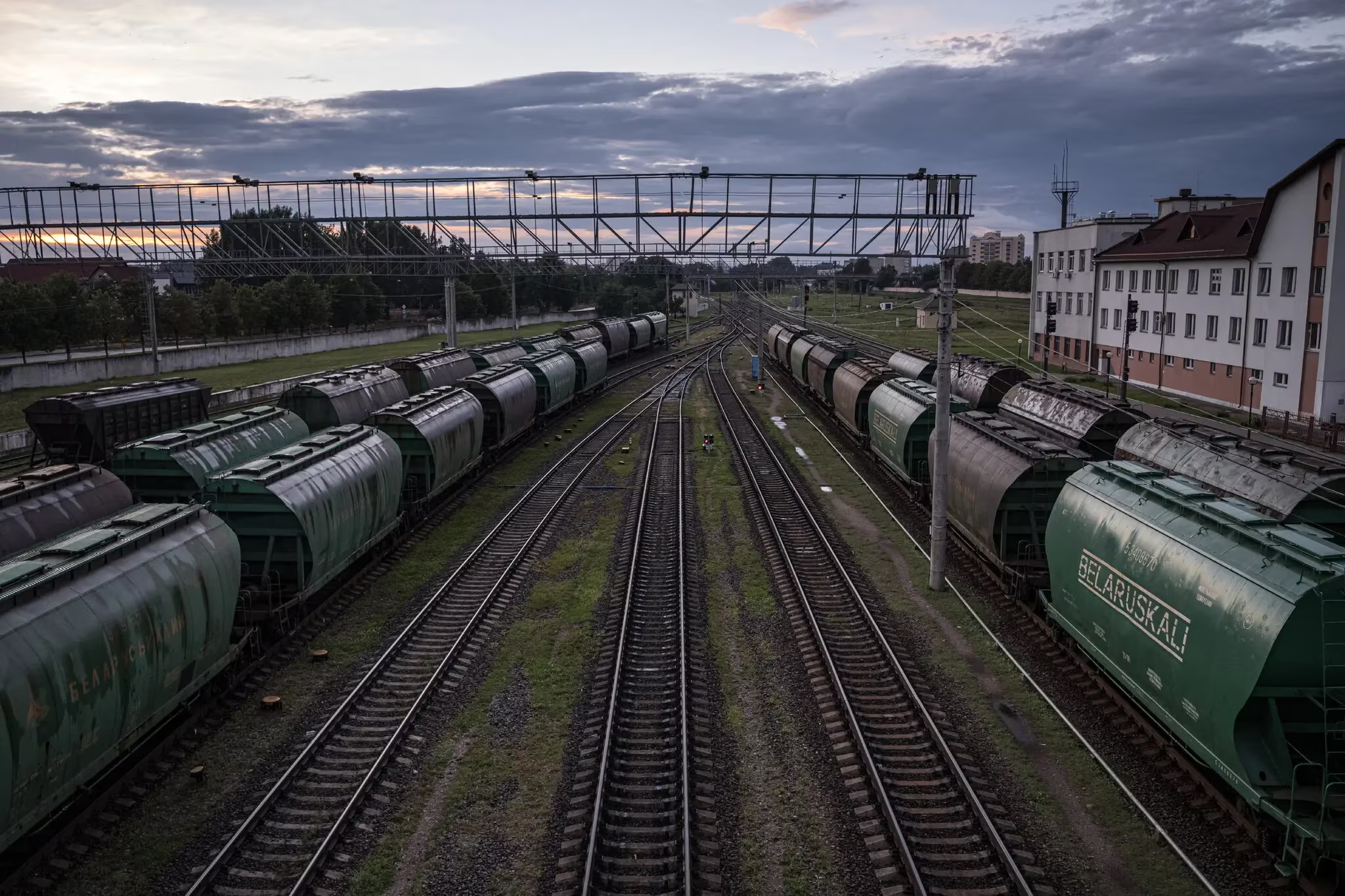
These three companies account for up to one-fifth of global potash supply—a critical element of fertilizers directly tied to global food security. Sanctions were lifted both from them—Belaruskali, Belarusian Potash Company, and Agrorozkvit—and from the state investment bank. All are pillars of the Belarusian economy, and their removal from sanctions effectively grants the country economic breathing room.
Washington’s decision follows the recent suspension of sanctions on part of Russian oil—a measure aimed at containing the economic fallout of the conflict engulfing the Middle East.
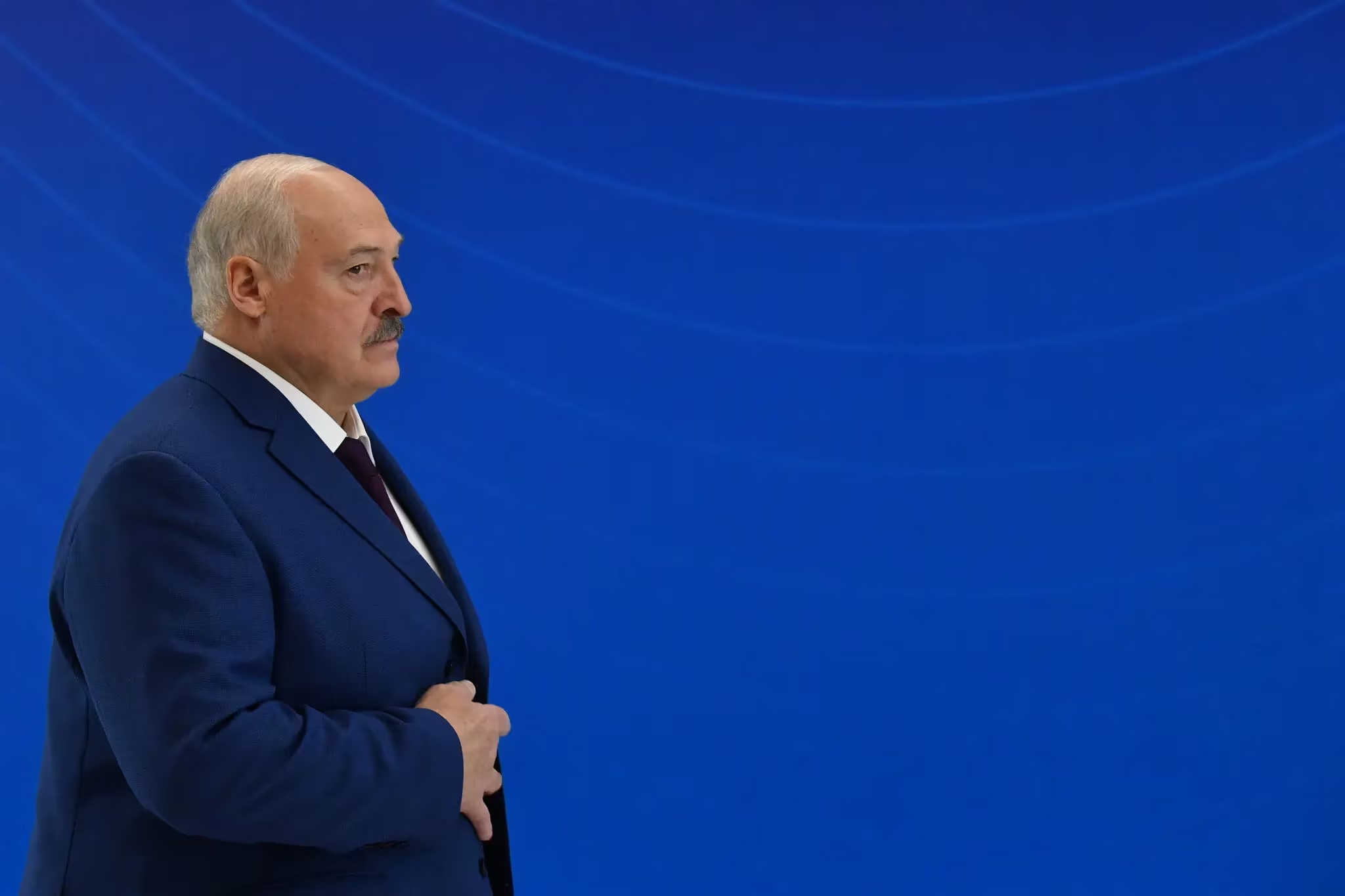
Alexander Lukashenko granted amnesty to 250 prisoners, seeking to normalize relations with the United States while maintaining close ties with his principal ally—Russian President Vladimir Putin.
Trump’s special envoy for Belarus, John Cole, visited Minsk, where he held talks with Lukashenko, including on improving relations with Lithuania—the country to which some of those released were transferred on Thursday. Relations between Minsk and Vilnius remain strained amid political and security tensions.
According to Cole, the Belarusian leader may visit the United States in the near future. Such a trip would mark a breakthrough for Lukashenko, who has been in power for 32 years and in 2020 violently suppressed protests following elections widely recognized as fraudulent.
“Today’s release of 250 individuals is a significant humanitarian achievement and a testament to the president’s commitment to direct, hard-edged diplomacy,” John Cole wrote on social media, accompanying the post with a photograph of 15 of those freed, who have left Belarus and headed to Lithuania.
He added that talks with Alexander Lukashenko also covered the possible reopening of the US embassy in Minsk, which was closed after Belarus allowed Russia to use its territory in 2022 to launch the invasion of Ukraine.
“We are discussing bilateral relations—from restoring the normal functioning of the embassy to the release of so-called political prisoners,” Lukashenko told journalists in Minsk, while at the same time denying that such prisoners exist in the country.
The Viasna Human Rights Center, a Nobel Peace Prize laureate whose leader was released in December, counts 1,117 individuals imprisoned on political grounds. Since 2020, the organization has recognized 4,457 people as political prisoners.
Lukashenko said that Minsk and Washington are conducting negotiations across ten tracks—“economic issues, sanctions—everything in combination.”
Over the past two years, the United States has gradually begun to move away from a policy of diplomatic and economic isolation of Belarus. Since contacts with Minsk resumed under the Biden administration, more than 600 people have been released, according to the Coalition for the Release of Political Prisoners in Belarus.
Following a previous meeting between Cole and Lukashenko in mid-December, Minsk released 123 individuals, including Nobel laureate Ales Bialiatski and prominent opposition figures—Maria Kalesnikava and Viktor Babariko.
In response, Washington announced a temporary suspension of sanctions on potash. Now, as Cole noted, all restrictions in this sector have been fully lifted.
Among those released and transferred to Lithuania on Thursday was journalist Katerina Andreyeva, detained in 2020 during a livestream of protests against Lukashenko. While already serving a sentence, she was tried again in 2022—this time on charges of “treason,” which Amnesty International described as “fabricated.” The closed trial added another eight years to her term. Her husband, journalist Igor Ilyash, was arrested in October 2024 and remains in custody.
“Behind every release are lives, families, years of waiting,” Maria Kalesnikava said in an interview on Thursday. “Each such moment is not just news—it is a return to life, it is the saving of a life.”
Unlike previous cases, most of those released—235 individuals—intend to remain in Belarus. Previously, they were typically taken to the border and handed over to authorities in other countries, including Lithuania and Ukraine.
Many choose not to leave despite the risks, explains Belarusian journalist Yevgenia Dolgaya, who is in exile in Poland: some cannot abandon sick or elderly relatives, while others are not prepared to start their lives over abroad.
“Staying is always a risk,” Dolgaya says. “They may once again face political repression, but people understand that risk and accept it.”