The United States and Iran have agreed on the text of a preliminary deal that would extend the ceasefire for 60 days and resume negotiations over Iran’s nuclear program, Axios reports, citing sources. Tehran has not yet given final approval.
The document is a “Memorandum of Understanding.” It provides for the immediate reopening of the Strait of Hormuz without any transit fees for vessels, a phased easing of U.S. sanctions in exchange for Iran’s compliance with the terms of the deal, and a 60-day extension of the ceasefire, including in Lebanon. Prewar shipping volumes through the strait are to be restored within 30 days of signing, and the U.S. blockade will be lifted.
Under the memorandum, Iran commits never to build nuclear weapons and to resolve the issue of its enriched-uranium stockpile. According to Axios, Trump agreed that one option could be diluting Iran’s highly enriched uranium inside the country under the supervision of UN inspectors.
The outlet writes that the document has already been approved at a high level in Tehran, though it likely has not yet been endorsed by Iran’s supreme leader, Mojtaba Khamenei. Iranian Foreign Ministry spokesperson Esmaeil Baghaei confirmed that most of the future agreement had been agreed, but accused the United States of continuing to put forward contradictory positions, complicating the negotiating process. He said Iran had entered the talks “in good faith and with full responsibility,” while U.S. officials had repeatedly changed positions, advanced unrealistic demands and even carried out military strikes during negotiations. “While they speak of diplomacy and negotiations, at the same time they resort to force, illegal actions and criminal behavior,” Baghaei said.
“The decision-making process in our country is completely clear. The competent authorities must examine every detail of the text. Once we reach a final conclusion that serves the interests of the Iranian people, it will be officially announced,” he added.
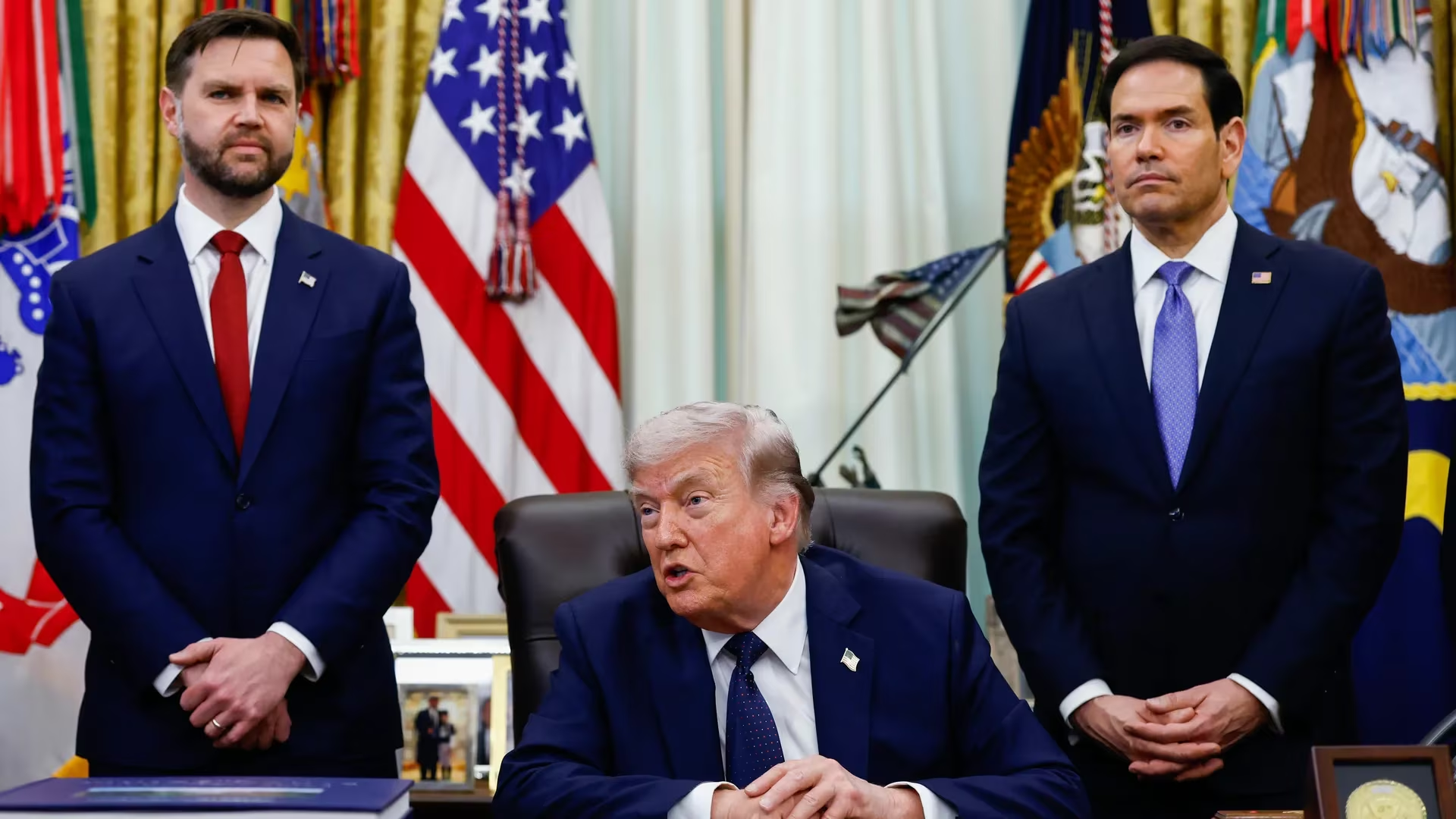
The day before, Donald Trump announced that a deal had been reached. He said a “magnificent agreement” with Tehran could be signed as soon as “this weekend,” probably in Europe. “We have just reached a great agreement to end the war with Iran, and we will be awaiting the finalization of the documents, which should be completed in the next few days. I won’t be able to be there, but JD Vance will be there, the vice president, and some other people,” he said. The president will miss the ceremony because of celebrations for his 80th birthday on June 14. Trump also noted that under the agreement Iran “will never have nuclear weapons” and the Strait of Hormuz will be open to shipping. Before that, he said he had canceled planned U.S. strikes on Iran because of progress in the talks.
According to Trump, the final points of the deal have been agreed by “all involved parties”—Israel, Saudi Arabia, the UAE, Qatar, Turkey, Pakistan, Bahrain, Kuwait, Jordan, Egypt and other countries. Axios writes, however, that his statement came as a surprise to Israeli Prime Minister Benjamin Netanyahu, who had remained in the dark in recent days and had tried to obtain information through allies close to the Trump administration.
On Thursday, four U.S. Air Force C-17 military transport aircraft flew to Europe, carrying equipment for a possible Vance trip to a signing ceremony in Geneva. Baghaei called reports about the timing and location of the ceremony mere speculation.
If the agreement is signed, it could be called the “Islamabad Agreement”—Qatar and Pakistan acted as mediators in the talks. Baghaei said the mediators were continuing their work, but that the diplomatic process had “naturally suffered” because of U.S. actions.