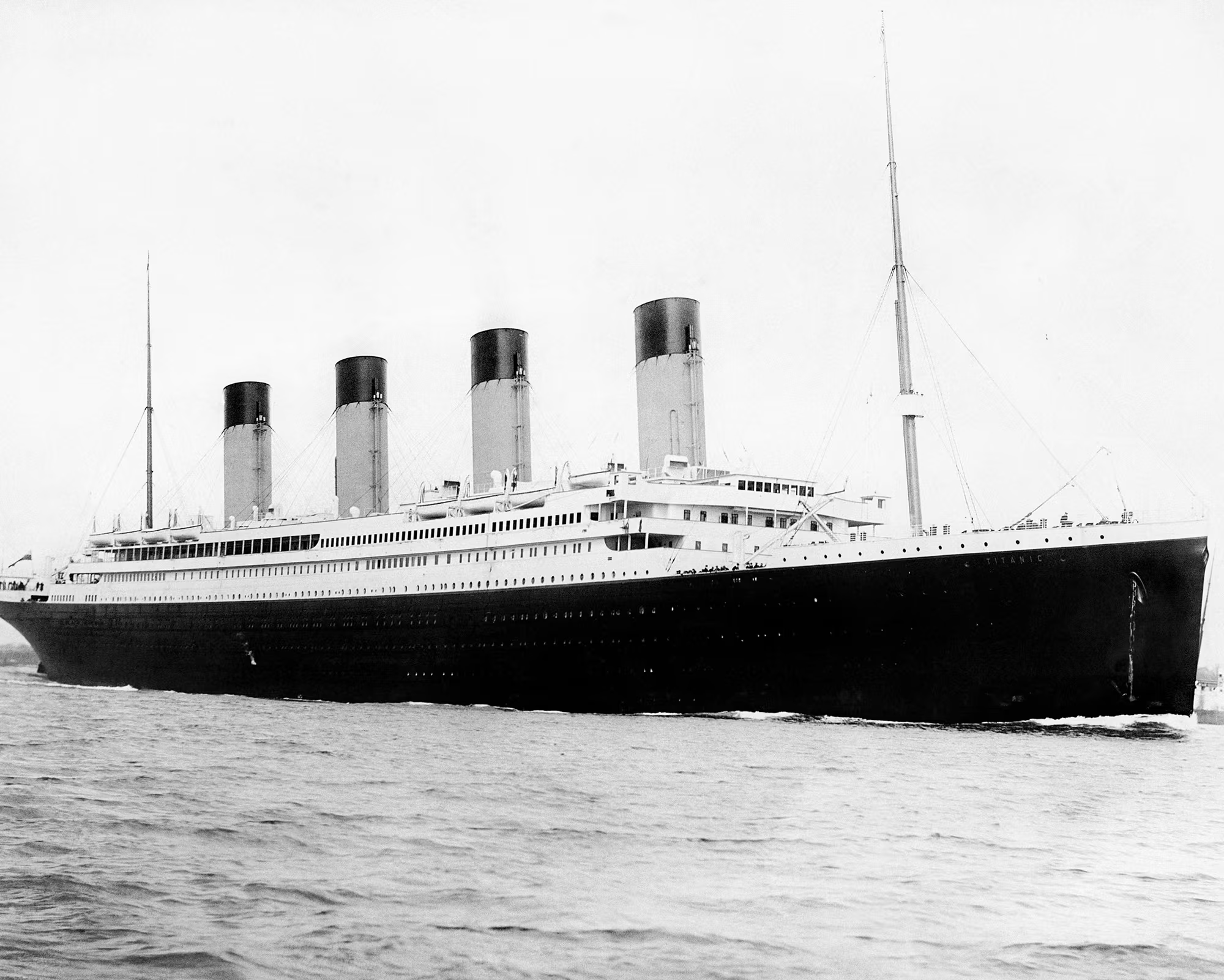
A dispute has emerged in the United States over plans to auction more than 100 artifacts recovered from the wreck site of the Titanic, including passengers’ personal belongings, money, kitchen items and decorative elements.
According to recently declassified court documents, the U.S. government opposes the sale.
RMS Titanic Inc., which holds exclusive salvage rights at the liner’s wreck site in the North Atlantic, wants for the first time to sell some of the artifacts. The company had previously pledged only to display them in museums and traveling exhibitions.
RMS Titanic, registered in the state of Georgia, proposed holding an auction while also showing the items as part of an international tour in four cities. Which cities have been chosen has not yet been disclosed. The court documents mention, among other items, a bronze cherub, a necklace made of gold nuggets and a heart-shaped pendant.
U.S. interests and oversight of the wreck site are represented by the National Oceanic and Atmospheric Administration (NOAA). The agency believes the sale would violate RMS Titanic’s legal obligations regarding the site, according to documents that a judge ordered unsealed earlier this month.
In opposing the auction, the government said the company “is not seeking the court’s approval, does not believe such approval is required, and asserts that it is not restricted in its ability to sell” the artifacts.
Representatives of RMS Titanic did not respond to requests for comment on Monday. The company’s lawyers had previously argued in federal court that the proposed auction arrangement does not violate existing court decisions and agreements concerning the artifacts.
This is not the first attempt to sell items recovered from the Titanic.
Since 1987, salvage operations have recovered thousands of items and even fragments of the liner’s hull. RMS Titanic earns money from displaying them.
For decades, the company has tried to sell some of the artifacts to fund new expeditions or cope with financial difficulties. Such initiatives, however, have consistently met resistance from U.S. courts, historic-preservation organizations and relatives of those who died. Some of the recovered items belonged to the ship’s passengers.
At the same time, items saved by survivors themselves or recovered from the water by rescuers can be sold and often fetch large sums. In April, a life jacket belonging to one passenger sold for more than $900 00, while a gold pocket watch presented to the captain of the ship that rescued survivors sold in 2024 for nearly $2 million.
Auction houses explain the high demand by the enduring interest in the Titanic, the rarity of the objects and the history of the liner itself, which sank in 1912 after striking an iceberg during its first voyage from Europe to New York. More than 1,500 of the 2,200 people on board died in the disaster.