
The US economy grew at an annualised rate of 4.3 percent in the third quarter—according to official data released on Tuesday. The figure far exceeded analysts’ expectations and came in well above the results of previous quarters.
US GDP Growth by Quarter
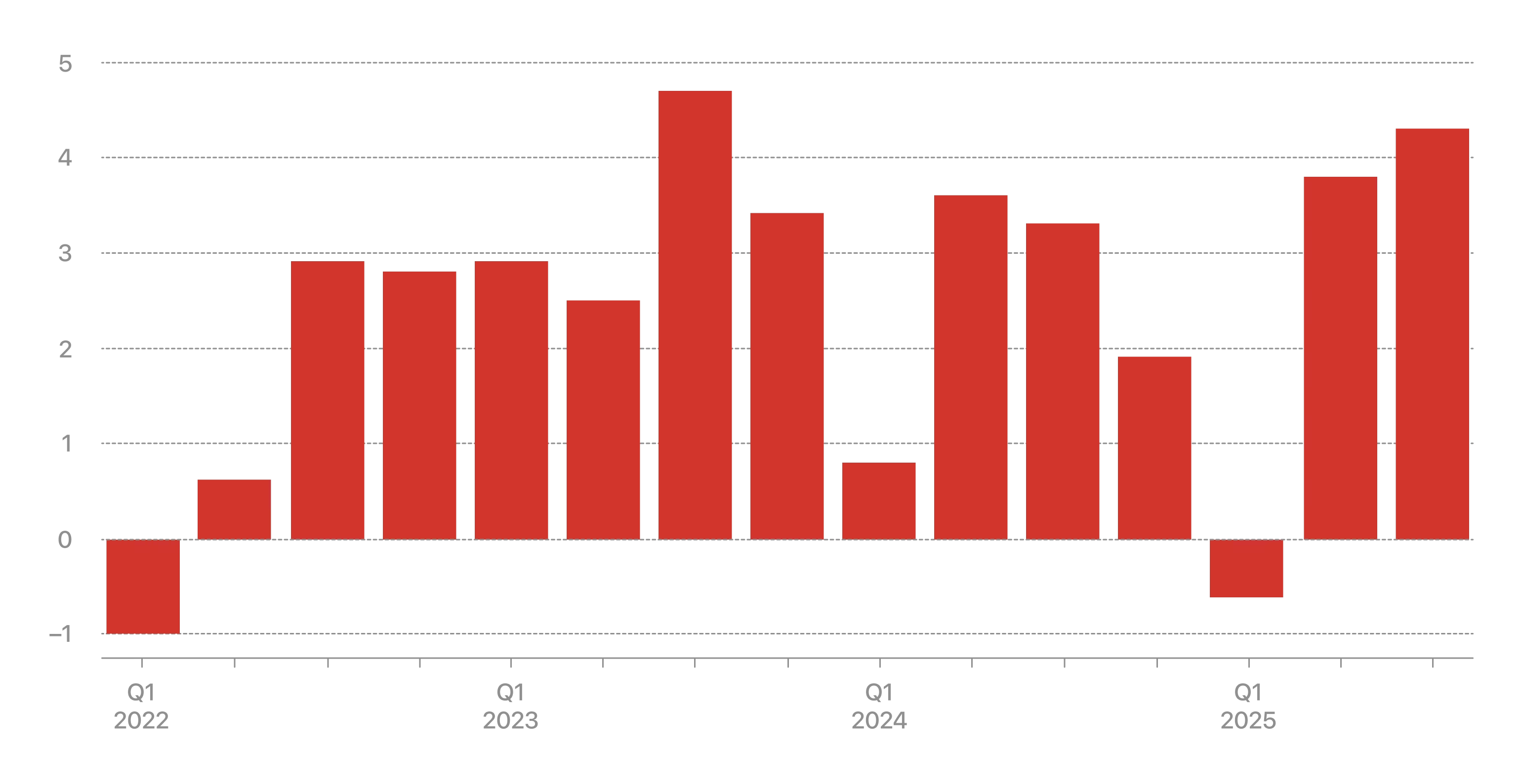
GDP growth, supported by spending on healthcare and artificial intelligence, exceeded the consensus forecast of economists surveyed by Bloomberg, who had expected an increase of 3.2 percent.
Data from the Bureau of Economic Analysis, whose release was delayed by the recent government shutdown, showed increases in consumer and government spending as well as exports. At the same time, business investment slowed and imports declined.
The report follows GDP figures for the first two quarters that were distorted by sharp swings in foreign trade.
“The strong rise in GDP in the third quarter was flattered by higher defence spending and a sizable contribution from net trade as imports fell, but underlying measures are consistent with a solid economic expansion,” said Michael Pearce, chief US economist at Oxford Economics.
In the first quarter, the world’s largest economy contracted at an annualised rate of 0.5 percent—companies rushed to purchase foreign goods ahead of the introduction of Donald Trump’s sweeping tariffs. In the second quarter, growth rebounded to 3.8 percent as imports fell sharply.
Imports, which exert a negative effect on GDP, continued to decline in the third quarter.
Market reaction to the data was muted—many Wall Street traders were away from their desks that day. Treasury yields edged higher, while the dollar index and equity futures were little changed.
Analysts believed the report would have little impact on Federal Reserve policy decisions in 2026, after the US central bank cut interest rates three times this year.
“These numbers will put some pressure on Treasuries, but I don’t think they change anything for the Fed,” said Andy Brenner, head of international fixed income at NatAlliance Securities, adding that he expects rates to remain unchanged in the first months of 2026.
Growth in the third quarter was driven to a large extent by strong consumer spending on healthcare, which added 0.76 percentage points to the overall growth rate.
The net contribution from imports amounted to 1.6 points, while government spending—primarily federal defence outlays—added a further 0.4 points to growth.
In the final quarter of 2025, growth is expected to come under pressure from a slowdown in consumer spending and the effects of the government shutdown. Data for this period were also delayed and will be released next year.