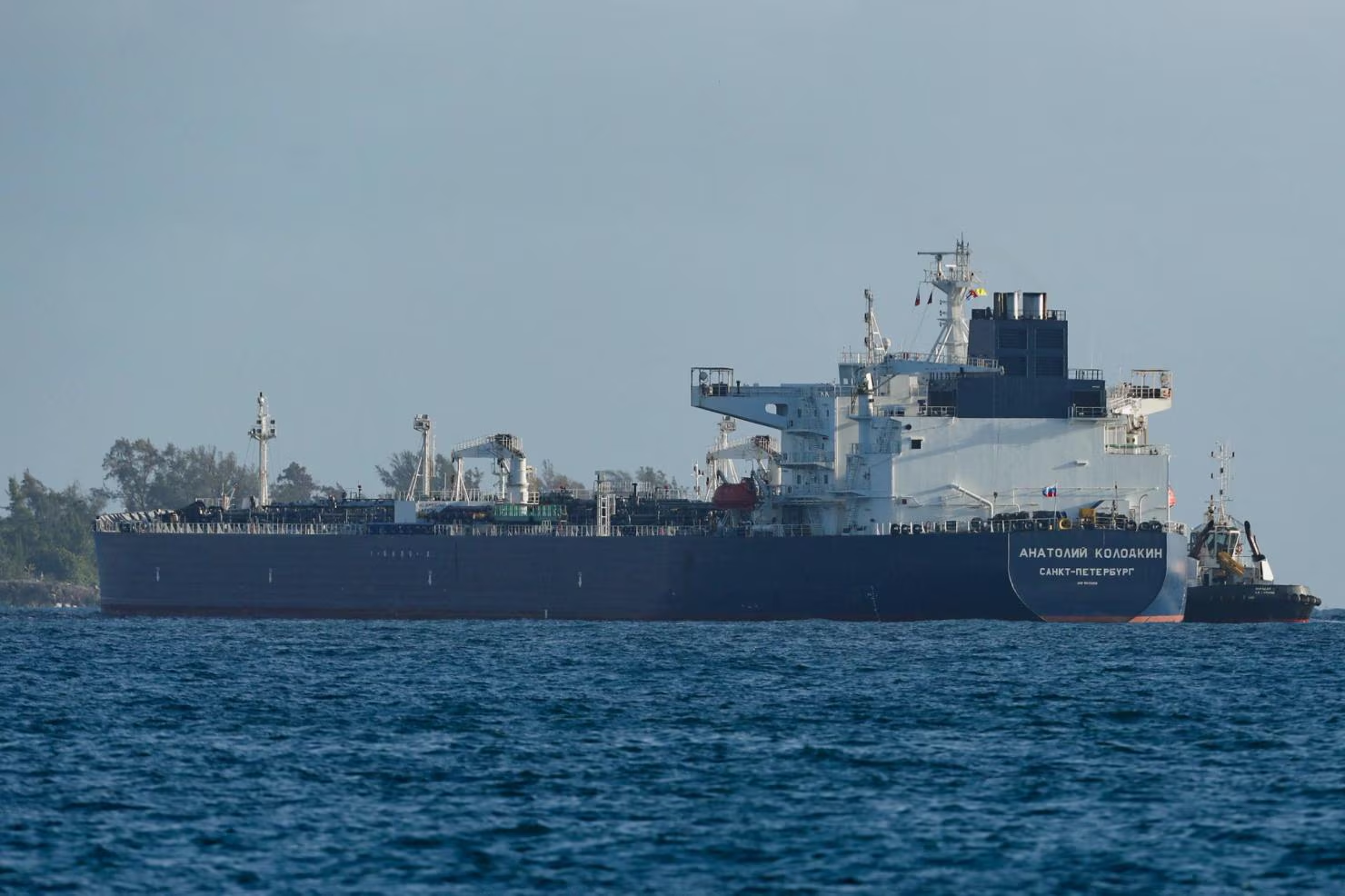
The United States is preparing to extend a waiver allowing shipments of Russian oil, introduced in March after energy prices surged sharply following the outbreak of war in the Middle East. Several former Treasury and State Department officials told Semafor.
According to them, a similar step is likely to be taken with regard to Iranian oil as well. Donald Trump’s administration has already used a partial easing of restrictions as a tool for influencing global prices.
The publication’s sources emphasize that such measures are primarily symbolic—meant to “send a signal to the markets.” Yet, experts note, the rise in oil prices after the start of the U.S. and Israeli war with Iran creates an opportunity for Russia to significantly increase budget revenues from energy exports.
Responding to a request for comment, the Treasury Department said it does not comment in advance on decisions related to sanctions policy.
A sharp spike in global oil and gas prices came in March after the United States and Israel entered the war with Iran. A key factor was the closure of the Strait of Hormuz, through which a substantial share of global supplies passes. Against that backdrop, Washington authorized shipments of Russian oil and petroleum products provided they had been loaded onto vessels before March 12—an authorization that remains in effect until April 30. A similar exemption was extended to Iranian oil loaded before March 19.
Overnight into April 8, the United States and Iran announced a two-week ceasefire. According to Donald Trump, the agreement предусматривает возобновление судоходства через Ормузский пролив. As WSJ reports, Tehran agreed to let 10 ships pass per day, even though about 400 tankers are still waiting in line for transit.