
On Monday, December 22, the US Department of Justice briefly posted tens of thousands of documents on its website related to the so-called Epstein files—materials tied to the case of financier Jeffrey Epstein, who was accused of sex trafficking. Within a few hours, the bulk of the files was removed from public access, and the department offered no official explanation for what had occurred.
As reported by Politico, the documents were available for download via a direct link on the Justice.gov domain during the first half of the day. The link did not appear in the section of the Justice Department’s website where materials subject to disclosure under a law passed by Congress in November have been published in recent days. At the same time, the URL structure suggested that the release corresponded to the anticipated eighth batch of records in the phased disclosure of the case.
The published trove included tens of thousands of internal documents and emails, as well as several dozen video recordings from the Federal Bureau of Prisons. In particular, the files contained information on negotiations in 2008 between the Department of Justice and Epstein’s attorneys, when he sought an out-of-court settlement of charges related to the trafficking of minors. A separate set of documents concerned 2019, when federal prosecutors in New York were preparing to bring new criminal charges against him.
The materials show that investigators and prosecutors sought to reconstruct the structure of Epstein’s financial empire, trace his real estate holdings in the United States and abroad, and analyze his ties to influential figures in the financial industry. Some of the documents focus on law enforcement efforts to track the movements of Epstein himself and his associate Ghislaine Maxwell.

The Release of the Epstein Archive Shifted Attention From Trump to Clinton
The Sexual Crimes Case Is Being Used as a Tool of Partisan Warfare in the United States
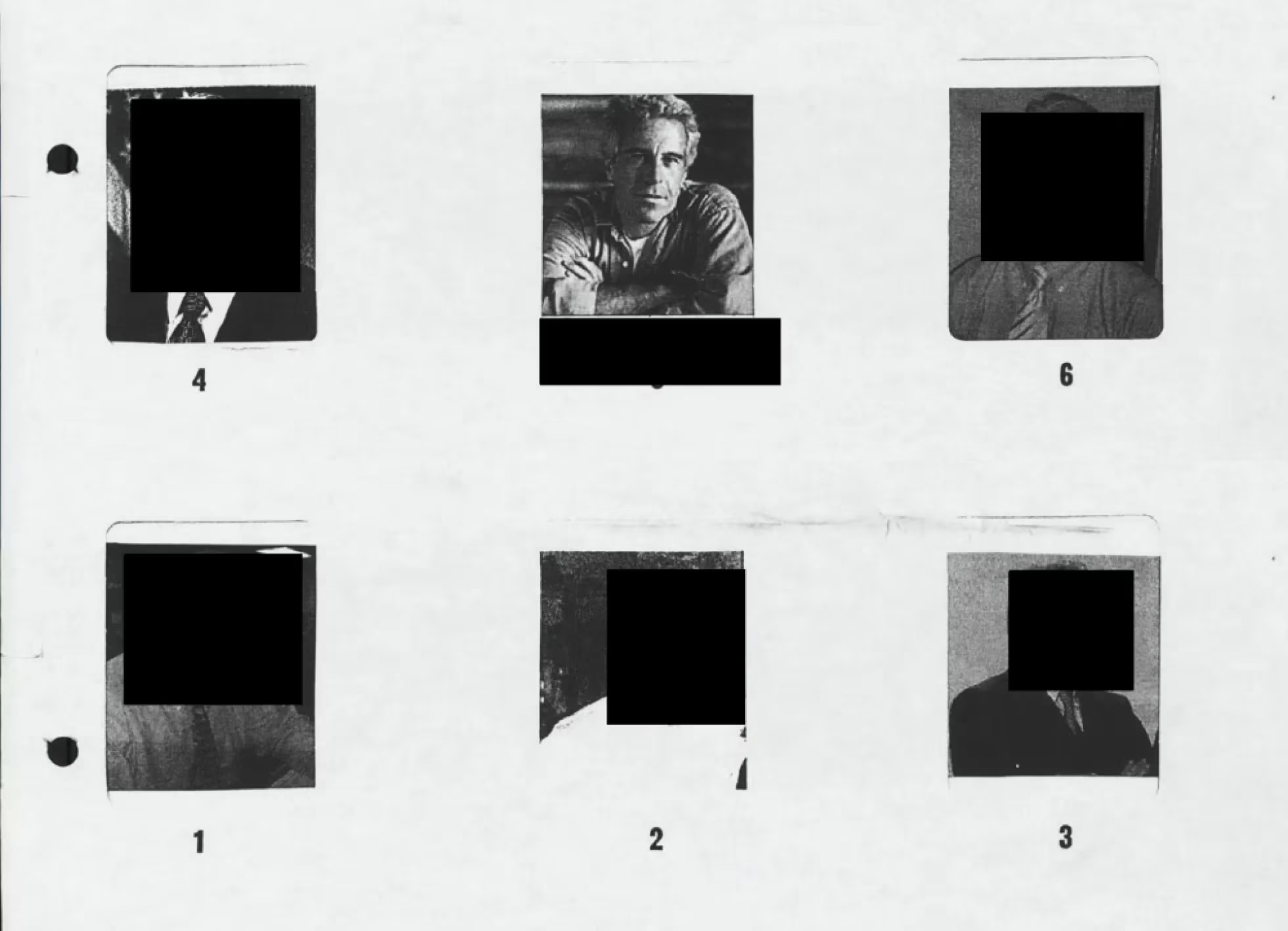
The First Batch of Epstein Case Files Has Been Released—13,000 Documents. What Have We Learned?
Trump Discussed a 14-Year-Old Girl With the Financier, and the First Complaint Reached the FBI as Early as 1996—but the Bureau Took No Action
A substantial portion of the archive relates to internal discussions within the Department of Justice. In most cases, the names of officials are redacted, but the correspondence makes it possible to infer the pressure faced by those involved in the investigation from political leadership. The documents also show how, after Epstein’s death in August 2019—when he took his own life in jail before standing trial—prosecutors adjusted their strategy and shifted their focus to potential accomplices.
According to the materials, after his death prosecutors prepared a memorandum listing alleged accomplices who could have faced charges, as well as a separate memorandum on the potential liability of legal entities linked to Epstein. Those memoranda themselves, however, were not among the files that were published.
Justice Department representatives did not respond to Politico’s requests for comment on the disappearance of the documents. Meanwhile, lawmakers who had pushed for the release of the archive and secured passage of the relevant legislation accuse the department of violating congressional requirements: under the law, all materials were to be published no later than December 19. The Justice Department had previously said that the release would proceed in phases over the course of several weeks.
The publication of the Epstein files began on December 19. Even after the release of the first batch of data, at least 16 files were removed from it, including a photograph of Epstein in the company of Donald Trump.