Roger Conner makes his living selling firewood—but he is just as well versed in another source of energy: diesel. It is this fuel that powers the entire operating chain of his company, RC Conner Enterprises—from the heavy trucks delivering logs to the facility in Exeter, New Hampshire, to the machinery that processes them into kiln-dried firewood for homes and restaurants, and further to the transport distributing finished products across New England. In a typical year, Conner spent about $6,800 a month on diesel. Now—roughly $11,000. To partially offset the increase, he introduced a 5% fuel surcharge, after which some customers abandoned their orders.
If prices continue to rise, “we will have to keep raising prices, but there likely won’t be any sales,” says Conner, 50. “It will undermine the economy. People do not realize how heavily it depends on diesel fuel.”
The average price of diesel in the United States this week exceeded $5 per gallon—only the second time in history. The first came after Russia’s invasion of Ukraine in 2022, when the market moved beyond previously accepted limits. While consumers tend to focus on gasoline prices, it is the sharper rise in diesel costs that is alarming businesses.
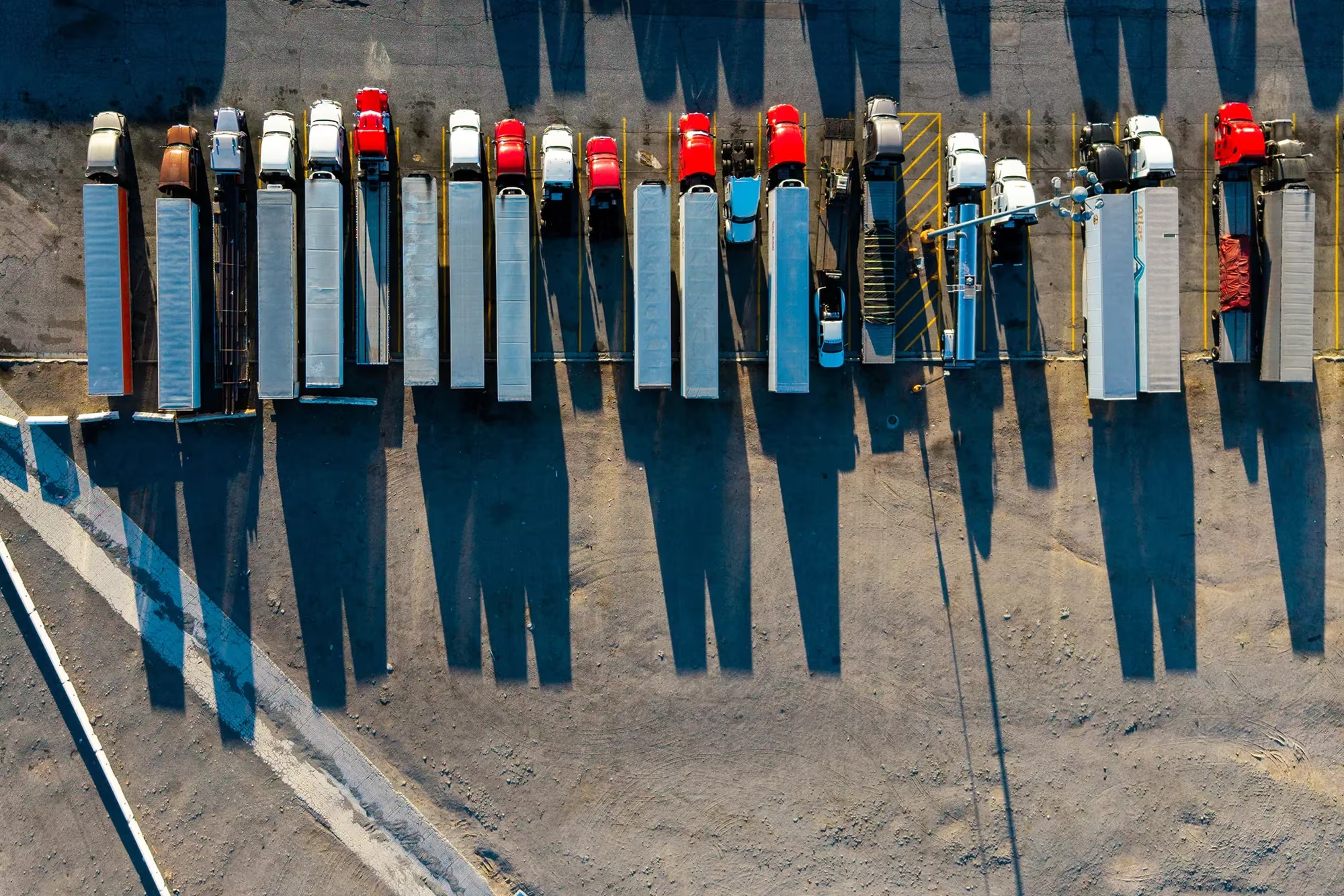
The reason lies in its ubiquity: diesel underpins nearly every sector—from agricultural equipment to construction machinery and transport, including trucks, trains and buses that move goods and passengers across the country. In the cost structure of trucking companies, diesel ranks second only to driver wages and accounts for about a fifth of expenses, notes Bob Costello, chief economist at the American Trucking Associations. Even under normal conditions, carriers closely monitor fuel consumption—down to offering drivers bonuses for efficiency—because even small price shifts directly erode margins. “They are not driving for pleasure,” he emphasizes.
The rise in prices is already feeding through to logistics. According to Anton Posner, chief executive of Mercury Resources, the cost of shipping a barge upriver from New Orleans to Owensboro, Kentucky, increased by 27% from February through the end of March—“and it is entirely driven by diesel.” In some cases, diesel is also used to generate electricity—for example, in data centers, where backup generators are activated during grid outages.
Given its ubiquitous role, higher diesel costs almost inevitably translate into price increases at every stage of the supply chain—whether lumber hauled by rail or vegetables delivered to supermarkets. Joe Brusuelas, chief economist at consulting firm RSM US, points to a pronounced multiplier effect: by his estimate, a 10% rise in diesel prices adds about 0.1% to the headline consumer price index. This implies that if current levels persist, inflation could increase by roughly 0.4%. Economists, however, tend to focus on core inflation—excluding food and energy—to better gauge underlying trends. The next U.S. CPI release is scheduled for April 10.
If rising diesel costs begin to feed directly into the prices of everyday goods, they could pose political risks for President Donald Trump, who has made tackling inflation a central priority of his administration. At the same time, he has previously described affordability as a “hoax” and claimed he had “won affordability”—an issue likely to become a central theme ahead of the midterm elections. Federal Reserve Chair Jerome Powell, when asked about diesel’s impact on prices, said the central bank is “closely monitoring the situation.” Oil and refined fuels, he noted, exert a “strong influence on headline inflation” and also filter, to some extent, into core inflation: “These effects may be less pronounced, but they are real and significant.”
The Strait of Hormuz—through which roughly a fifth of the world’s oil typically passes—has effectively remained closed since the start of the U.S. and Israeli war against Iran, driving global oil prices above $100 per barrel. Crude oil is the primary feedstock for refined products, including gasoline, jet fuel and diesel.
In the United States, the increase in oil prices has been less pronounced than on global markets, which in theory should help contain domestic fuel costs. Yet the structure of production is critical: despite leading in output, the U.S. predominantly produces “light” crude, better suited for gasoline. Diesel, by contrast, requires heavier grades, largely sourced from Persian Gulf producers. Significant reserves of heavy crude are also found in Venezuela and Canada.
How long elevated diesel prices will persist—and how quickly they will be passed on to end consumers—remains uncertain. Still, participants across logistics chains are already introducing fuel surcharges, if they have not done so earlier. The National Retail Federation notes that “carriers have begun implementing emergency service surcharges, although their full impact on prices remains unclear.”
Major logistics companies such as United Parcel Service and FedEx already use such surcharges to offset energy price spikes; the U.S. Postal Service is now considering a similar move. Postmaster General David Steiner said that when oil prices rise, “you have to use the tools available,” adding: “If oil continues to climb, we will likely have to deploy this tool.”
For some businesses, the current environment creates opportunities. Ernesto Fernandez, founder of Fernandez Landscape Contractors Services in Houston, says his diesel costs have risen by $2,500 a week, yet he has not passed them on to clients, hoping instead to attract orders that have become too expensive with competitors. Customer flow is increasing: “I am losing some margin, but I am staying busy,” he says. At the same time, he acknowledges that this strategy is unlikely to be sustainable: if costs continue to rise, he too will have to raise prices within weeks.