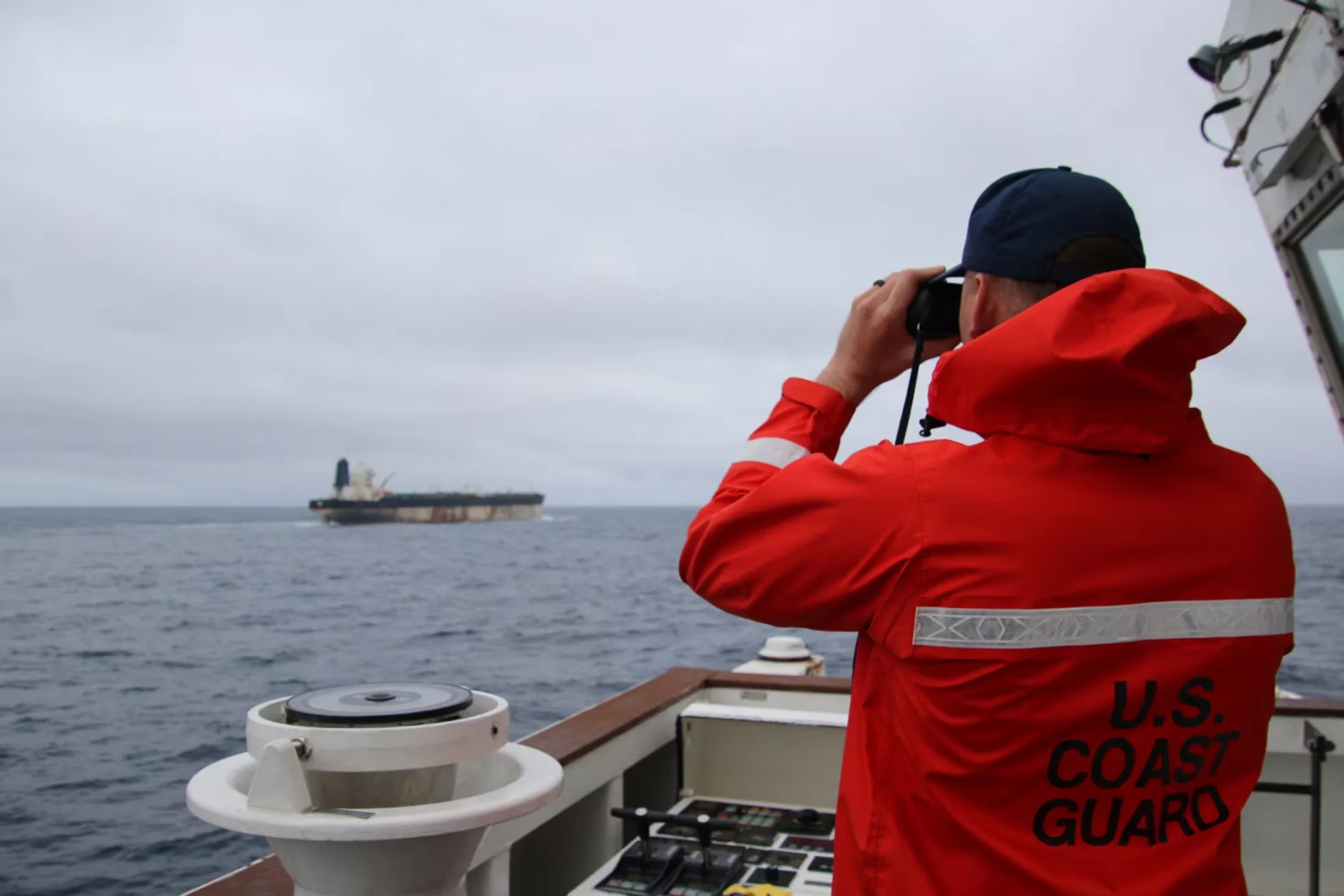
On January 7, U.S. forces detained two tankers associated with the so-called “shadow fleet”—Bella 1 (also known as Marinera) and Sofia. Both vessels are listed under U.S. Treasury sanctions for their role in transporting sanctioned oil from Iran, Venezuela, and Russia.
The tanker Sofia, sailing under the Panamanian flag, was stopped in international waters of the Caribbean Sea as part of the U.S. operation dubbed “Southern Spear.” Officially, its stated aim is the dismantling of “criminal and illegal maritime trade networks,” but in practical terms it amounts to a naval blockade of Venezuela. Following the detention, the vessel was placed under U.S. Coast Guard escort and diverted to a U.S. port.
Bella 1, also operating under the Panamanian flag, entered the Caribbean Sea as early as December 20. The U.S. Coast Guard ordered the crew to stop for inspection, but the vessel ignored the command, turned around, and attempted to break into the Atlantic. Several U.S. ships began pursuing it.
During the chase on December 30, the tanker changed its flag—from Panamanian to Russian—and was entered into Russia’s maritime register under the name Marinera. The following day, Moscow sent Washington an official note demanding that the pursuit be halted. Several Russian naval vessels, including a submarine, moved to intercept the tanker. These steps affected the situation only temporarily—the United States postponed a forcible interception but did not discontinue surveillance of the vessel.
The final interception took place in the afternoon of January 7 in waters between Iceland and the British Isles. A U.S. boarding team was deployed onto Bella 1/Marinera from a helicopter. Russian vessels were nearby but did not intervene.
Since the imposition of the naval blockade of Venezuela, vessels linked to Russia have made several attempts to circumvent it. In November, the tanker Seahorse, sailing under the Cameroonian flag and carrying naphtha—an oil product used to dilute heavy crude during transport—encountered the U.S. destroyer Stockdale while en route from Cuba to Venezuela. The destroyer attempted to block its passage, but Seahorse executed a series of sharp maneuvers, managed to evade interception, and reached its destination. Shortly thereafter, another shipment of naphtha was delivered to Venezuela by the tanker Vasily Lanovoy, sailing under the Russian flag, without any interference.
On December 10, U.S. forces detained the tanker Skipper, which had departed Venezuela carrying a cargo of 1.8 million barrels of oil. The vessel is under U.S. sanctions and was sailing under the flag of Guyana, although it is not listed in that country’s maritime register. According to U.S. authorities, Skipper is part of a “shadow fleet” controlled by Viktor Artemov—a Ukrainian citizen residing in Switzerland—and serves Iranian interests.
Following the detention of Skipper, the Trump administration announced additional sanctions against Venezuela and stated that it no longer intended to allow tankers either into or out of the country. As early as December 20, the U.S. Coast Guard stopped the tanker Centuriz, sailing under the Panamanian flag and carrying a cargo of oil, despite the fact that the vessel does not appear on any sanctions lists. The pursuit of Bella 1 also began that same day.
After the interception of Bella 1, Russian authorities said they were “closely monitoring the reports” and demanded that the United States “refrain from obstructing the swift return home of Russian nationals from the vessel.” The crew of Bella 1/Marinera includes not only Russian citizens but also nationals of Ukraine and India.