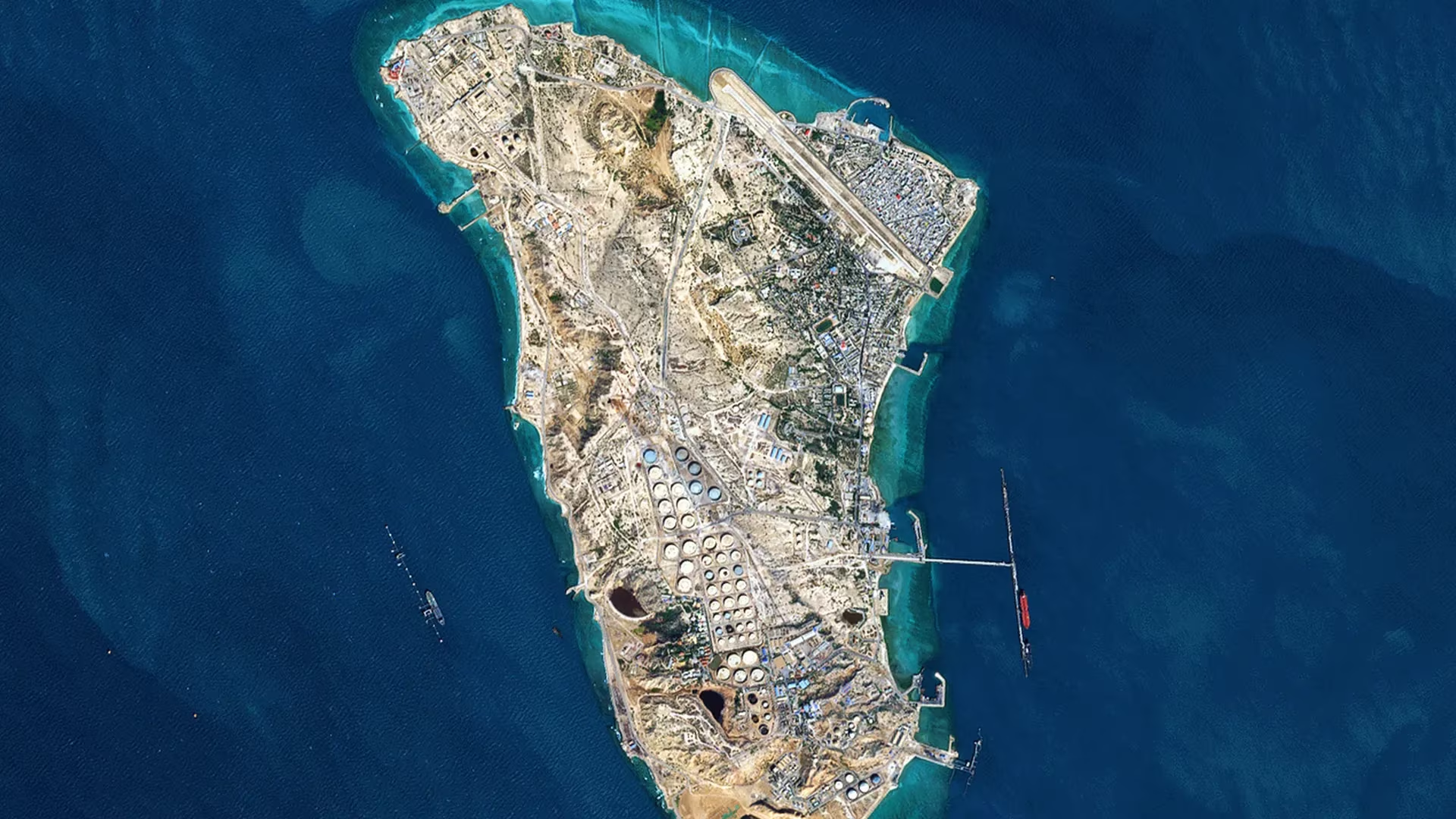
The administration of Donald Trump is considering options to occupy or blockade Iran’s Khark Island in an effort to force Tehran to reopen the Strait of Hormuz, Axios reported, citing four sources familiar with the discussions.
For Trump, this is a central objective: ending the war on his terms is impossible as long as Iran retains the ability to disrupt shipping through the strait. Against this backdrop, global energy prices continue to rise.
However, an operation to seize Khark—located 15 miles off the coast and responsible for processing 90% of Iran’s crude oil exports—would expose U.S. forces to more direct risks. For that reason, sources say, such a scenario would only be feasible after the United States further weakens Iranian forces in the Strait of Hormuz area. “We need about a month to degrade the Iranians further with strikes, take the island, and then grab them by the balls and use that in negotiations,” one source familiar with the White House’s thinking said.
If the operation is approved, it will require additional forces. Three separate Marine units are already being deployed to the region. According to a U.S. official, the White House and the Pentagon are also discussing the possibility of sending further reinforcements in the near term.
“He wants the Strait of Hormuz open. If that means taking Khark Island, then that is what will happen. If he decides to launch an invasion from the coast, then that is what will happen. But no decision has been made yet,” a senior administration official said.
Another senior official said that U.S. forces have “always had a presence on the ground in conflicts under every president, including Trump.” According to him, the issue of a ground presence has become “an obsession for the media,” but the president will do what he believes is right. He also emphasized that no final decision has been made.
Senator Tom Cotton, a Republican from Arkansas and chairman of the Senate Intelligence Committee, said Trump had shown “prudence” by not ruling out a ground invasion, though he declined to say directly whether he supports such a move. Cotton argues that the closure of the strait was an act of desperation by Iran, adding that Trump has “mountains of plans” for such a scenario.
The downside of this scenario is that, despite Khark’s critical importance to Iran’s oil sector, there is no guarantee that seizing it would compel Tehran to agree to peace on Trump’s terms.
Retired Rear Admiral Mark Montgomery said such a mission could expose U.S. forces to unnecessary risk with highly uncertain returns. “If we take Khark Island, they will simply turn off the tap somewhere else. It is not as though we control their oil production,” he said. In his assessment, a different scenario is more likely: after roughly two more weeks of strikes aimed at further degrading Iran’s capabilities, the United States would deploy destroyers and aircraft to escort tankers through the strait, removing the need for an invasion.
Trump had initially hoped to end the war before his planned trip to China in late March. But the crisis in the strait, according to two sources, forced him to postpone the visit and extend the war beyond his original timeline.
Last Friday, U.S. forces carried out large-scale airstrikes on dozens of military targets on Khark Island. American officials described the strike as a “warning shot” intended to push Iran to reopen the strait. At the same time, it served as a preparatory phase: the strikes were meant to degrade Iran’s military capabilities on the island and lay the groundwork for a potential ground operation.
“We can destroy that island at any moment we choose. I call it a little island just sitting there, completely exposed. We destroyed everything there except the pipes. We left the pipes because it would take them years to rebuild,” Trump said on Thursday.
The same day, he told reporters that he was “not going to send troops anywhere,” but immediately added: “And if I were, I certainly wouldn’t be telling you about it.”
Behind the scenes, according to three sources, the option of occupying the island with ground forces is indeed being seriously considered. Another possible scenario is a naval blockade aimed at preventing tankers from reaching the island. One source said Pentagon lawyers have already been brought in to assess the legality of such potential steps.
In the coming days, a Marine expeditionary force of 2,500 troops will arrive in the region. Two additional units of comparable size are also being deployed. The White House and the Pentagon are discussing the possibility of further reinforcements beyond that, but no final decision has been made. Newsmax and Reuters were the first to report on the planned buildup.
At the same time, one source cautioned that the Marines may have other missions beyond Khark, including the possible evacuation of U.S. embassy personnel in the region if necessary.