China’s military activity around Taiwan has become systematic over the past year: combat aircraft flights into the island’s air defense identification zone and rehearsals of coercive pressure have shifted into a regular pattern. At the same time, skepticism is growing in the United States toward the previous model of deterrence based on political signaling and ambiguous commitments. In Washington, the prevailing view increasingly is that in the coming years Taipei must rely primarily on its own military readiness rather than on allied declarations.
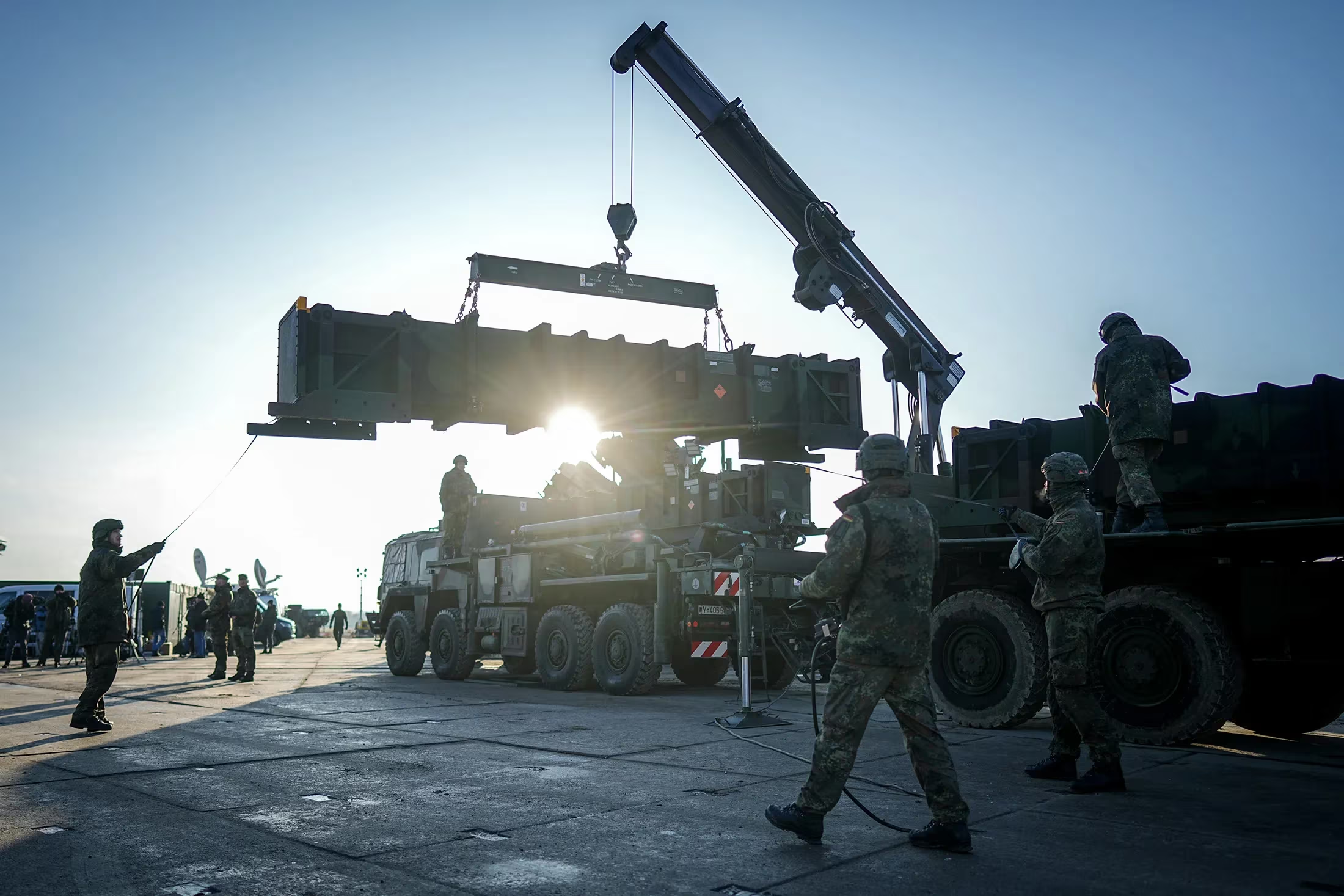
The United States has approved an $11.1bn arms sale to Taiwan—the largest package of its kind amid intensifying pressure from China and Taipei’s need to prepare for a potential use-of-force scenario. According to the decision announced by the State Department on Wednesday, the package will include Himars multiple-launch rocket systems, howitzer artillery, drones, Javelin anti-tank missiles, and other weapons.
The deal could undermine the tentative thaw in relations between Washington and Beijing. It was approved less than two months after a meeting between Donald Trump and Xi Jinping in South Korea, where the leaders agreed to a truce in the trade confrontation between the world’s two largest economies. Tensions between China and Taiwan, however, remain. Beijing regards the island as its territory and has repeatedly stated its readiness to establish control by force if Taipei continues to resist political pressure.
In recent years, the People’s Liberation Army has stepped up military activity around Taiwan, including regular aircraft flights into a buffer zone declared by Taipei. For decades, the United States has adhered to a policy of “strategic ambiguity” regarding the extent to which it would defend the island in the event of an attack. US intelligence and military officials have previously said that, in their assessment, Xi Jinping has instructed the PLA to be ready for an invasion of Taiwan by 2027.
Former president Joe Biden repeatedly stated that the United States would defend Taiwan in the event of a Chinese invasion. Donald Trump has taken a more cautious stance, insisting that Taipei increase its own defense spending and raise military readiness.
Last month, Taiwan’s president Lai Ching-te pledged to allocate NT$1.25tn ($40bn) for arms procurement over the next eight years—the largest special defense budget in more than 30 years. Taiwanese authorities said part of the funds would be directed toward the joint development of defense systems with the United States. Lai also said he intends to strengthen the island’s defensive capabilities to deter any threats from China.
Karen Kuo, a spokesperson for Taiwan’s presidential office, said the arms deliveries “demonstrate close ties” between Taiwan and the United States, stressing that the island would continue to bolster its defenses both militarily and at the societal level. According to William Yang, an analyst at the International Crisis Group, the new arms package will “help reinforce Taiwan’s confidence in the Trump administration’s commitment” to its defense and could “reduce rising anxiety” caused by “mixed signals” since Trump’s return to the White House. He noted that the shipment includes systems “tested in combat in Ukraine and critical to building Taiwan’s asymmetric capabilities” and to sustaining deterrence in the Taiwan Strait.
China’s foreign ministry sharply condemned the announcement of the deal, warning that Taiwan is a “fundamental red line” in relations with the United States. “US attempts to facilitate so-called ‘Taiwan independence’ through arms sales will only produce the opposite effect, and the strategy of using Taiwan to contain China is doomed to fail,” the ministry said.

A Military Parade in Beijing Gathered China’s Allies and Showcased New Weapons
Xi Jinping Declared That the Country Will Not Accept U.S. Dictates and Warned Taiwan
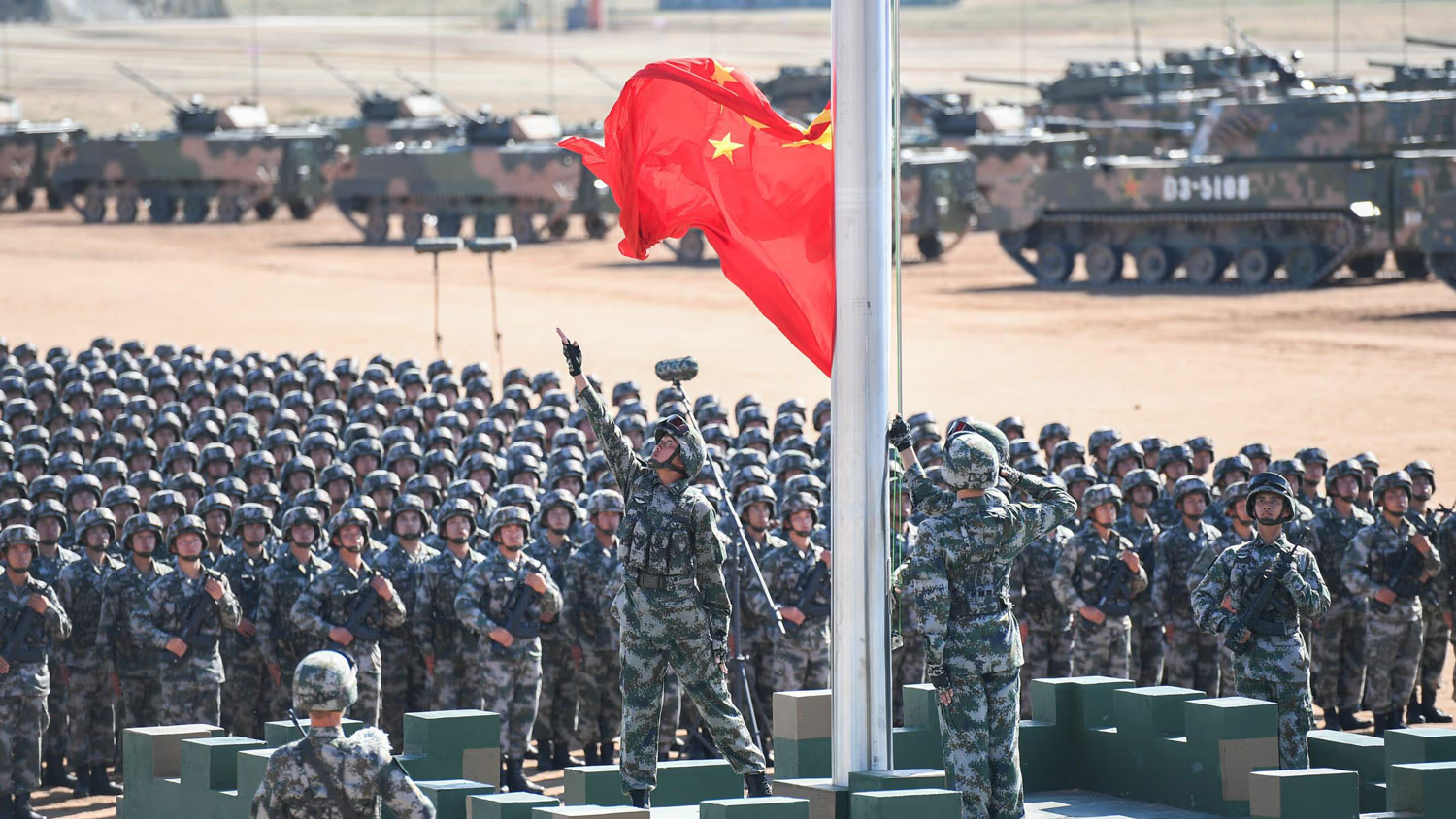
China Rehearses a Blockade of Taiwan
Beijing is Pressuring the Island Through Drills, Laws, and Economic Leverage, Aiming to Break Its Resistance by 2027—Before the U.S. Can Intervene
This year, Taiwan conducted large-scale and more realistic civil defense drills for the first time, rehearsing wartime scenarios. Its annual Han Kuang live-fire exercises were also expanded to include a greater number of urban defense episodes. The drills involved Javelin anti-tank systems and, for the first time, US-supplied Himars rocket systems.
Against this backdrop, Taiwan’s defense ministry this week moved to tighten conscription rules, seeking to narrow the list of service exemptions. The step followed a series of scandals involving public figures who falsified medical records to evade the mandatory one-year military service.
As Rupert Hammond-Chambers, president of the US-Taiwan Business Council, noted, “this bundle of notifications … is a response to the threat from China and reflects Mr Trump’s demand that partners and allies take greater responsibility for their own defense.” According to him, there remains a “prioritization of platforms and munitions designed to counter an attack on the island under a scenario resembling a D-Day landing.”