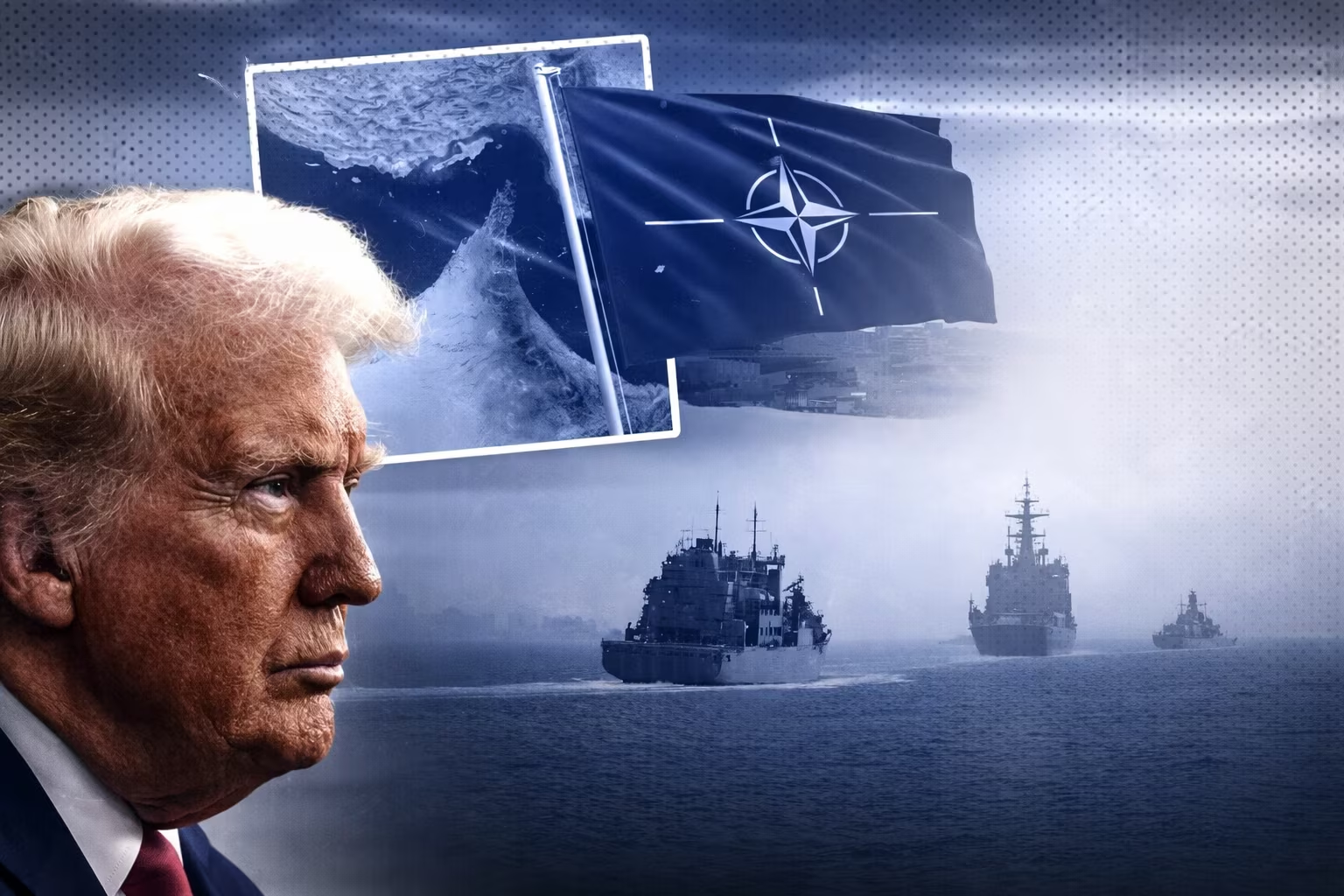
The United Kingdom, France and Germany have rejected Donald Trump’s demand that they join a naval operation to reopen the Strait of Hormuz, despite his warning that refusal could mean a “very bad future” for NATO.
Europe’s three largest military powers said on Monday, March 16, that they do not intend to be drawn into a direct confrontation with Iran. At the same time, they voiced concern over the closure of the strait—a critical route through which roughly a fifth of the world’s oil and gas supplies normally pass.
British prime minister Sir Keir Starmer said the country “will not be drawn into a wider war”. He added that deploying Royal Navy vessels to the Persian Gulf is not under consideration while the conflict continues.
German chancellor Friedrich Merz, who had previously backed the US and Israeli strikes on Iran, stressed on Monday that “NATO is a defensive alliance, not an alliance for interventions”. Germany’s defence minister Boris Pistorius added: “This is not our war; we did not start it”.
The stance taken by European countries could lead to a serious political confrontation with Trump. His war against Iran has already triggered a series of missile and drone attacks across the Persian Gulf and sharply jolted global energy markets—since the start of the year, prices for oil and European natural gas have risen by roughly 70 percent.
On Sunday Donald Trump demanded that NATO allies help reopen the Strait of Hormuz, which has been effectively closed to almost all shipping since late February, after the war began.
“It is only natural that countries benefiting from the strait should help ensure that nothing bad happens there,” Trump said. “If there is no response or the answer is negative, I think that will be very bad for the future of NATO.”
On Monday the United Kingdom, France and Greece—three countries with some of the alliance’s largest naval forces—declined to commit to participating in an operation in the strait while the conflict continues. Japan and Australia have taken a similar position.
Trump, however, said that “many countries” had already “told me they are on the way”, and suggested that nations long protected by the United States would appear ungrateful if they declined to join the mission.
“Some are showing great enthusiasm, and some are not,” Trump said.
“There are countries we have helped for many, many years, protecting them from terrible external threats—and they have not shown much enthusiasm. For me, the level of enthusiasm matters.”
European officials emphasise that NATO is a defensive alliance, and that the strikes on Iran and its nuclear programme constitute a “war of choice” launched by the United States and Israel. At the same time, European governments are keen to preserve the Trump administration’s support for Ukraine in its confrontation with Russia and remain reliant on the American role within the alliance’s security system.
Europe’s energy system is still recovering from the loss of Russian supplies that were cut off following Vladimir Putin’s full-scale invasion of Ukraine in 2022.
In early trading on Monday, oil prices rose to $106.50 a barrel before slipping slightly—to $102.35. As recently as January, oil had been trading at around $60 a barrel.
Over the past two weeks Iran has struck at least 19 vessels in the Persian Gulf, killing 13 seafarers. Fuel storage tanks and other energy infrastructure have also been targeted in the attacks.
The total number of strikes on Gulf countries since the conflict began has surpassed 3,400.
More than half of all attacks have targeted the United Arab Emirates. On Monday Dubai International Airport was briefly forced to suspend operations after a drone strike.
Keir Starmer said European allies want to develop a “credible and workable plan” to protect the Strait of Hormuz—with the participation of Gulf states and with support from the United States.
At a meeting in Brussels, EU foreign ministers discussed how member states might assist in reopening the Strait of Hormuz. However, all signalled that there is little appetite for steps that could lead to a direct confrontation with Iranian forces.
Trump’s demand drew sharp criticism from European ministers. Luxembourg’s foreign minister Xavier Bettel described his approach as “blackmail”.