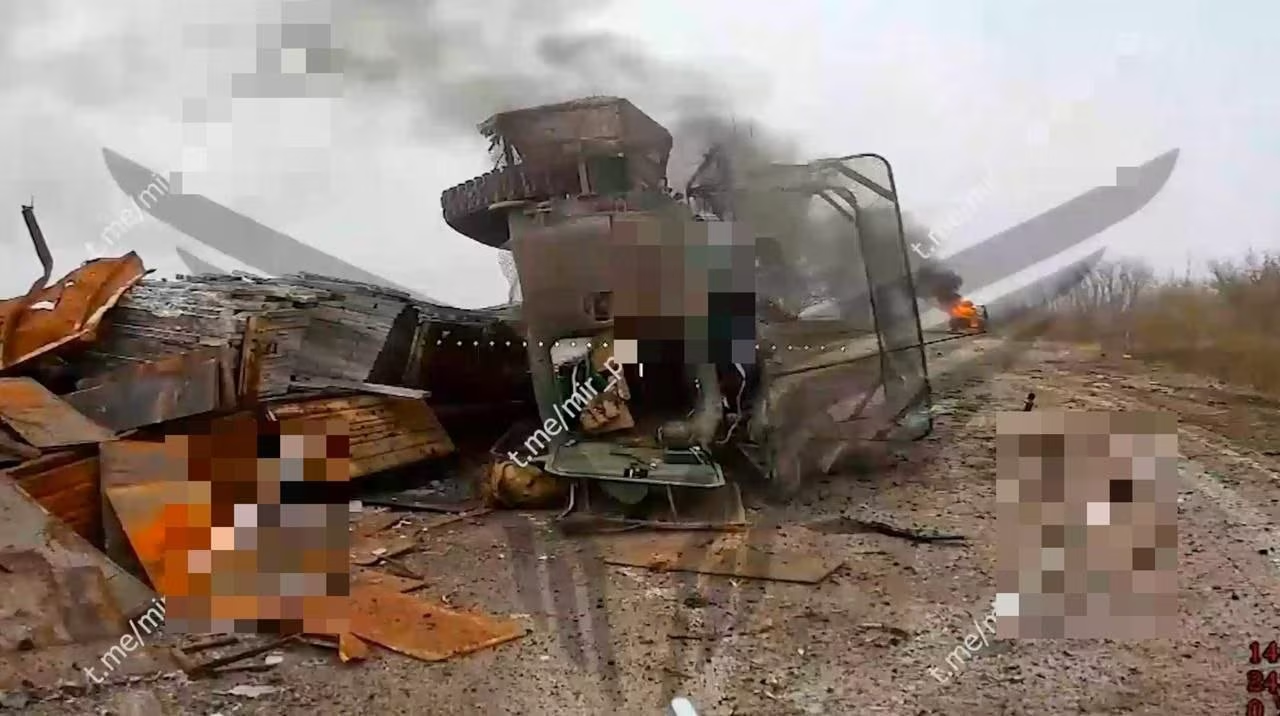
On March 1, the Deep State project reported that a column of the 425th Skelya Assault Regiment had been struck while advancing toward Pokrovsk. According to its account, the unit was detected and destroyed by Russian forces while still on the move, before reaching the city.
According to the outlet, the column never made it to Pokrovsk—it was detected and hit in transit. Deep State also says Russian forces are “actively pushing into” nearby Hryshyne and are trying to establish positions on the northern approaches to the city. It separately stresses the complete dominance of Russian FPV drones in the Pokrovsk area.
“The result—two BMP-2 infantry fighting vehicles and one Abrams tank were lost,” DS states.
According to these reports, the equipment was destroyed before it could reach the city, and there were also casualties among the personnel.
Defense Minister’s adviser Sternenko confirmed the deaths of Ukrainian servicemen. “I will not post footage showing the bodies of our soldiers. Unfortunately, there are many of them there,” he said, publishing excerpts from a Russian video of the strike on the column.
He described what happened as “a crime” and called for the regiment’s command to be held accountable. In his view, such tactics under conditions of widespread drone warfare inevitably lead to heavy losses.
“In conditions of total drone dominance, columns become easy targets, and the enemy suffers heavy losses. But what should be done about Ukrainian commanders who do the same?” Sternenko wrote.
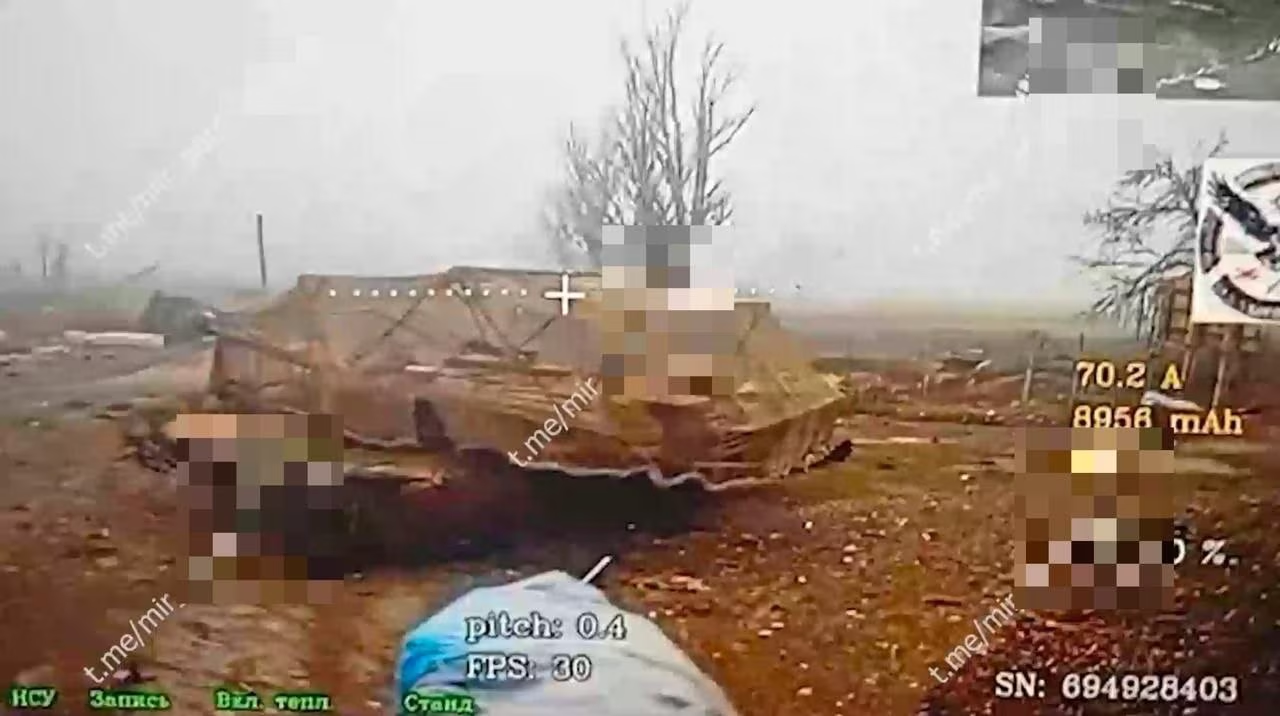
The 425th Skelya Regiment rejected those claims, saying the conclusions were based on material from Russian sources that had been “edited together from different days and different sections of the front.”
The unit said that on March 31 it had carried out a counterattack aimed at holding positions in Pokrovsk and preventing encirclement. According to its account, the assault group accomplished its mission, secured its position at the site, and remains engaged in combat.
The regiment says that four pieces of armored equipment were hit during the operation, while its losses amounted to two killed. “All crews were evacuated, and the assault group continues to carry out its mission,” the statement said.
The regiment also appealed to Sternenko, urging him to mobilize and join the fighting.
“If Mr. Sternenko knows how to organize assault operations against enemy strongholds in Pokrovsk, we are ready to give him—as well as all other Ukrainian men and women who have not yet been mobilized—the opportunity to put that experience into practice as part of our unit and to take direct part in the defense of the country,” Skelya said.
Russian sources have also reported the attack, claiming it took place between Serhiivka and Hryshyne. According to their account, five Ukrainian vehicles were hit, including an Abrams tank, and the assault itself was repelled.
A source in Ukrainian military circles confirmed that there were losses during the assault operations, but believes the cause did not lie in the actions of specific commanders.
“Skelya is one of Ukraine’s best-prepared assault units. They operate professionally. But under conditions of drone dominance, any assault operation leads to significant losses and either ends in failure or produces only marginal gains that do not affect the broader situation on the front. That applies to both Russian and Ukrainian forces. Which raises the question—are such attacks justified? But that question should be directed not at Skelya, but at those who formulate the missions. And that is not even Syrskyi. Decisions on offensive operations are taken at a higher military-political level—so that later they can show Western media advances measured in kilometers or publish footage of the Ukrainian flag on the outskirts of Pokrovsk and Myrnohrad, which have in effect already been lost,” the source said.