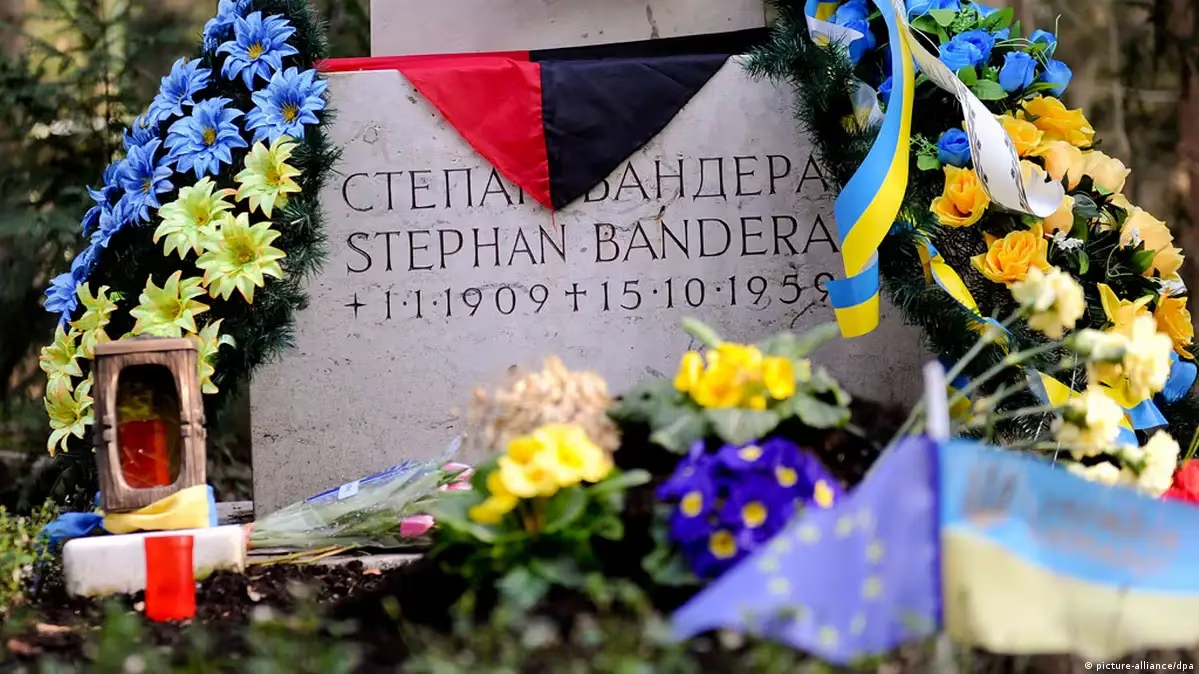
After the reburial in Kyiv of Andriy Melnyk’s remains, Ukrainian authorities are considering transferring the remains of other figures from the Ukrainian nationalist movement to Ukraine, though in the case of Stepan Bandera, relatives continue to oppose the move.
In March, Kyrylo Budanov, head of Ukraine’s military intelligence agency, announced plans to create a “pantheon of outstanding Ukrainians.” The initiative envisions bringing back to Ukraine the remains of prominent Ukrainian figures buried abroad.
Later, Ukraine’s Foreign Ministry said that 98 graves in 21 countries had already been identified as potentially linked to future reburials. Among those whose remains Kyiv would like to return are OUN leaders Stepan Bandera, buried in Germany, and Yevhen Konovalets, buried in the Netherlands.
“Our Ukrainian heroes of different eras, who defended the idea of independence, fought for our state, and are buried in Europe, in America, in different countries—we are bringing them home. Decisions are being prepared regarding Colonel Yevhen Konovalets and other prominent historical figures,” Volodymyr Zelensky previously said.
However, the issue of Bandera’s reburial remains controversial. Relatives of the OUN leader publicly opposed transferring his remains to Ukraine as far back as 2010.
At the time, Bandera’s grandson said such a decision should “contribute to the consolidation of Ukrainian society, not its division.” According to him, the family also did not want the issue of reburial to be used “for party interests or political purposes.”
Ukrainian blogger Myroslav Oleshko said after Melnyk’s reburial ceremony that Bandera’s relatives still do not consent to transferring the remains.
“Since Bandera still has living relatives, they refused to let these corpse-eaters rebury him and use his body for publicity. But of course propagandists won’t talk about that,” he wrote.
The possibility of transferring Bandera’s remains was also discussed in 2024, but Ukrainian media reported at the time that the process was halted because of family concerns that the grave could become a target for attacks or vandalism by opponents of the OUN.