After Verkhovna Rada lawmaker and human rights commissioner Dmytro Lubinets addressed parliament with a statement on systemic violations of citizens’ constitutional rights by territorial recruitment centers (TCCs), a sweeping public campaign has unfolded in Ukraine aimed at justifying the actions of the TCCs—including unlawful detentions, violence, and the use of force against civilians.
According to Lubinets, the number of complaints about TCC actions has risen sharply in recent years. In 2022, the Office of the Commissioner received just 18 complaints; in 2023, that figure climbed to 514. In 2024, the number rose to 3,312, and in 2025 it reached 6,127. The ombudsman stressed that these are not isolated incidents but a systemic trend that persists and is intensifying.
Speaking in the Verkhovna Rada, Lubinets cited specific cases. In the Kharkiv region, TCC officers broke a lawyer’s leg. In the Volyn region, TCC staff held representatives of the ombudsman’s office—who had arrived to conduct an investigation—locked inside for an hour.
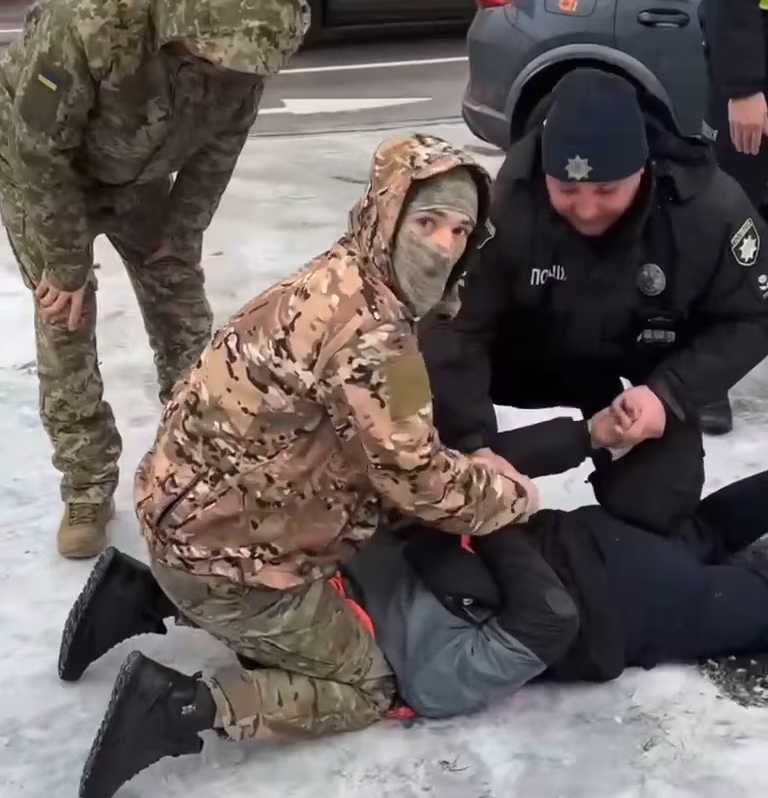
TCC officers in Chernivtsi forcibly pull a passenger out of a car and fire shots in his direction.
TCC officers detain a civilian, an action not permitted by law.
He also described cases in which conscripts with serious spinal conditions were formally declared fit for service: after passing the military medical commission, they were physically unable even to put on body armor.
A separate set of statements addressed the operating methods of the TCCs. Lubinets noted that staff members often act without identification and conceal their faces, which constitutes a direct violation of the law. Such practices, he said, undermine the legal basis of mobilization procedures and create fertile ground for abuse.
The ombudsman also recalled that TCC personnel have no legal authority to detain, arrest, or hold citizens, as such powers are not granted to them by law. Nevertheless, he said, cases have been documented of unlawful seizure of personal belongings, including mobile phones.
As a result, the human rights commissioner’s address to parliament consisted not of general assessments but of concrete figures, recorded complaints from citizens, and specific examples of TCC actions that he explicitly classified as violations of constitutional rights.
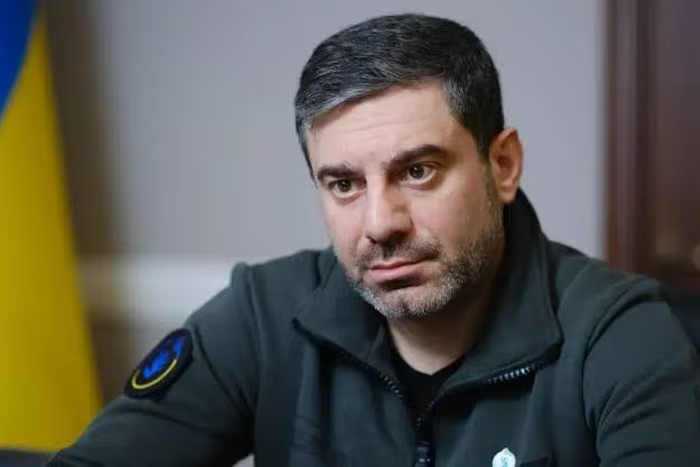
Dmytro Lubinets.
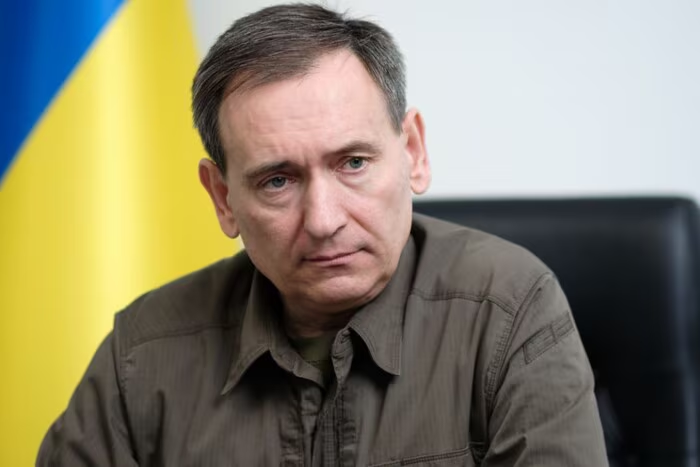
Fedor Venislavskyi.
Almost immediately after the human rights commissioner’s address in the Verkhovna Rada, statements began circulating in the public sphere aimed at discrediting the very facts of the violations and shifting the focus away from TCC actions toward “external information influences.”
One of the most telling interventions came from lawmaker Fedor Venislavskyi, a member of the parliamentary majority from the Servant of the People party. He said that discussions of demobilization during wartime were “nonsense” and had no historical precedent. According to him, “never in the world” had demobilization been discussed under such conditions.
A central element of his position was the claim that most high-profile videos and reports about TCC actions allegedly do not reflect reality. Venislavskyi publicly stated that a significant share of the scandals had been “created by artificial intelligence.”
In his version, the issue involves “several hundred cases a month”—the maximum number of incidents capable of provoking a negative public reaction. At the same time, the lawmaker stressed that, according to information allegedly held by the relevant parliamentary committee, Russia is actively using artificial intelligence technologies to create “quasi-narratives” of conflict situations surrounding the TCCs. He acknowledged that “far from all” such cases could be generated, but insisted that a significant share of them is the result of an external information operation.
Thus, instead of responding to the facts documented by the ombudsman—the surge in complaints, specific cases of violence, unlawful detention, and abuse of authority—a narrative was introduced into the public sphere portraying the problem as largely artificial and technologically engineered.
Against this backdrop, attention also turned to the lawmaker’s own personal circumstances. Member of parliament Maryana Bezuhla, in one of her public posts, pointed out that Venislavskyi’s sons are not subject to mobilization. In particular, she said that the lawmaker’s elder son, born in 1992, holds a position at Ukraine’s Ministry of Foreign Affairs, which shields him from conscription. The information in her post was presented without evaluation and related solely to the sons’ status.

Venislavskyi with his son, who is not serving in the Armed Forces of Ukraine.
At the same time, alongside politicians’ statements, posts by private individuals began appearing in the public sphere that justified the use of force by the TCCs and called for direct physical intervention by citizens.
In one such post, a self-described volunteer reflects on what should be done if a person runs from TCC officers. The text asserts that flight is possible only in cases of deliberate lawbreaking and draft evasion, and treats the very act of running as proof of guilt.
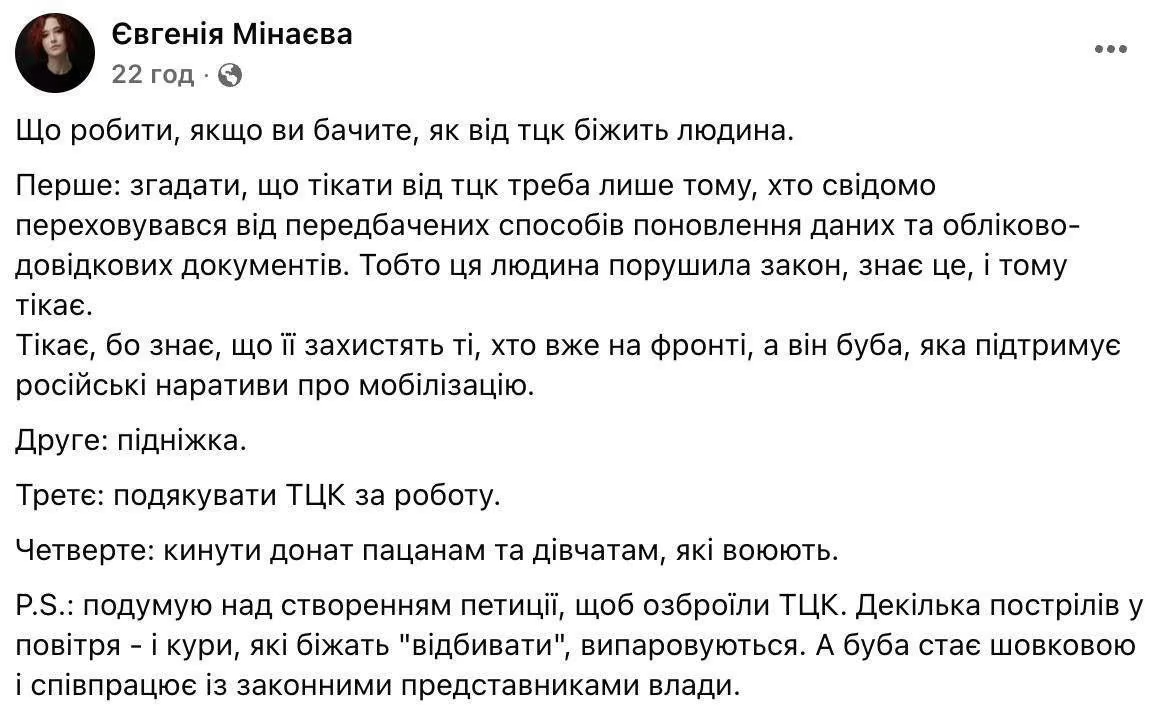
Screenshot of a post by Yevheniia Minaieva.
The author then proposes specific actions. Among other things, she explicitly writes about the need to trip a person who is running away. After that, she suggests thanking TCC officers for their work and making a donation to the military.
In a postscript, the author states her intention to initiate a petition proposing that the TCCs be armed. As justification, she cites the possibility of firing shots into the air to “calm” citizens and compel them to cooperate.
At the time the publication circulated, the author’s Facebook profile was closed, while the text itself was being widely shared in the form of screenshots.
So far, neither the surge in complaints nor the specific cases of violence cited by the ombudsman have led to any revision of TCC operating practices. Instead, a rhetoric is taking hold in the public sphere in which unlawful actions are justified as necessary, and responsibility for what is happening is steadily shifted from institutions onto individual citizens.