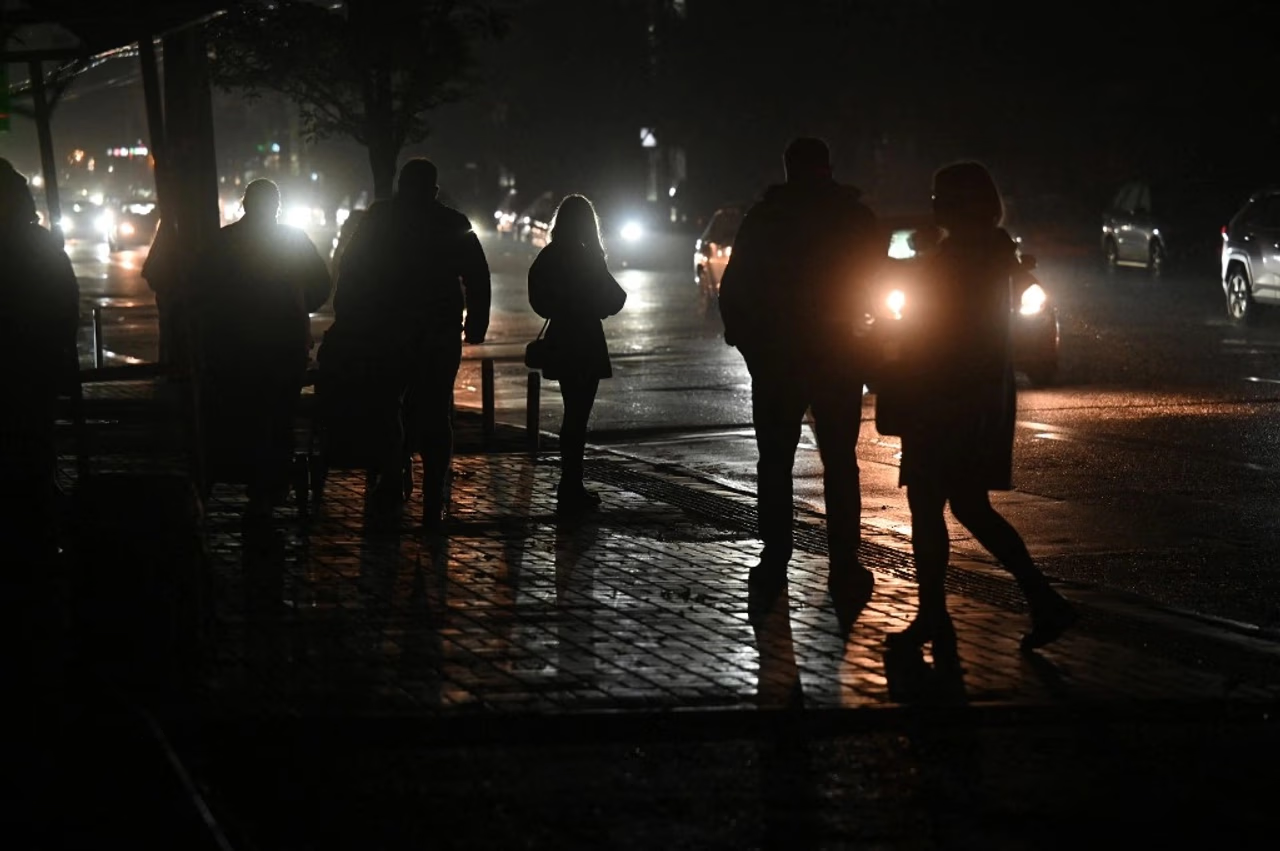
Ukraine is experiencing a sweeping power-supply crisis that has stretched on for weeks following sustained Russian strikes on critical infrastructure. Damage to energy facilities has proved so extensive that repairs are moving slowly, leaving entire regions dependent on strict blackout schedules.
Ukrainian officials avoid using the word “blackout,” wary of projecting an image of a country under extreme strain—at a moment when Kyiv and European leaders want to stress Ukraine’s ability to continue resisting Russia largely on its own. Yet the scale and duration of the disruption amount, in practice, to a full-fledged blackout.
On average, people across the country are without electricity for about 17 hours a day. Under such conditions, ordinary life becomes exceedingly difficult: household appliances and communications function only during brief windows of power, while heating and water supplies rely on backup systems that are rapidly depleted.
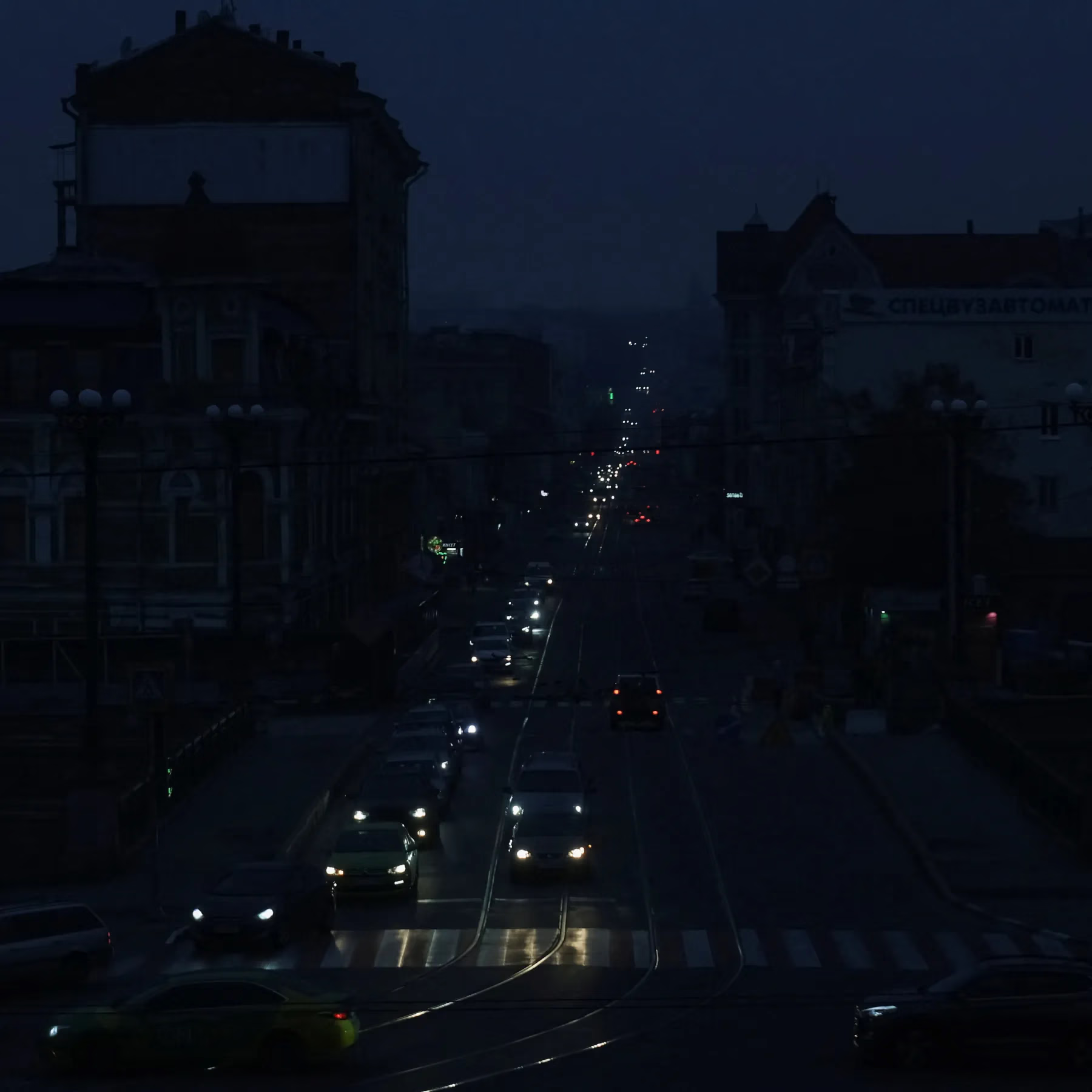
Kharkiv. November 10, 2025.
Constantly shifting outage schedules add another layer of difficulty. Updated several times a day depending on the state of the grid, they make even the most basic planning nearly impossible: the limited windows in which people can charge devices, cook, or log in to work often change at the last moment.
At the time of writing, roughly 70% of Kyiv is without electricity—a large share of its districts remain dark for most of the day. City services warn of disruptions to transport, healthcare and other essential systems.
According to Gennady Ryabtsev, head of special projects at the Psychea Research Center, the current shortfall in generating capacity reaches at least 4 gigawatts.
A source in the energy market explained that the gap between supply and demand stems from the shutdown of several nuclear power plant units that have yet to be brought back online.
«The units were taken offline because substations at several nuclear plants were damaged, including the Rivne facility, which supplies Kyiv directly. In practical terms, there is no physical way to transmit the electricity. Demand rose today due to a slight drop in temperature. Ukrenergo did not anticipate this, so during peak hours it had to introduce emergency outages, then lifted them as soon as the situation stabilized somewhat. The operator will likely have to resort to such measures in the coming days, until repairs at the substations are completed and all nuclear units are restored to operation. That will take at least two weeks, but further strikes could push the timeline back», said energy-market expert Oleg Popenko.
Another factor shaping the current crisis is the gap between plans to reinforce the energy infrastructure and what has actually been delivered. Since 2023, officials have repeatedly emphasized the need to strengthen key facilities and modernize equipment, yet much of that work remained aspirational. Anti-corruption agencies, meanwhile, documented irregularities in several projects, further slowing the sector’s preparation for new waves of strikes.
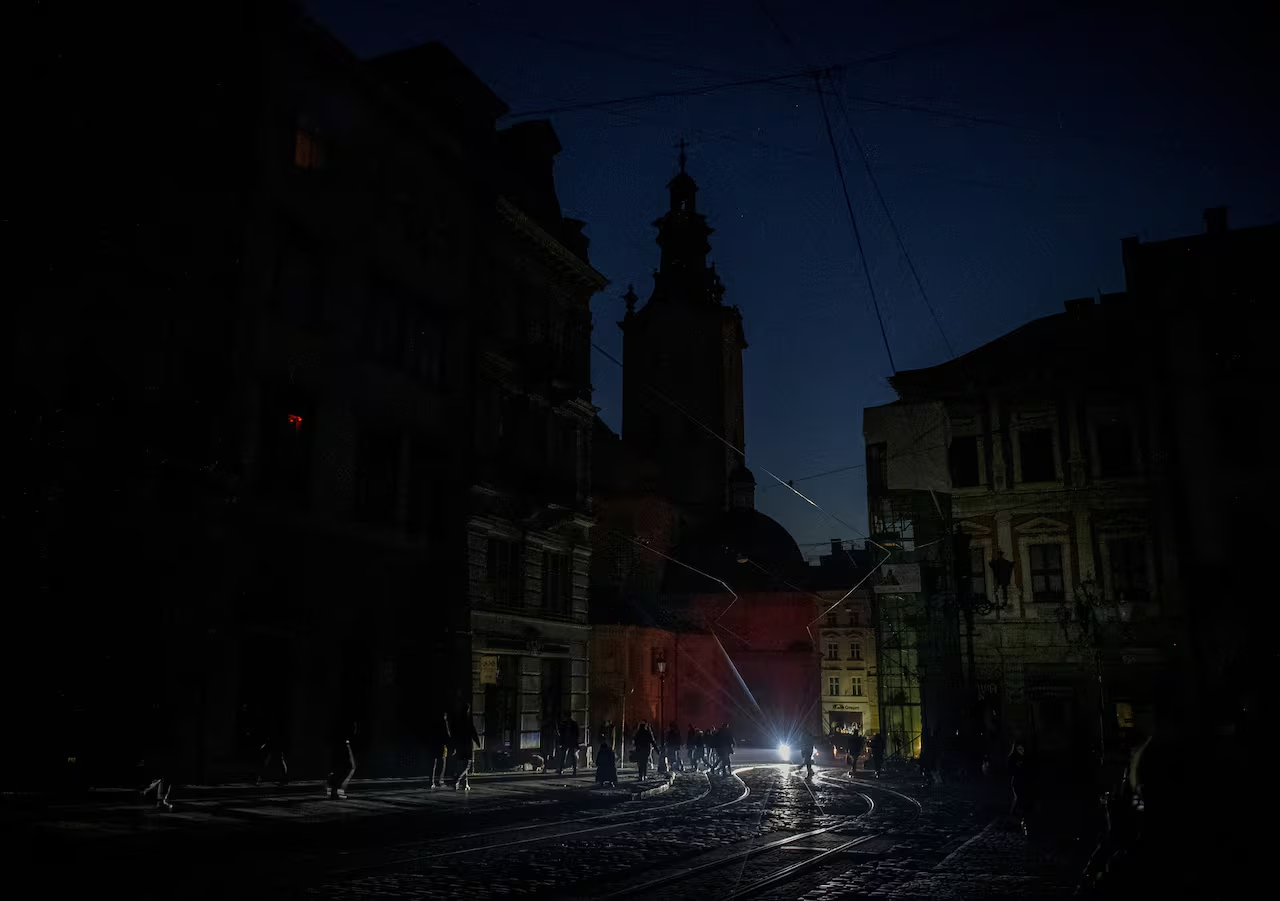
Lviv. November 15, 2025.
Yet the situation has drawn little notice from the global media. Unlike the blackouts of 2022–23, which were widely covered by international outlets, the current crisis sits largely at the edge of the world’s attention.
Given that these conditions have persisted for several weeks, many indicators now align with what is typically defined as a blackout—prolonged, large-scale outages affecting a significant portion of the country.