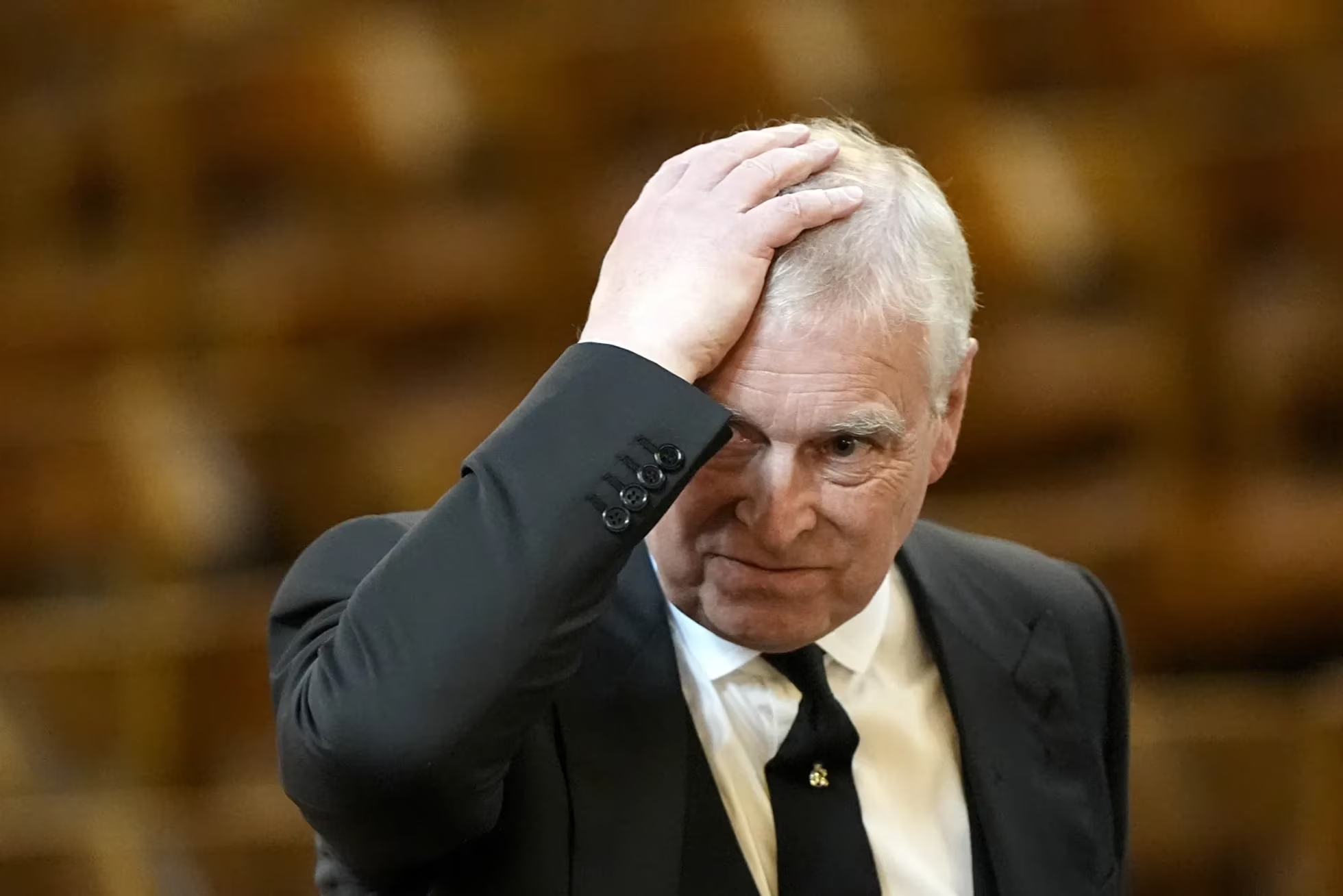
British law enforcement authorities have detained Andrew Mountbatten-Windsor—the younger brother of King Charles III—on suspicion of committing an abuse of office. Investigators are examining allegations that, while serving as the UK’s special representative for international trade and investment, he may have passed confidential information to an associate—American financier and sex offender Jeffrey Epstein. The BBC and The Guardian reported the development.
The very fact of detaining a close relative of a reigning monarch has no precedent in the modern history of the British royal family. Charles III and his entourage have refrained from public comment. Earlier in the day, the tabloid Daily Mail published photographs of unmarked vehicles and individuals in plain clothes arriving at the Sandringham estate in Norfolk, where Andrew had been living recently. They appeared to be police officers. The detention took place on his birthday—he turned 66 today.

Police vehicles at the Sandringham estate on the day Andrew Mountbatten-Windsor was detained. February 19, 2026.
Andrew Mountbatten-Windsor maintained a relationship with Jeffrey Epstein for many years. Their acquaintance dates back to the 1990s, and contacts between them continued even after Epstein was convicted in 2008 of sexual offenses against underage girls. It is also known that Epstein provided financial assistance to Andrew’s former wife, Sarah Ferguson. At the same time, Andrew himself, according to author Andrew Lownie, who wrote an unofficial biography of the duke, provided Epstein with “respectability, access to political leaders, and business opportunities.”
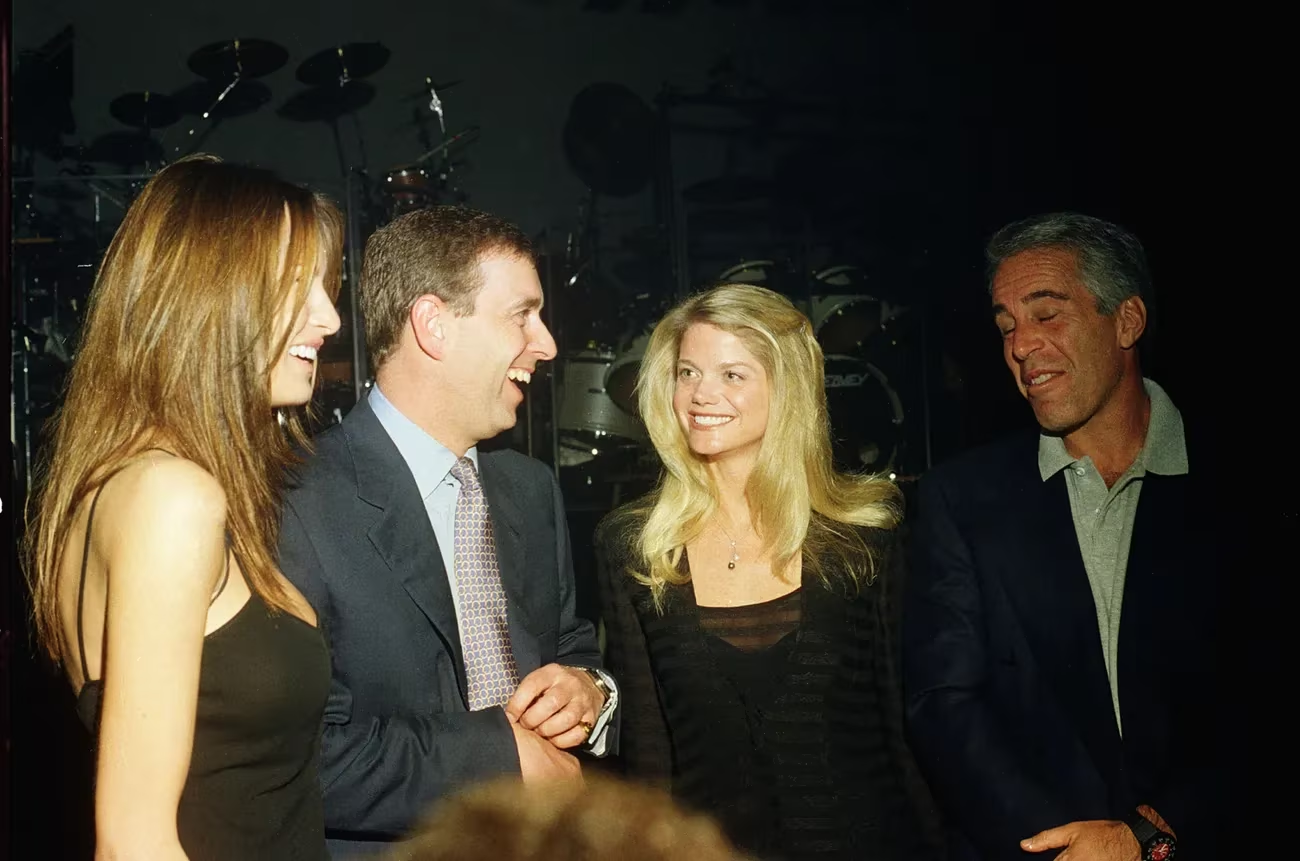
Melania Trump (left), Andrew Mountbatten-Windsor, Gwendolyn Beck, and Jeffrey Epstein at a party at Donald Trump’s Mar-a-Lago estate in Florida. February 12, 2000.
Ties to Epstein effectively brought Andrew’s royal status to an end. In 2019, following Epstein’s death, he was removed from royal duties. In 2021, amid a civil lawsuit filed by Virginia Giuffre, he was stripped of his military ranks and the title “His Royal Highness.” In 2025, after the posthumous publication of Giuffre’s memoirs, Andrew lost the title of Duke of York and definitively assumed the status of a private individual. British media reported that King Charles III chose not to take risks—the Epstein scandal was too closely associated with his brother and posed a threat to the reputation of the royal family as a whole.
Andrew’s name returned to the spotlight after the release in late January of materials from Epstein’s archives, made public by US authorities. The correspondence indicates that in 2010 Epstein offered to introduce Andrew to a 26-year-old Russian woman, describing her as beautiful, intelligent, and “reliable.” Andrew, according to the letters, responded with interest and said he would welcome such an introduction. The archive also contained photographs showing Andrew kneeling over a woman lying on the floor. When and under what circumstances the images were taken remains unknown.
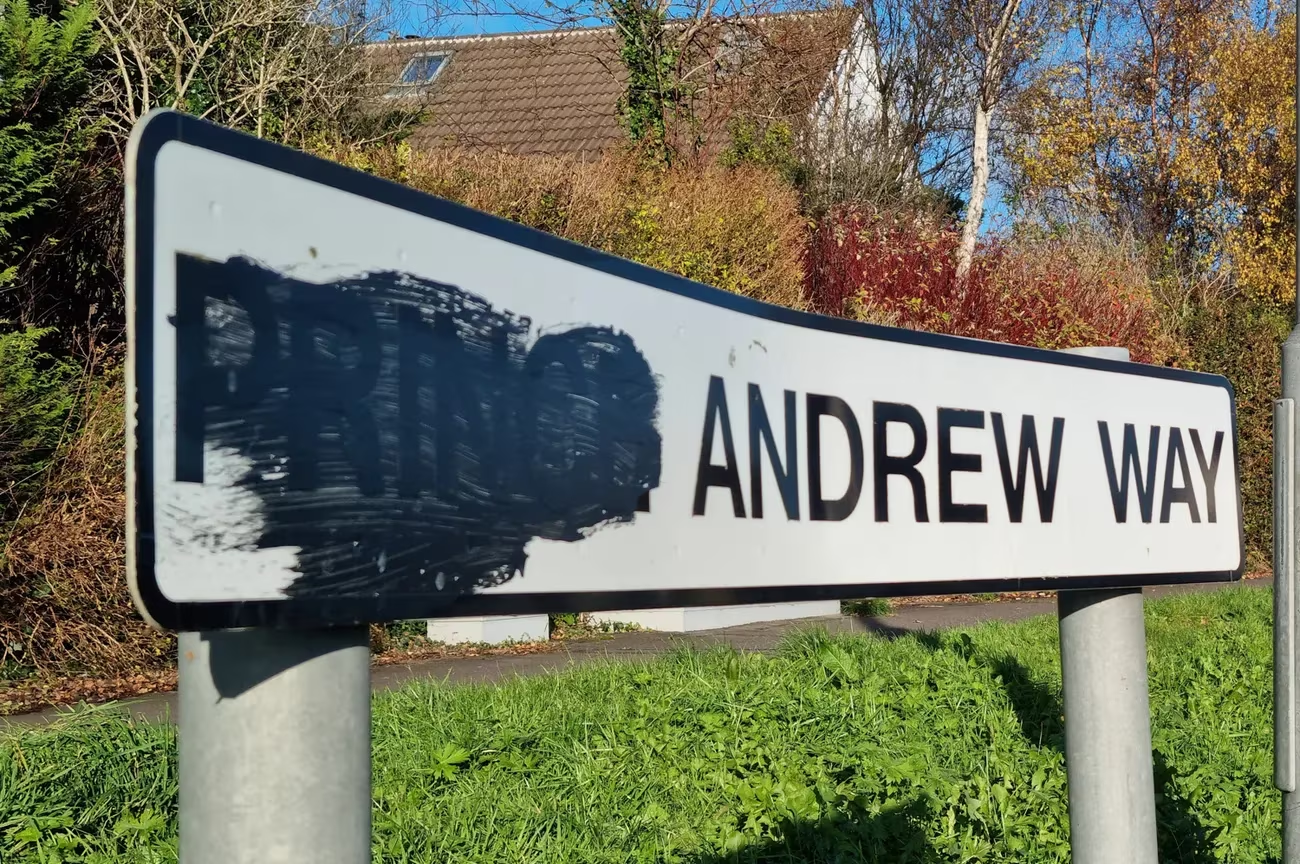
Prince Andrew Way in the Northern Irish town of Carrickfergus, named after the wedding of Prince Andrew and Sarah Ferguson in 1986. In the wake of the Epstein-and-Andrew scandal, the street is set to be renamed.
The Epstein files, made public in late January, became a key trigger for Andrew’s detention. The released correspondence includes letters indicating that in 2010 Epstein offered to introduce Andrew to a 26-year-old Russian woman, describing her as beautiful, intelligent, and “reliable.” Andrew replied that he would welcome such an introduction. The same archive also contains photographs showing Andrew kneeling over a woman lying on the floor. The date, location, and circumstances under which the images were taken remain unknown.
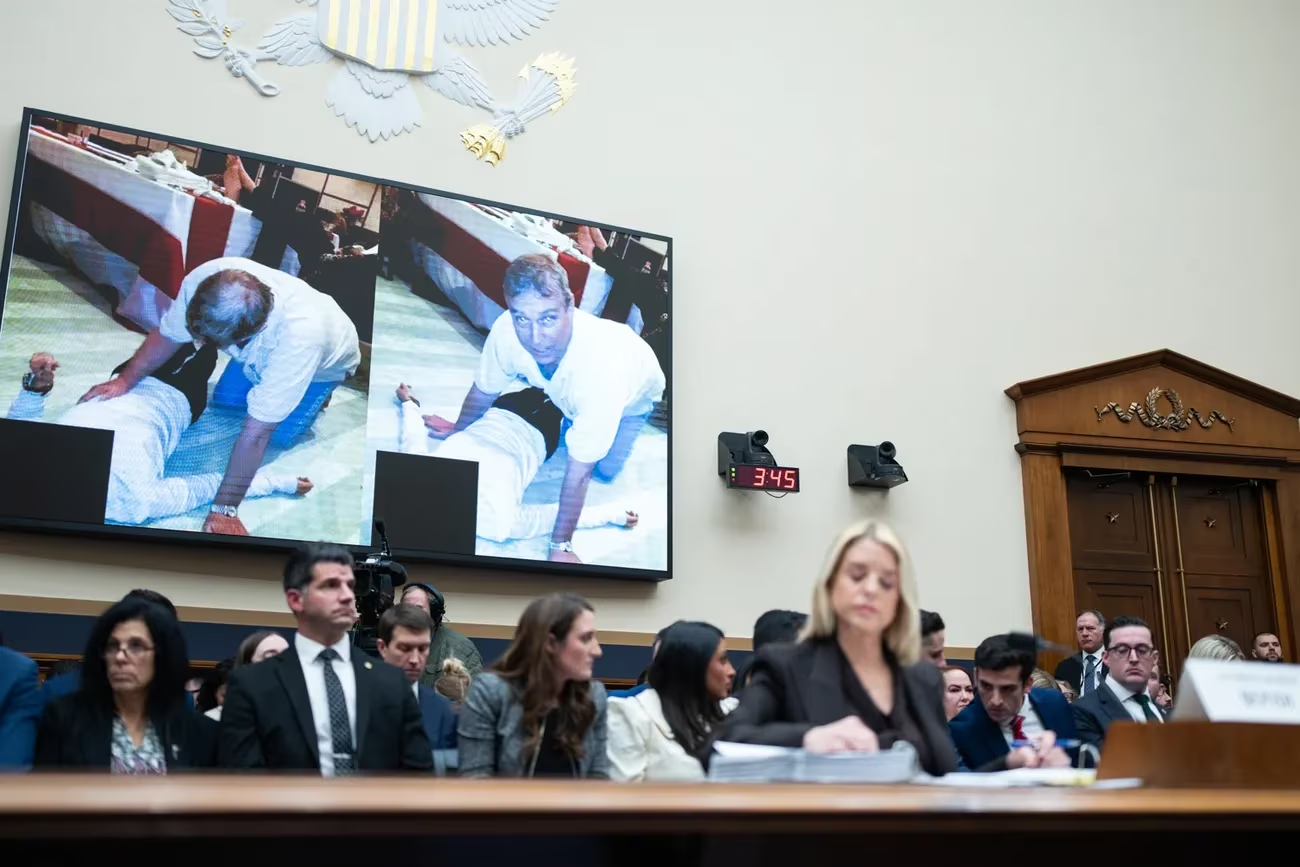
Photographs of Andrew from the Epstein archive shown during a briefing by US Attorney General Pam Bondi to Congress. It was the Justice Department that released the Epstein files.
Journalists also found indications in Epstein’s email correspondence that Andrew had shared confidential reports with him on trips to Hong Kong, Vietnam, and Singapore undertaken during his tenure as Britain’s trade envoy. In one case, Andrew forwarded a report to Epstein just five minutes after receiving it from his own aide. In another email, he shared information with Epstein about investment opportunities in Afghanistan’s Helmand province.
After the Epstein files were made public, the British monarch signaled that he did not intend to interfere with the investigation into his brother. “The King has made clear his deep concern about the ongoing allegations regarding the conduct of Mr Mountbatten-Windsor. <…> While specific claims should be addressed to [him directly], should the police make contact, we stand ready to provide support,” a spokesman for Charles III said on February 9. Shortly after the release of Epstein’s archives, the King also moved to accelerate a long-planned relocation of his brother from Windsor to the royal family’s private Sandringham estate in Norfolk. It was there that Andrew was subsequently detained.