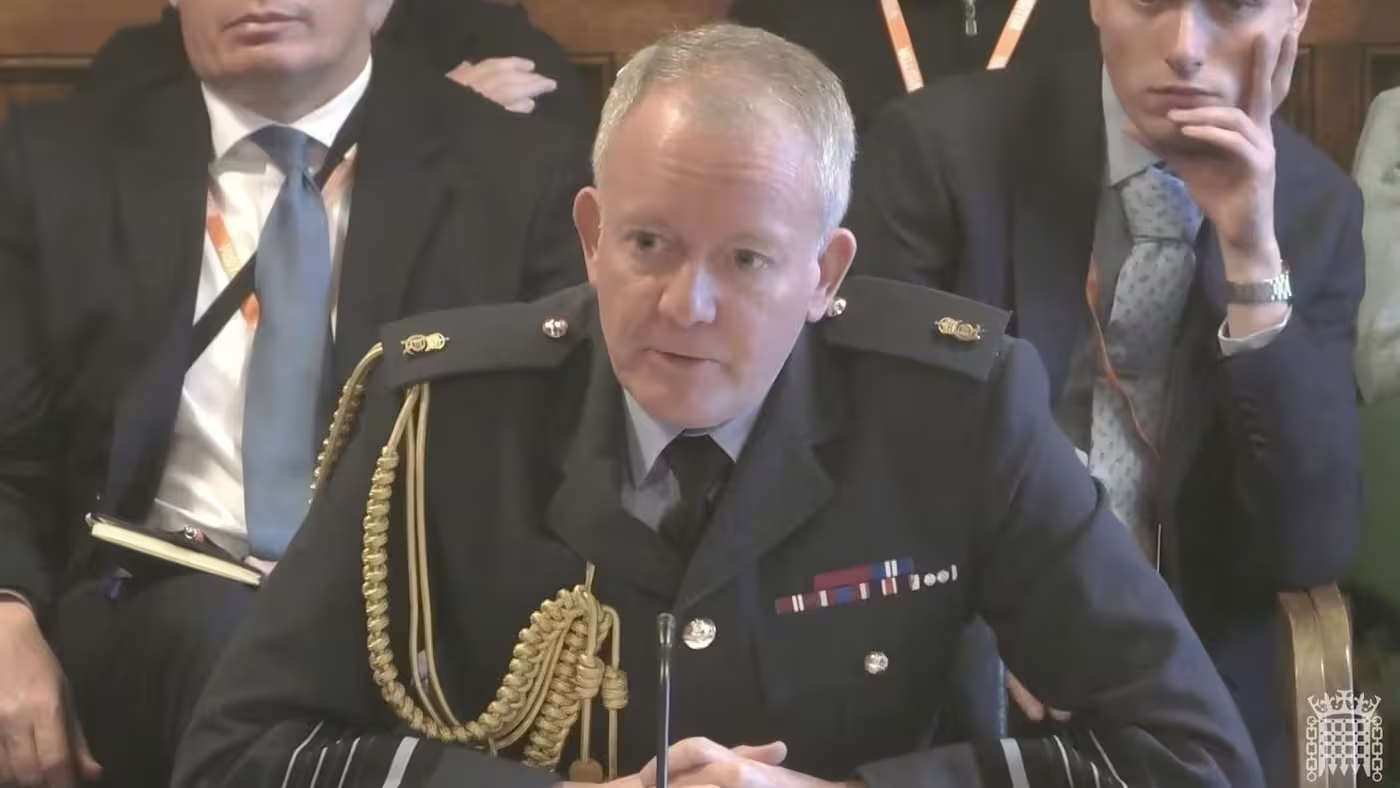
The head of the British armed forces has acknowledged that the country’s army is not prepared for a full-scale conflict “of the kind it may face,” citing a lack of resources for rapid modernization. Air Chief Marshal Sir Richard Knighton, the Chief of the Defence Staff, told Parliament’s defence committee on Monday that a budget gap has opened up in the current fiscal year, forcing the military into painful choices amid mounting warnings about the threat from Russia.
“We are not as ready as we should be for the kind of full-scale conflict we could face,” Knighton told lawmakers.
He sought to temper criticism of the government by noting that an increase in defence spending is planned from 2027. Even so, his remarks have sharpened concerns that Britain’s stated military ambitions are not yet matched by sufficient funding from Keir Starmer’s cabinet. Defence spending is set to rise to 2.5 percent of GDP from 2027, up from about 2.3 percent when Labour took office. However, commitments to lift it to 3.5 percent of GDP by 2035 have yet to be backed by money. Knighton made clear that he does not expect additional funding. “That is the financial corridor within which we are operating,” he said.
In occasionally tense exchanges with lawmakers, Knighton said that under current conditions he cannot both deliver military programmes already under way and implement the recommendations of the flagship Strategic Defence Review. Unveiled last summer, the review was presented as a blueprint for transforming Britain’s armed forces to counter the threat from Russia and meet all of the country’s NATO commitments.
“We cannot do everything we would like to do as quickly as we would like to do it within the agreed budget,” Knighton said, adding that this forces ministers into difficult trade-offs.
The defence investment plan—intended to flesh out the review and set out procurement decisions for modernising the armed forces—has been repeatedly delayed. It had been expected before Christmas, but disputes between the services, as well as with the prime minister and the chancellor over additional funding, derailed the timetable. Knighton declined to give a new publication date.
Tan Dhesi, chair of Parliament’s defence committee, said many lawmakers were “frustrated” by the delay. “There is a sense that we are simply muddling along without grasping the urgency of the moment,” he said.
Asked whether the planned increases in spending would allow the recommendations of the Strategic Defence Review to be implemented in full without cuts elsewhere, Knighton answered in the negative. “If we want to do everything that is already built into existing programmes, and everything set out in the review, within the current budget, then the answer is no,” he said, stressing that he was not directly predicting imminent cuts but was pressing for political decisions.
Knighton also declined to comment on reports that the funding shortfall required to deliver the review could reach £28 billion over the next decade, saying the figures were classified.