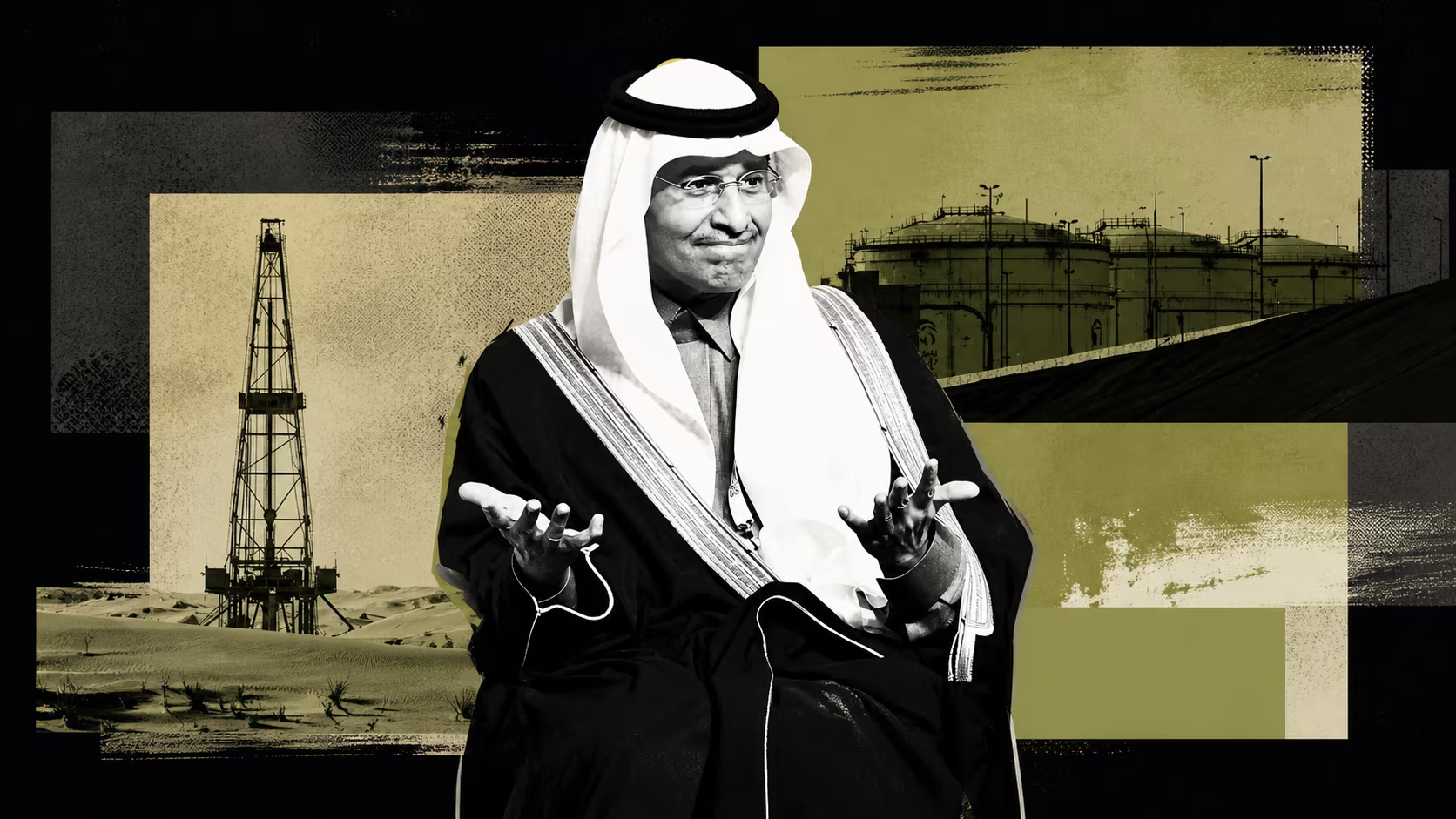
Saudi Arabia has so far offered no public response to the UAE’s decision to leave OPEC immediately, and that silence is revealing in itself. Several days after Abu Dhabi’s announcement, neither the cartel nor Riyadh, which effectively leads it, has issued an official reply.
The decision came as a surprise not only because of the long-running tensions between Saudi Arabia and the UAE, but also because of its timing: the country announced its withdrawal from OPEC in the middle of a regional war. Riyadh received minimal warning and had no opportunity to hold talks before the official letter was handed to Saudi energy minister Prince Abdulaziz bin Salman.
For now, Saudi Arabia’s main task is to contain the fallout. A public display of irritation could deepen instability in an already turbulent oil market and affect the stance of other members of OPEC and the broader OPEC+ alliance.
Instead, Riyadh is trying to project calm and reassure allies that its ability to manage the market has not weakened. That is especially important ahead of Sunday’s meeting of seven OPEC members, where possible production increases will be discussed.
Behind the scenes, OPEC secretary-general Haitham al-Ghais is trying to convince market participants that other countries are not planning to leave the organisation and that the cartel remains intact.
The UAE’s move was abrupt, but the timing was probably calculated. Abu Dhabi had long sought the right to produce more oil than its OPEC quota allowed. By announcing its exit at a moment when supplies from the Persian Gulf were already being disrupted by war, the UAE reduced the immediate impact on the market and the risk of a harsh response from Saudi Arabia.
At the same time, Riyadh currently has few comfortable options for applying pressure: while shipments through the Strait of Hormuz remain constrained, the threat of a price war looks less realistic. Normally, Saudi Arabia could discipline OPEC members with the prospect of sharply increasing its own output, since it holds the largest spare production capacity, but that scenario appears unlikely for now.
Even so, the consequences may emerge later. One possible pressure point remains the busy land border between Saudi Arabia and the UAE, which is important for trade, including food supplies. But any restrictions there would amount to a serious escalation.
In the short term, the UAE’s departure could complicate internal discipline within OPEC. Other countries may use the precedent to demand a revision of quotas and softer production limits, especially after the war with Iran, when Persian Gulf producers will be eager to regain market share.
The main challenge, in the view of market participants, will be keeping Russia, Iraq, Kazakhstan, and other countries in line—states that had already been accused of exceeding official quotas. At the same time, experts note that Saudi Arabia has long known how to manage internal disputes within the cartel.
In Riyadh, officials believe it is still impossible to assess the consequences of the UAE’s decision with any precision because of the war and the uncertainty surrounding the Strait of Hormuz. Still, as one former Saudi official put it, Saudi Arabia is confident that OPEC will endure: “They are not going to change course now because one country has left. OPEC will continue to exist.”