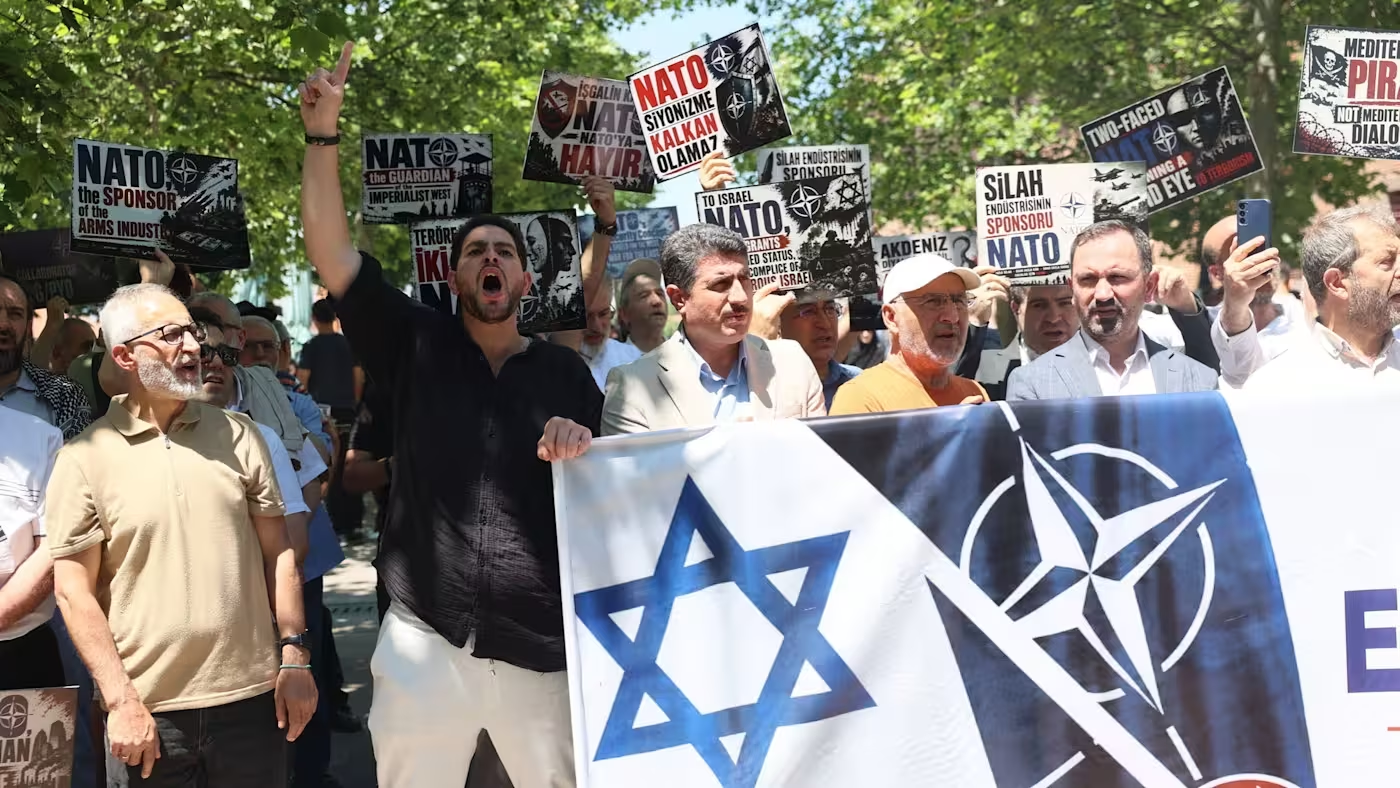
Turkey has tightened security measures ahead of the NATO summit in Ankara, which will take place on July 7–8. As preparations for the event continue, Turkish authorities detained more than three dozen environmental activists, most of them TEMA Foundation volunteers aged 60 to 70. They were stopped after a quiet picnic at a bird sanctuary near Ankara and taken for questioning as terrorism suspects.
Counterterrorism officers asked the detainees whether they had received weapons training. Some elderly activists needed help climbing the stairs to their interrogations.
Turkish authorities traditionally pay heightened attention to security, but preparations for this year’s NATO summit have proved especially extensive. Ankara is effectively being turned into a fortress ahead of the arrival of leaders from the alliance’s 32 countries, including U.S. President Donald Trump.
Turkish security forces carry out counterterrorism raids across the country ahead of the July NATO summit.
About 70,000 people are expected to be deployed to protect the summit. That is larger than the armies of most NATO countries and almost three times the force used to secure the summit in The Hague in 2025.
Civil servants in Ankara will be given the entire week off to ease traffic and ensure the passage of motorcades from the recently upgraded high-security airport to Recep Tayyip Erdogan’s presidential complex.
The summit, which U.S. Secretary of State Marco Rubio has called one of the most important in NATO’s history, is meant to be the forum where alliance Secretary General Mark Rutte tries to persuade Trump to maintain his commitment to NATO in exchange for European countries’ promises to increase defense spending.
Ankara, in turn, wants to use the summit to demonstrate Turkey’s diplomatic influence, military capabilities and growing defense industry.
The Turkish army remains the second-largest in NATO after the U.S. military.
However, preparations for the summit have also deepened concerns about Turkey’s retreat from democratic norms. Journalists from outlets critical of Erdogan said they had been denied accreditation. In addition, all public gatherings and demonstrations, including the display of posters, have been banned for 12 days.
On Tuesday, authorities also carried out a series of “preventive” raids and detained more than 200 people, officials said, “to identify actions and activities of terrorist organizations.” The environmentalists detained separately are not included in that number.
“When an authoritarian government hosts a summit, you get arbitrary media accreditation and more than 200 people detained in some ‘preventive’ operation,” Nacho Sánchez Amor, the European Parliament’s rapporteur on Turkey, wrote on social media. “It is sad that none of this seems to be keeping Rutte awake at night.”
Media organizations criticized the refusal to accredit some local journalists, saying NATO had evaded responsibility. Turkish authorities did not comment on the issue.
“The denial of accreditation to a large number of media outlets is alarming from the point of view of press freedom,” the Turkish Journalists Association said.
“We reject this procedure and demand a transparent and positive process,” Reporters Without Borders said.
The Ankara governor’s office said at the beginning of the week that “the necessary security measures have been taken to ensure the safety of the summit, as well as the peace and security of citizens.”
NATO spokesperson Allison Hart said Thursday that the alliance “relies on the host country in assessing journalists from that country.” At the same time, she said, it is “very important” for NATO that media can attend major events in person.
The U.S. Plans to Sharply Reduce Its Military Contribution to NATO—Fighter Jets, Bombers, Ships and Submarines
Ukraine to Ask Allies for Another $20 Billion Before NATO Summit