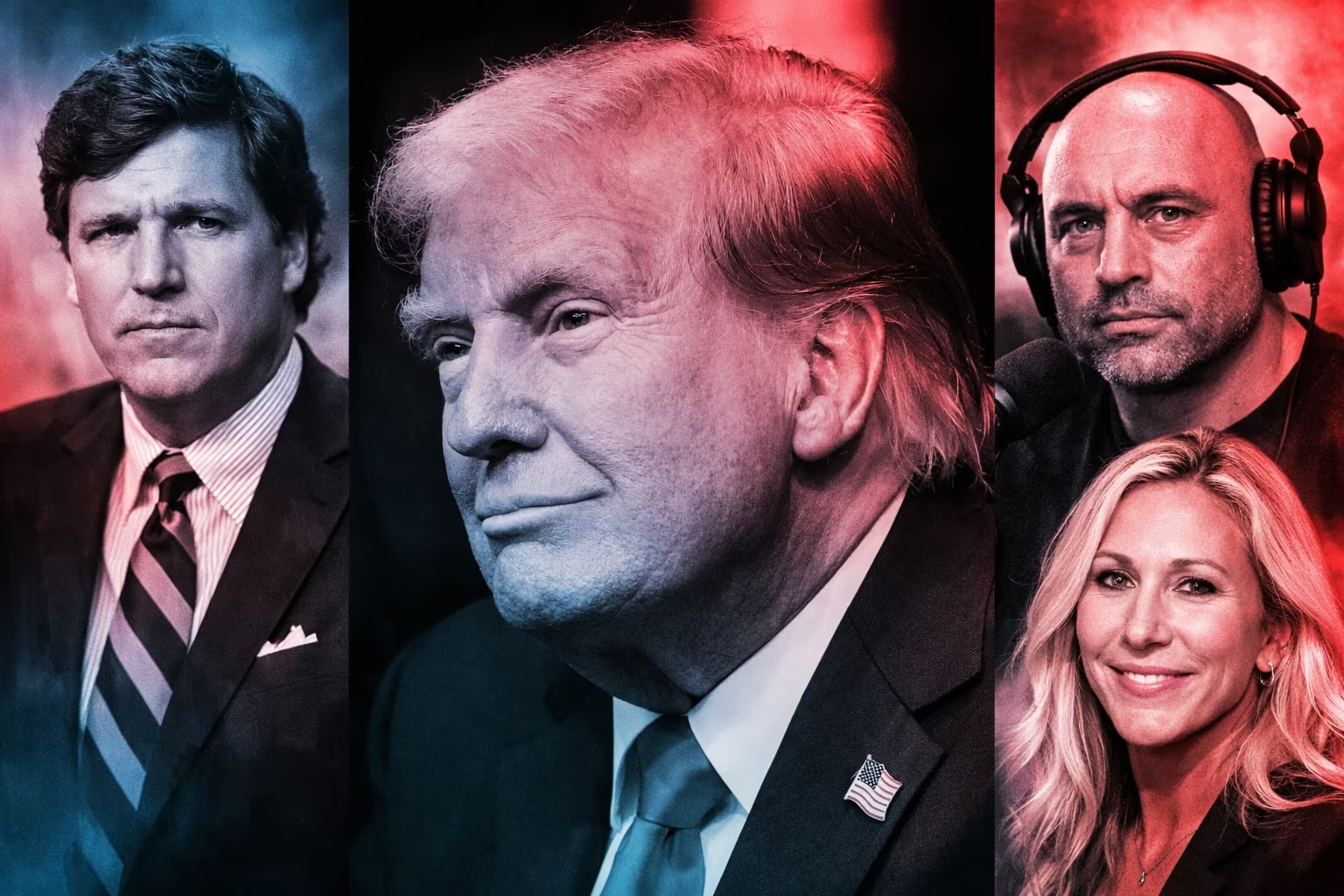
The architects of the MAGA media ecosystem have openly turned against Donald Trump in response to his threat to destroy “the whole civilization” of Iran.
Trump’s political durability rested from the outset not so much on party structures as on a decentralized network—podcasters, streamers, and activists who carried his agenda to millions of loyal voters. At the start of his second term, that coalition looked cohesive and confident: it had helped return him to the White House and expected something in return. Now, however, some of the most influential voices within the movement are trying either to restrain Trump or to directly weaken his position, accusing him of abandoning the “America First” principles on which MAGA was built. Taken individually, such ruptures might be dismissed. Taken together, they are beginning to look like a threat to the movement’s very survival.
Tucker Carlson, for instance, released a 43-minute address in which he called Trump’s rhetoric on Iran morally corrupt and even “evil.” He voiced personal outrage over the president’s Easter post threatening to “unleash hell” on Iran and urged American officials not to carry out orders that could lead to the deaths of civilians. Alex Jones, who had defended Trump for years, struggled to contain his emotions on air, calling the president “a dementia risk” and demanding his removal. Former congresswoman Marjorie Taylor Greene, once regarded as one of Trump’s most loyal allies within the Republican Party, described his rhetoric as “evil and insanity” and called for the 25th Amendment to be invoked. Candace Owens, another prominent supporter with a multimillion-strong audience, called the president “a genocidal madman” and demanded intervention by Congress and the military.
The rift is moving beyond the narrow circle of ideologically hardline MAGA loyalists and spreading through the broader ecosystem of podcasters, comedians, and influencers of the so-called “manosphere,” who helped make Trump acceptable in 2024 to a younger and less ideological audience. Joe Rogan, one of the key media backers of the 2024 campaign, called a war with Iran “madness that runs against everything he campaigned on,” adding that supporters feel “betrayed.” Comedian Theo Von said that “the real terrorists are the United States and Israel, not Iran.” Tim Dillon called the slogan “America First” “the greatest con in history.” Streamer Sneako expressed regret over his earlier support for Trump and came out in favor of his impeachment.
Doubts and defections have been building for more than a year and are tied in large part to the suspicion that Trump is using the movement in the interests of powerful groups rather than his own voters. Daily Wire commentator Matt Walsh, for example, welcomed the dismissal of Attorney General Pam Bondi, calling it an overdue step against the backdrop of the administration’s “disastrous” handling of the Epstein case. Mike Cernovich, one of the most prominent MAGA influencers on X, delivered a scathing critique of alleged insider trading, saying that “corruption inside the Trump administration has demoralized me in a way my enemies never could.”
At the same time, much of the criticism is coming from influential figures with large platforms and sharply defined views. Among rank-and-file Republican voters, the picture is different: according to a Wall Street Journal poll, about two-thirds still approve of Trump’s actions toward Iran despite a broader erosion of trust. Conservative podcaster Megyn Kelly, while sharply criticizing the decision to launch the war, put it in stark terms: “Trump could drop a nuclear bomb and I would still vote Republican rather than Democrat.”
The White House insists that the central issue remains security. “What matters most to Americans is having a commander-in-chief who takes decisive action to eliminate threats and protect the country, and that is exactly what President Trump did in the successful Operation Epic Fury,” press secretary Davis Ingle said. In his words, Trump “was proud of his promise to deny the Iranian regime the ability to build a nuclear weapon, and this operation does exactly that,” while decisions at this level are made “not on the basis of shifting polls, but in the interests of the American people.”
Until now, Trump has been largely successful at neutralizing criticism by discrediting his opponents—branding them “RINOs,” “Panicans,” or simply losers. But that strategy becomes far more difficult when the people turning against him are the very ones who built the movement’s infrastructure.