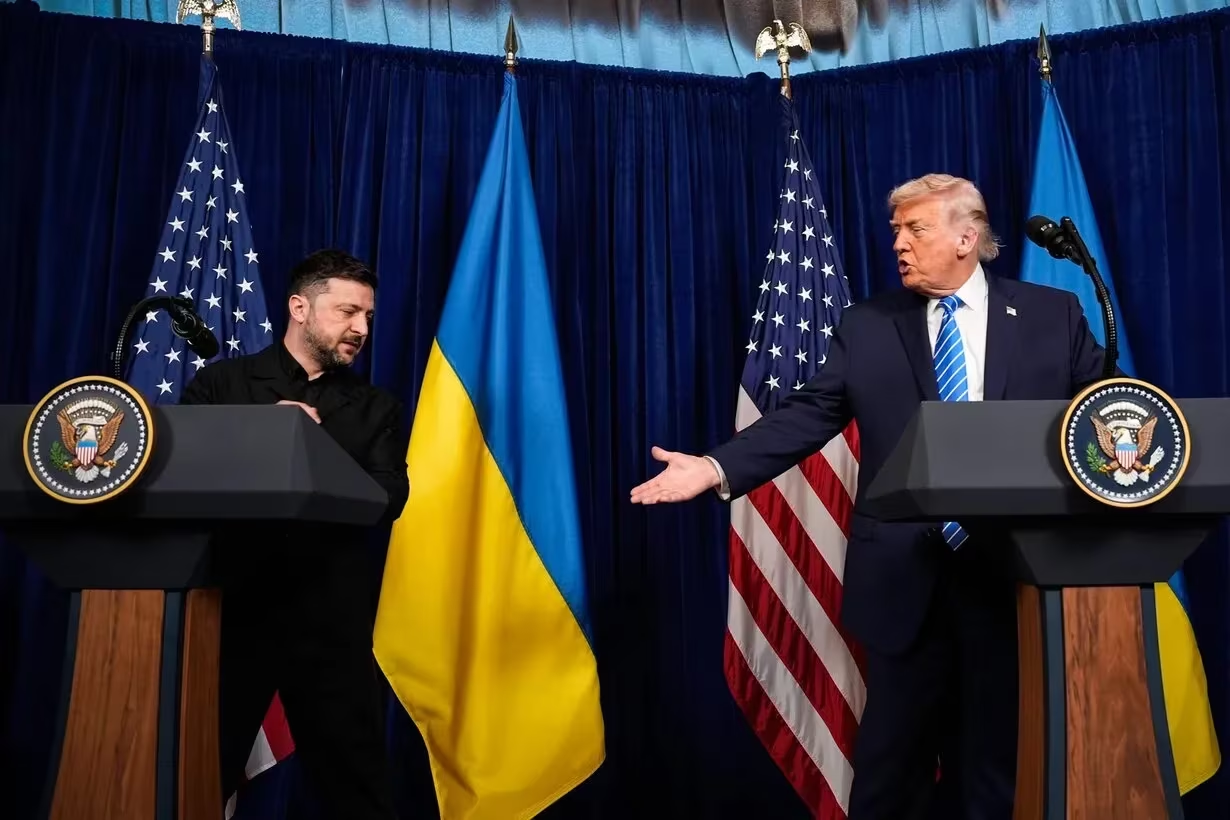
In the aftermath of talks between Donald Trump and Volodymyr Zelenskyy in Mar-a-Lago, it is difficult to speak of any meaningful breakthrough. Zelenskyy said that the US-Ukrainian peace proposal remains 90 percent agreed—exactly the same level as before the meeting. Trump, for his part, acknowledged that differences over the territorial issue between Ukraine and Russia—the most contentious point—remain “unresolved”.
At the same time, at the press conference Trump appeared more favorably disposed toward Zelenskyy than in his earlier remarks: he described the meeting as “terrific” and pointed to the progress that, in his words, Ukrainian and American negotiators have made over the past month. Crucially, at least in public, there were no sharp exchanges between the two leaders. In Kyiv, this will be seen as a success. Yet Zelenskyy still faces an arduous task—to persuade the US president that Putin is the principal obstacle to peace, and that shifting the Kremlin’s calculus on the war will require increased pressure from Washington.