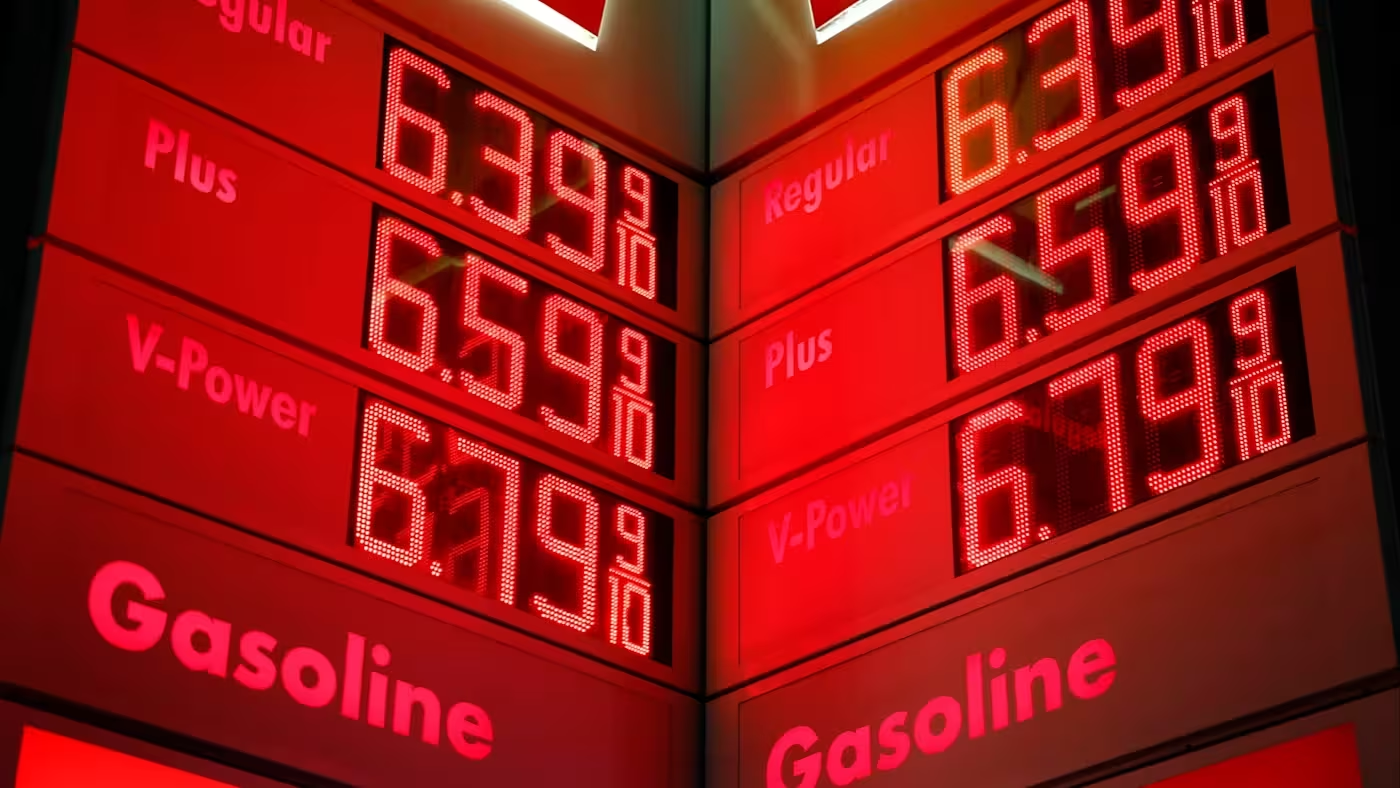
American consumers have spent more than $40 billion extra on fuel since the start of Donald Trump’s war against Iran. That conclusion comes from a study by the Watson School at Brown University.
According to the researchers, by Sunday evening the additional cost of gasoline and diesel had reached $41.5 billion — roughly $316 for every U.S. household.
Brown University political science professor Jeff Colgan said the money could instead have been directed toward upgrading the country’s transportation infrastructure.
“We are spending enormous amounts of money on higher fuel costs when we could be using those funds to improve America’s transportation infrastructure, which frankly needs it,” he said.
The authors of the study said the consequences of the war with Iran have affected the entire American economy. Higher fuel prices pushed inflation to its highest levels since the beginning of Russia’s war against Ukraine and created a new political problem for Trump.
The increase in gasoline and diesel prices has affected not only motorists but also the cost of goods and services — from food to air travel — as transportation costs have risen sharply across many sectors of the economy.
The study was released ahead of the start of the U.S. summer driving season, when gasoline demand traditionally reaches its annual peak.
According to Brown University’s calculations, the additional fuel spending has already exceeded the cost of several major infrastructure programs. The amount is larger than the $40 billion federal bridge restoration program, the full $31.5 billion modernization of the U.S. air traffic control system, or Joe Biden’s proposed electric vehicle charging infrastructure initiative.
“We could be building the transportation infrastructure of the future instead of spending money on more expensive fuel because of a war most Americans do not support,” Colgan said.
Since the start of the conflict around Iran, the Strait of Hormuz — through which roughly one-fifth of global oil supplies normally pass — has become effectively closed. That has triggered a sharp rise in oil prices. Brent crude has climbed by more than 50 percent and approached $110 per barrel.
The average gasoline price in the United States, according to AAA, has risen 51 percent to $4.51 per gallon. Diesel prices are up 54 percent to $5.65 per gallon, nearing record highs.
Higher energy prices have intensified inflationary pressure across the economy. In April, U.S. consumer prices rose at the fastest pace in three years, while wholesale inflation reached its highest level since 2022.
Inflation has also increased borrowing costs. Last week, the U.S. Treasury issued 30-year bonds with a yield of 5 percent for the first time since 2007 amid investor concerns over accelerating price growth.
Polls show the war with Iran remains unpopular among American voters and is hurting Trump’s approval ratings. Fifty-eight percent of Americans disapprove of his handling of the cost of living.
Trying to soften the impact of the energy crisis, the Trump administration has launched record oil sales from the U.S. Strategic Petroleum Reserve, eased shipping restrictions and fuel environmental standards, and proposed a temporary suspension of federal gasoline and diesel taxes.
Trump also faced criticism over remarks suggesting that rising prices and inflation do not affect his approach to the war.
“I’m not thinking about Americans’ financial situation. I’m not thinking about anyone at all. I’m thinking about one thing only — we cannot allow Iran to obtain nuclear weapons. That’s it,” the U.S. president told reporters this week.