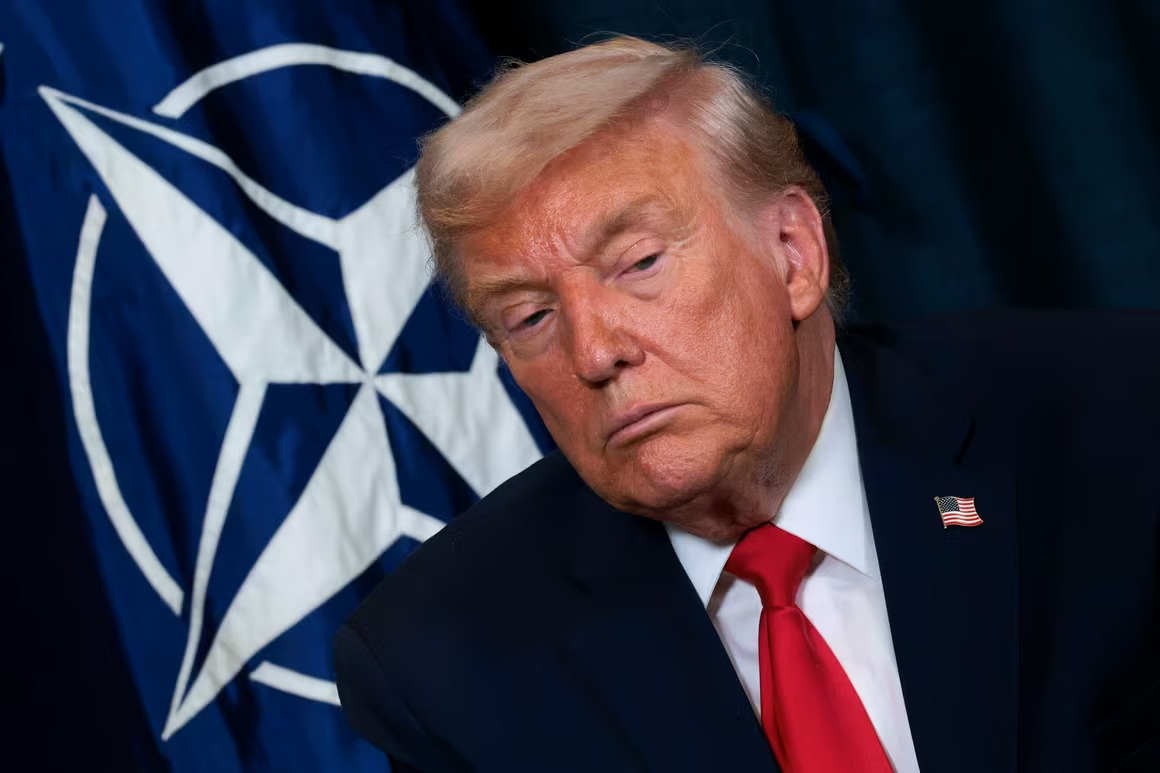
Donald Trump said he “absolutely” considers the possibility of withdrawing the United States from NATO.
“Absolutely. Without question. And in my position, wouldn’t you?” he said in an interview with Reuters.
Sky News examined what such a move would entail. Under Article 13 of the North Atlantic Treaty, a country may leave the alliance one year after formally notifying the parties of its denunciation. Yet that notification must be delivered to the U.S. government—creating legal ambiguity in a situation where Washington itself would be seeking to withdraw.
U.S. law places limits on presidential authority in matters of this kind. Legislation passed in 2024 requires either the support of two-thirds of the Senate or a separate act of Congress for the United States to leave NATO.
Notably, one of the co-authors of that law was Marco Rubio—now the U.S. secretary of state. Yet he has since adopted a more critical stance, arguing that membership in the alliance loses its rationale if the United States cannot use European bases or secure backing from its European allies for operations against Iran.
“Can the United States simply leave the alliance if Trump decides to do so? The brief answer is that we do not know for certain. But legal experts warn that Trump may try to circumvent the law by invoking presidential authority over foreign policy,” the broadcaster notes.
Since NATO was founded in 1949, no country has ever withdrawn from the alliance. From 1966 to 2009, France remained a political member while staying outside its military structures.