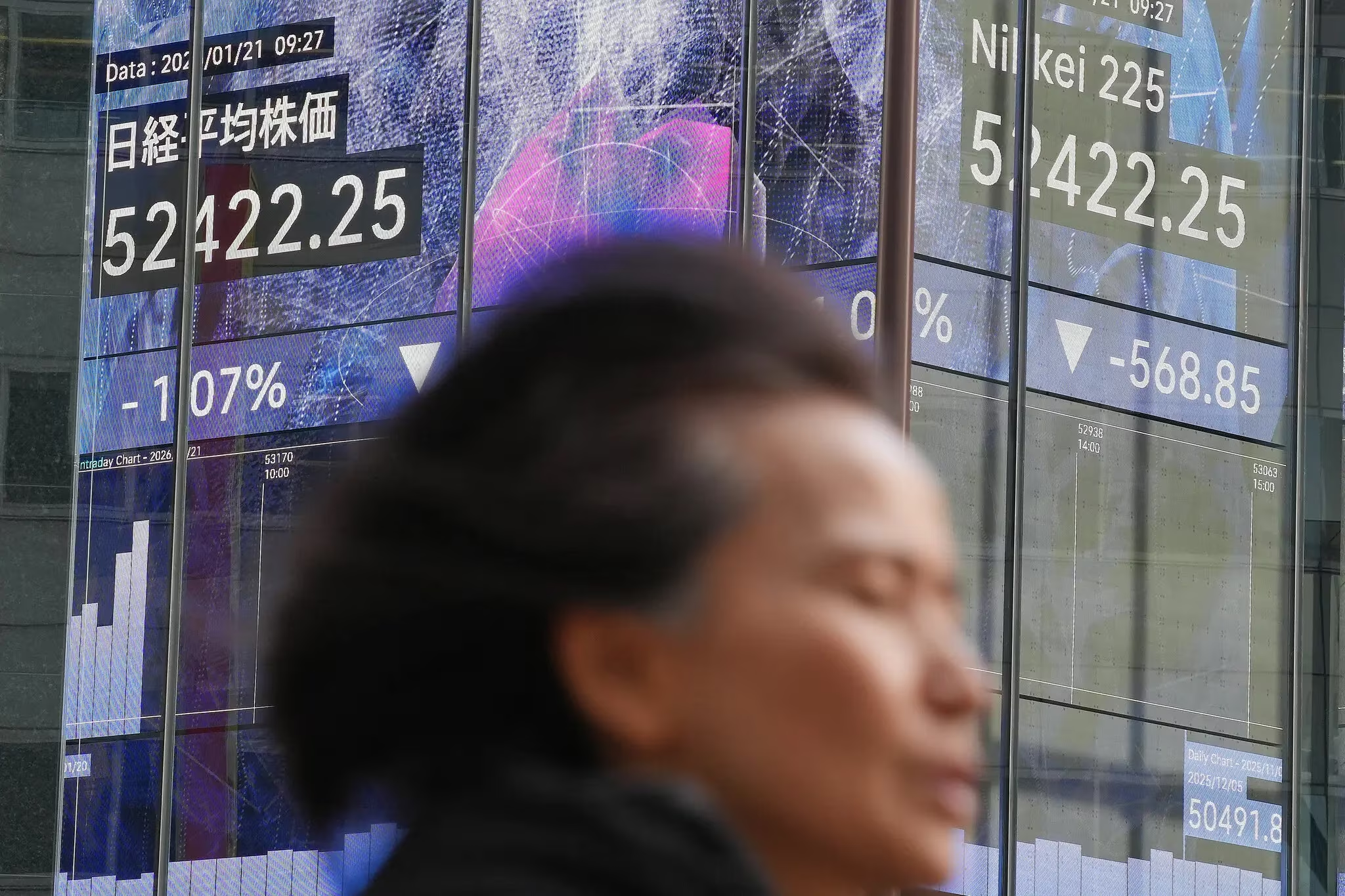
A sharp sell-off in US assets, triggered by President Donald Trump’s threat to impose sweeping tariffs on European allies over a dispute surrounding Greenland, spilled over into overseas markets on Wednesday.
Key equity indices in Asia declined. Taiwan’s Taiex fell by more than 1.5 percent, while Japan’s Topix slipped 1 percent. In Europe, performance was mixed: markets in France and Germany posted modest losses, while shares in the United Kingdom were little changed. US stock futures pointed to a moderately higher open.
The dollar weakened against the Japanese yen but strengthened versus the euro.
Gold prices, which have surged in recent months, continued to climb and set a new record, rising above $4,800 per ounce. Gold is traditionally viewed by investors as a safe-haven asset in periods of instability.
A survey of metals market analysts conducted by the industry association LBMA showed that most experts expect gold prices to exceed $5,000 per ounce for the first time this year. “Persistent geopolitical uncertainty—from armed conflicts to institutional strains—continues to underpin strong demand for safe-haven assets,” the survey said.
The turmoil across global markets signaled a return of volatility driven by trade policy, which had been a defining feature of Trump’s second term. The sell-off in equities began after he threatened a new wave of tariffs against eight European countries unless they facilitated Greenland’s transfer under US control, stoking fears of another round of reciprocal trade restrictions and their potential drag on global economic growth.
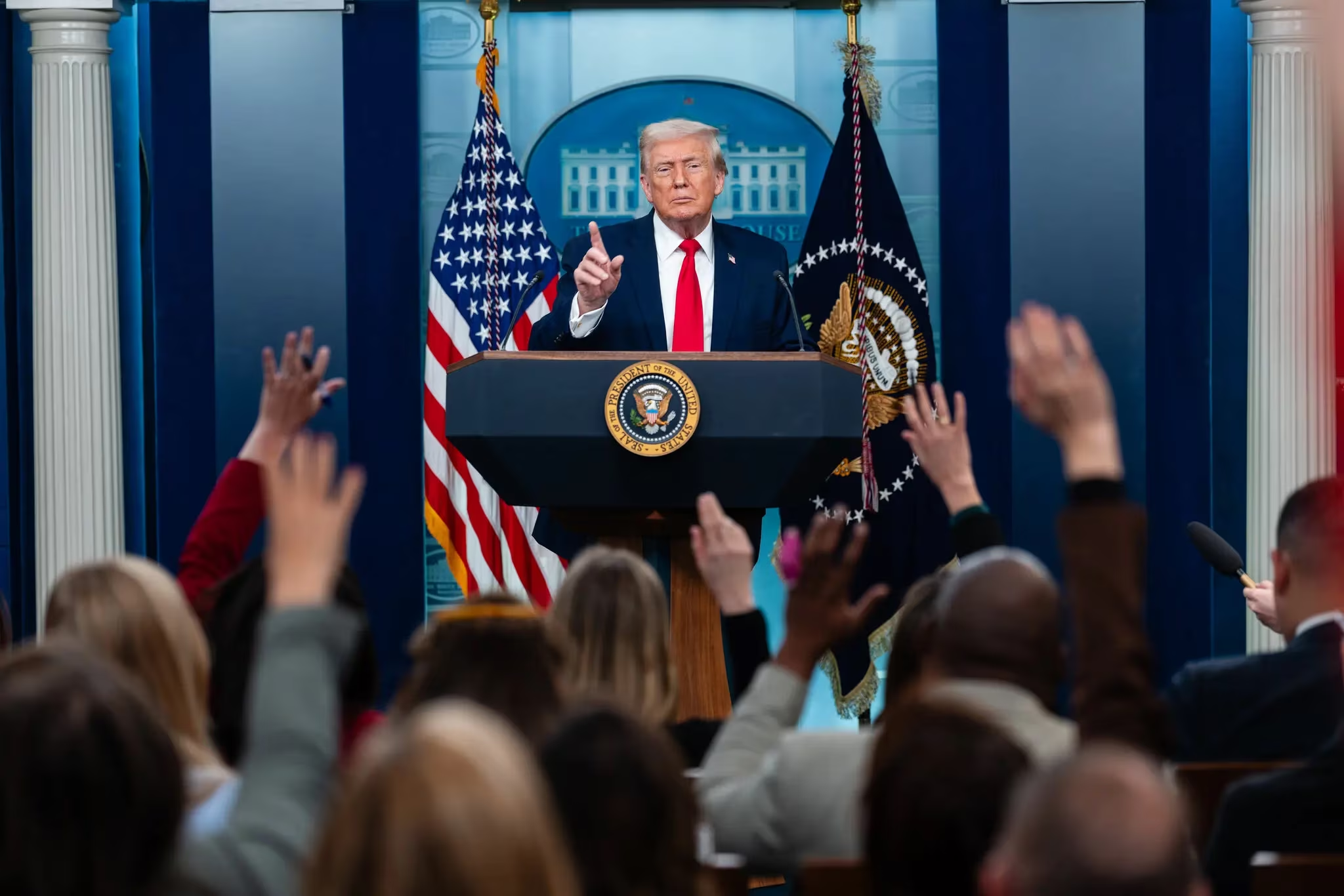
President Donald Trump answers questions from reporters during a press conference in the James S. Brady Press Briefing Room at the White House. January 20, 2025.
The sell-off in US assets, sparked by President Donald Trump’s threats to impose sweeping trade tariffs on European allies over disagreements surrounding Greenland, spread beyond the United States on Wednesday and rippled through global markets.
In Asia, major stock indices moved into negative territory. Taiwan’s Taiex fell by more than 1.5 percent, while Japan’s Topix declined by 1 percent. In Europe, the picture was less clear-cut: indices in France and Germany posted moderate losses, while the UK market closed with little change. US stock futures pointed to a cautiously positive open.
In currency markets, the dollar weakened against the Japanese yen but strengthened versus the euro.
Gold, which has surged rapidly in recent months, continued to climb and set a new record, rising above $4,800 per ounce. During periods of market turbulence, the metal is traditionally regarded by investors as a safe-haven instrument.
According to a survey of metals market analysts conducted by the industry association LBMA, most respondents expect gold prices to exceed $5,000 per ounce for the first time this year. “Persistent geopolitical uncertainty—from armed conflicts to institutional tensions—continues to sustain strong demand for safe-haven assets,” the study said.
Moves across global markets have become a sign of the return of volatility tied to trade policy, which largely defined Trump’s second presidential term. The decline in asset prices began after his threats to introduce a new round of tariffs against eight European countries unless they agreed to the idea of transferring Greenland under US control. This heightened concerns that another cycle of reciprocal restrictions could weigh on the pace of global growth.
Speaking at the World Economic Forum in Davos in an interview with Fox News, US Treasury Secretary Scott Bessent said that the sell-off in Japanese government bonds had spilled over into the market for US Treasuries.
While some investors have interpreted the Trump administration’s latest statements toward Europe as a familiar negotiating tactic—pressure for concessions followed by retreat—the behavior of US markets points to a declining tolerance for uncertainty.
“Recently, markets have shown a persistent trend of capital outflows from the US,” said Takahide Kiuchi, executive economist at the Japanese research institute Nomura. According to him, “to restore stability in financial markets, the Trump administration may need to reconsider its tariff policy toward Europe.”