
EU ministers have endorsed measures that would transfer rejected asylum seekers to “hubs” outside the bloc, amid a sharp tightening of Europe-wide migration and asylum policy that increasingly mirrors approaches used in the United States.
On Monday, December 8, interior ministers approved stricter rules on detaining and deporting those with no legal basis to remain in the EU, as well as provisions allowing such individuals to be redirected to countries designated as “safe” and located beyond the union’s borders.
“This is a turning point for all European migration and asylum policy,” said Magnus Brunner, the EU commissioner for migration, speaking on the sidelines of the meeting in Brussels. He described the new rules as “the missing pieces” of the reform package the European Union agreed last year.
The rules give member states a legal basis to strike agreements with third countries willing to accept “irregularly staying third-country nationals” and potentially hold them in so-called “return centers.” These measures also extend to families with children, drawing sharp criticism from human-rights groups. The specific conditions will be set individually by EU states—for example, how to handle people who remain in such centers and cannot return to their home countries.
The Netherlands has already signed an agreement with Uganda to host rejected asylum seekers there. The arrangement echoes Donald Trump’s strategy of pushing to deport migrants to African states, including Uganda, and to other countries that are not their place of origin.
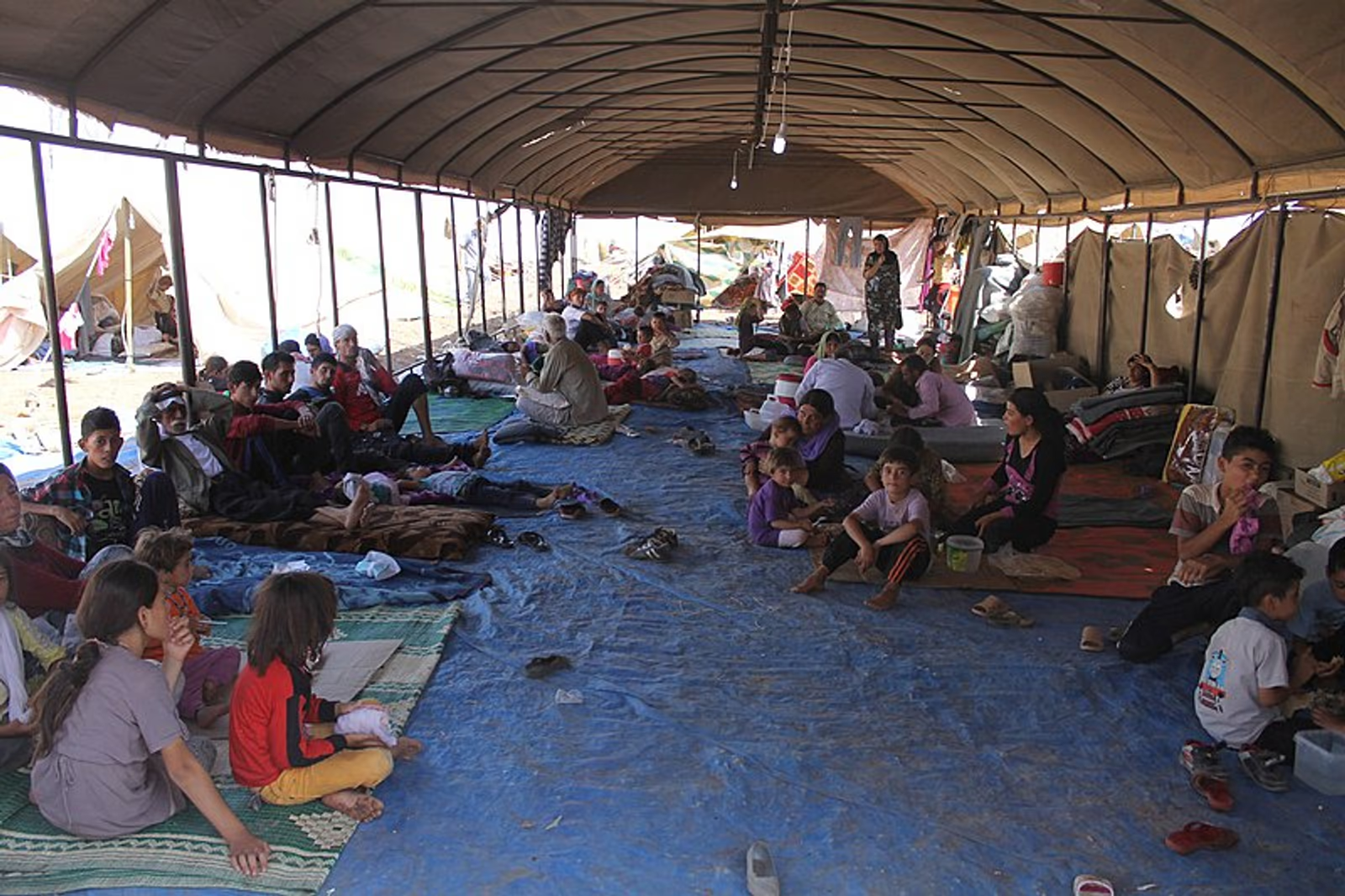
The Hell of Waiting
Inside a Dutch Refugee Camp Where More Than 20 Suicides Have Occurred

EU Migration Policy Shifts Sharply to the Right
Even Centrists Now Back Deportations, Offshore Camps, and Rewriting the European Convention
The document also reshapes the EU’s overall deportation framework: it introduces longer detention periods, entry bans for those without a legal right to remain in the union, and authorizes authorities to search homes and seize property—another step that aligns with U.S. practices.
Interior ministers also approved rules allowing officials to dismiss an asylum application outright if the applicant could have obtained protection in another country outside the EU.
Streamlined removal procedures pave the way for establishing offshore processing centers in third countries—mirroring the United Kingdom’s plan to send asylum seekers to Rwanda, a policy that was never implemented.
Denmark has long pushed to relocate parts of the asylum-screening process to countries outside the EU, but earlier efforts ran into legal obstacles. “We now have a legal basis that allows member states to establish reception centers and other arrangements jointly with third countries,” said Denmark’s migration minister, Rasmus Stoklund, who led the negotiations as Copenhagen currently holds the EU Council presidency.
Many European capitals hope the new decisions will resolve a series of legal challenges by revising existing legislation. It was this framework, for instance, that the EU Court cited when it struck down Italy’s plan to process asylum claims in Albania.
Ministers also approved a union-wide list of countries classified as “safe.” It includes Bangladesh, Colombia, Egypt, India, Kosovo, Morocco and Tunisia. The designation will allow migration authorities to handle cases from these countries more quickly and, in many instances, reject asylum claims with greater ease.
Human-rights organizations warn that several of these states cannot reasonably be deemed safe. In Tunisia, for example, the authoritarian government detains political opponents, suppresses civil society and employs harsh tactics against migrants.
Even so, the new rules allow a country to be designated as “safe” even when the EU deems parts of its territory unsafe.
The measures must still be approved by the European Parliament before they can take effect.