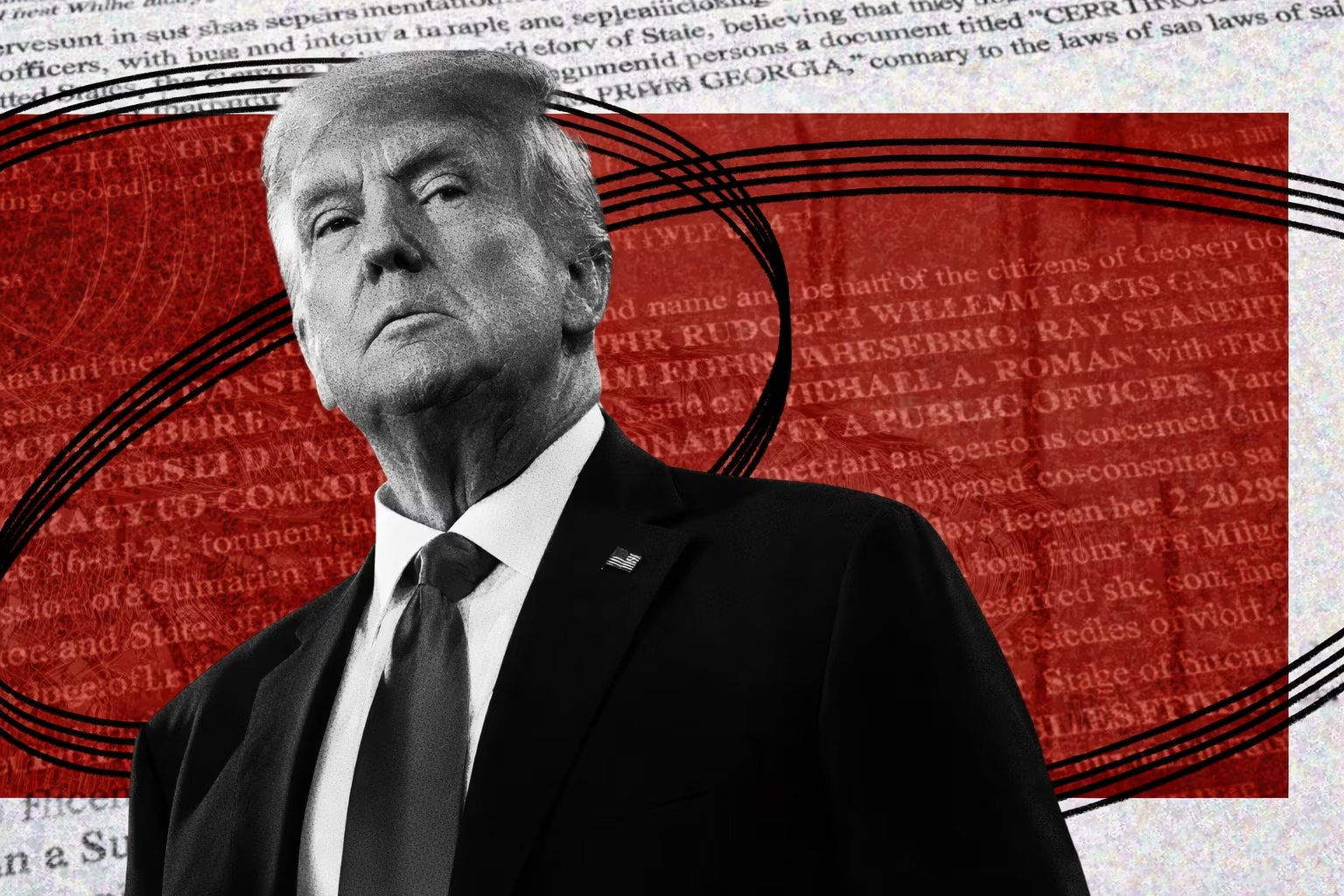
On Monday, February 2, President Donald Trump said Republicans should nationalize the administration of elections, once again advancing the claim of widespread fraud in the 2020 presidential vote. The proposal—which contradicts the Constitution, which assigns election administration to the states—came less than a week after the FBI searched an election office near Atlanta, seizing ballots and other voting materials from the 2020 election.
“Republicans should say, ‘We want to take control of this. We need to take control of voting in at least 15 places.’ Republicans should nationalize voting,” he said on the podcast of former FBI deputy director Dan Bongino, which was relaunched on Monday.
The president has repeatedly insisted that he won the 2020 election “by a landslide,” offering no evidence as he claimed that votes were cast “illegally.” He also pointed to the FBI search in Fulton County, Georgia, hinting that “in Georgia, you will see something interesting.”
Dozens of legal challenges to the results of the election failed to uncover credible evidence of widespread fraud, while both a statewide audit and a recount requested by Trump’s campaign confirmed former president Joe Biden’s victory in the state.
In recent months, Trump has intensified efforts to undermine the outcome of the 2020 election, pledging in January that “people will soon be held accountable for what they did” in connection with the vote. His Justice Department has also filed lawsuits against roughly two dozen states, seeking access to their statewide voter-registration rolls.
Trump’s latest threat to nationalize voting echoes a promise he made last summer to sign an executive order that would bring “integrity” to the 2026 midterm elections. “Remember, the states are merely ‘agents’ of the federal government when it comes to counting and tabulating votes. They are required to do what the federal government, in the person of the President of the United States, orders them to do, FOR THE GOOD OF OUR COUNTRY,” he wrote in an August social-media post.
Trump never signed such an order, and the White House has yet to explain how steps of this kind could be taken within the bounds of the Constitution. A separate order signed by Trump in March last year, aimed at imposing a citizenship-verification requirement for the national voter-registration form and altering mail-in voting procedures for the states, was largely blocked by federal judges, though its ultimate fate remains uncertain.