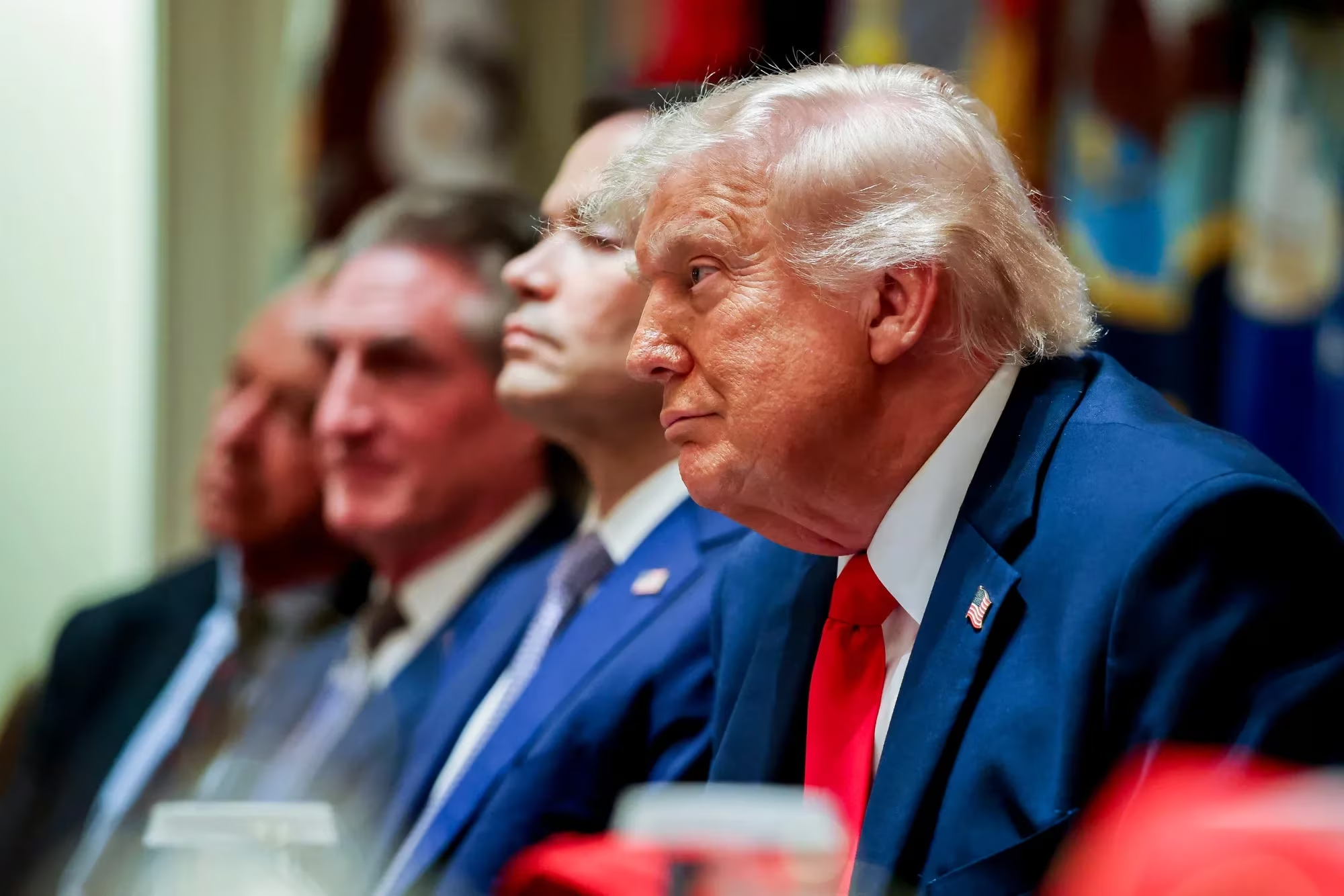
U.S. President Donald Trump said he was “not satisfied” with the course of negotiations with Iran to end the nearly three-month war, lowering expectations of a quick agreement.
“They very much want to make a deal. But so far that has not happened. We are not satisfied with it,” Trump said at the White House during a meeting with cabinet members.
According to him, Iran is “negotiating on fumes.” “Maybe we have to go back and finish it,” Trump added, without specifying whether he meant renewed military action.
The remarks came after Iranian state television published details of a draft interim peace agreement. The report claimed that shipping through the Strait of Hormuz could return to normal within a month of the deal entering into force.
The White House called the report false.
“This report from Iranian state media is not true, and the ‘memorandum’ they published is a complete fabrication,” the U.S. administration said in a statement.
Key Sticking Points in US-Iran Talks Over Interim Deal
Iran position
US position
Traffic through Hormuz strait
Wants to control maritime traffic
Insists on free passage for vessels
Iran's frozen financial assets
Iran media says government wants $12bn unfrozen with an interim deal
Unclear; pressure on Trump from Iran hawks not to release funds
Lebanon
Ceasefire must include Lebanon
Ally Israel reluctant to have its operations in Lebanon restricted
Iran's highly-enriched uranium
Says it wants to keep possession of its stocks; may accept them being sent to Russia or China
Trump wants HEU destroyed or sent to US
In addition, according to PBS News, Trump said the United States would not lift sanctions in exchange for Iran giving up enriched uranium.
Despite conflicting statements from the two sides, the oil market remains cautiously optimistic about a possible agreement.
Other elements of the draft deal reported by Iranian media include an end to the U.S. naval blockade and the withdrawal of U.S. Navy vessels from waters around Iran.
The reports also claim that Iran and Oman would create a joint mechanism to oversee shipping in the Strait of Hormuz—one of the main sticking points in the negotiations. Washington demands free passage for vessels, while Tehran insists on its own control and licensing system.
“The management of vessel passage, inspections, and fee collection falls within the authority of the Islamic Republic of Iran in partnership with Oman,” Iranian television said.
At the same time, according to IRIB, Tehran is not committing to reopen the strait unconditionally.
The United States and Iran are now discussing an extension of the ceasefire by roughly two months and the restoration of full shipping through the Strait of Hormuz. Iran’s effective closure of the strait at the start of the war caused a sharp rise in oil and gas prices and intensified inflationary pressure around the world.
U.S. Secretary of State Marco Rubio said there has been “some progress and interest from the parties,” and that the coming days will show whether a further breakthrough is possible.
Ali Bagheri Kani, deputy secretary of Iran’s Supreme National Security Council, confirmed that contacts with the United States are continuing through mediators, including Qatar and Pakistan.
“Until we have agreed on all issues, we believe we have agreed on nothing,” he said in Russia.
According to Bloomberg, an Iranian delegation recently returned from Doha after intensive negotiations covering the Strait of Hormuz, the fate of Iran’s enriched uranium, and the unfreezing of Tehran’s assets.
Iranian media claim Tehran is demanding that $12 billion be unfrozen immediately after an interim agreement is reached.
In the United States, some Republicans, including Senator Lindsey Graham, oppose such concessions and are urging Trump to return to military pressure on Iran.
An additional complication remains the war between Israel and the Iran-backed Hezbollah movement in Lebanon. In recent days, Israel has intensified its strikes and said its troops were advancing deeper into southern Lebanon.
Iran insists that any agreement must apply “to all fronts,” including Lebanon. Israel, however, is not prepared to restrict its operations against Hezbollah, arguing that they are necessary to protect the country’s northern areas from rockets and drones.