As reported by The Wall Street Journal, both Donald Trump and Iran’s leadership misjudged how the war might unfold. Those miscalculations, the newspaper argues, have led to the gradual expansion of a conflict for which no clear path to resolution is visible in the foreseeable future.
U.S. officials say Trump had anticipated a very different outcome from the initial strikes. The expectation was that a “decapitation” attack on Iran’s leadership—including the killing of Ayatollah Ali Khamenei—would either trigger the collapse of the regime in Tehran or set in motion a scenario resembling the “Venezuelan” model. In such a case, more pragmatic figures within Iran’s elite might choose to cooperate with Washington.
So far, neither of those expectations has materialized. After the supreme leader’s death, power passed to his son—hardline Mojtaba Khamenei—who has vowed to avenge his father. At the same time, there have been no signs inside the country of an uprising against the Islamic Republic.
Iran, for its part, built its strategy around large-scale strikes on the critical infrastructure of Gulf states. The plan envisioned attacks on airports, hotels, energy facilities, ports and data centers in the UAE, Bahrain, Kuwait, Qatar and Saudi Arabia. The calculation was that economic disruption and public pressure would push these governments to demand that Trump agree to a ceasefire on Tehran’s terms.
That calculation, however, also failed to materialize. The Gulf monarchies demonstrated unexpected resilience. Rather than making concessions, their governments warned of possible retaliation, while air-defense systems intercepted a significant share of Iranian drones and missiles, preventing large-scale destruction.
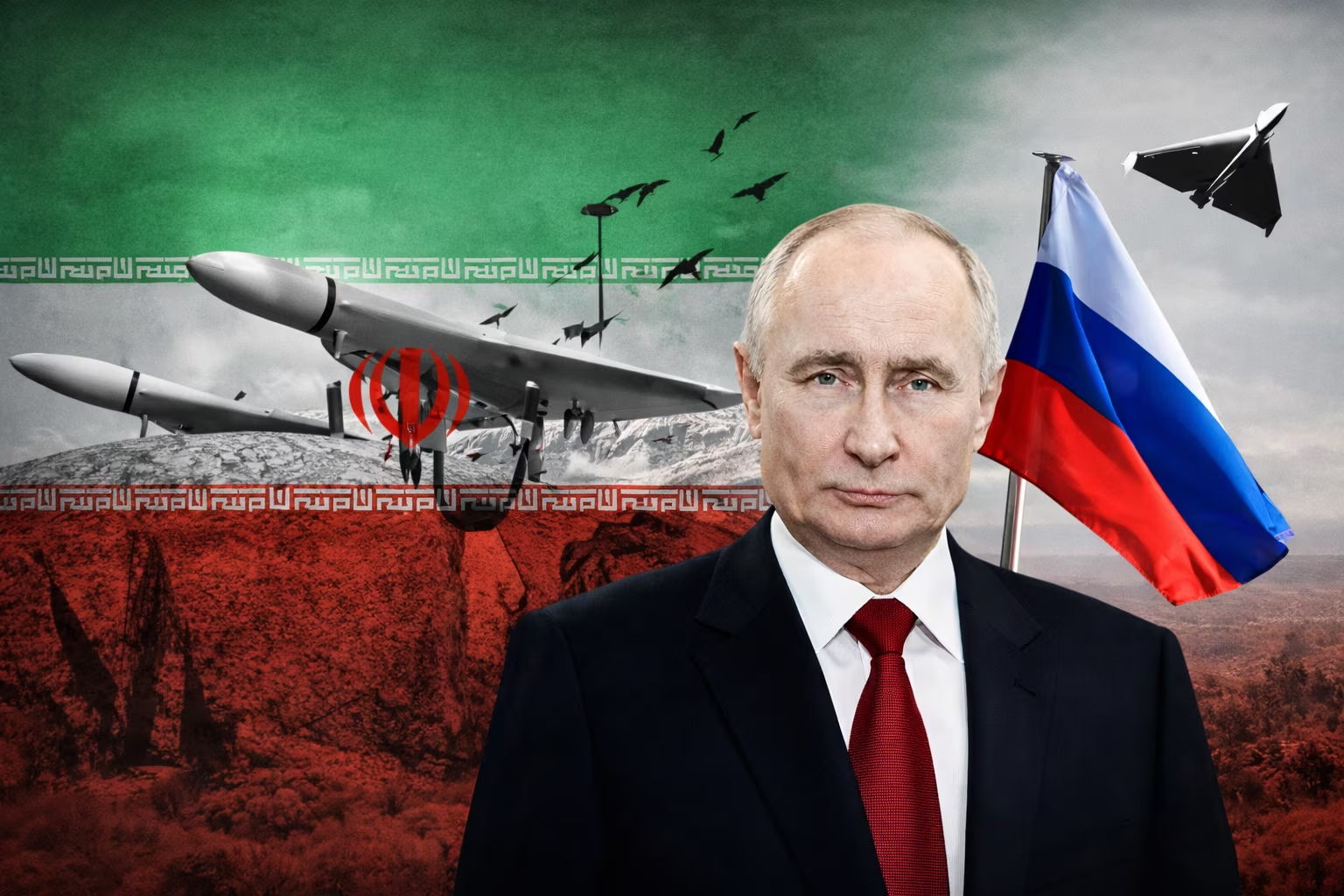
In these circumstances, a decisive victory by either side appears unlikely. A protracted war—one that drains Western military resources, diverts attention from Ukraine and makes Russian oil and gas more valuable to Western economies—could amount to a significant strategic gain for Vladimir Putin.