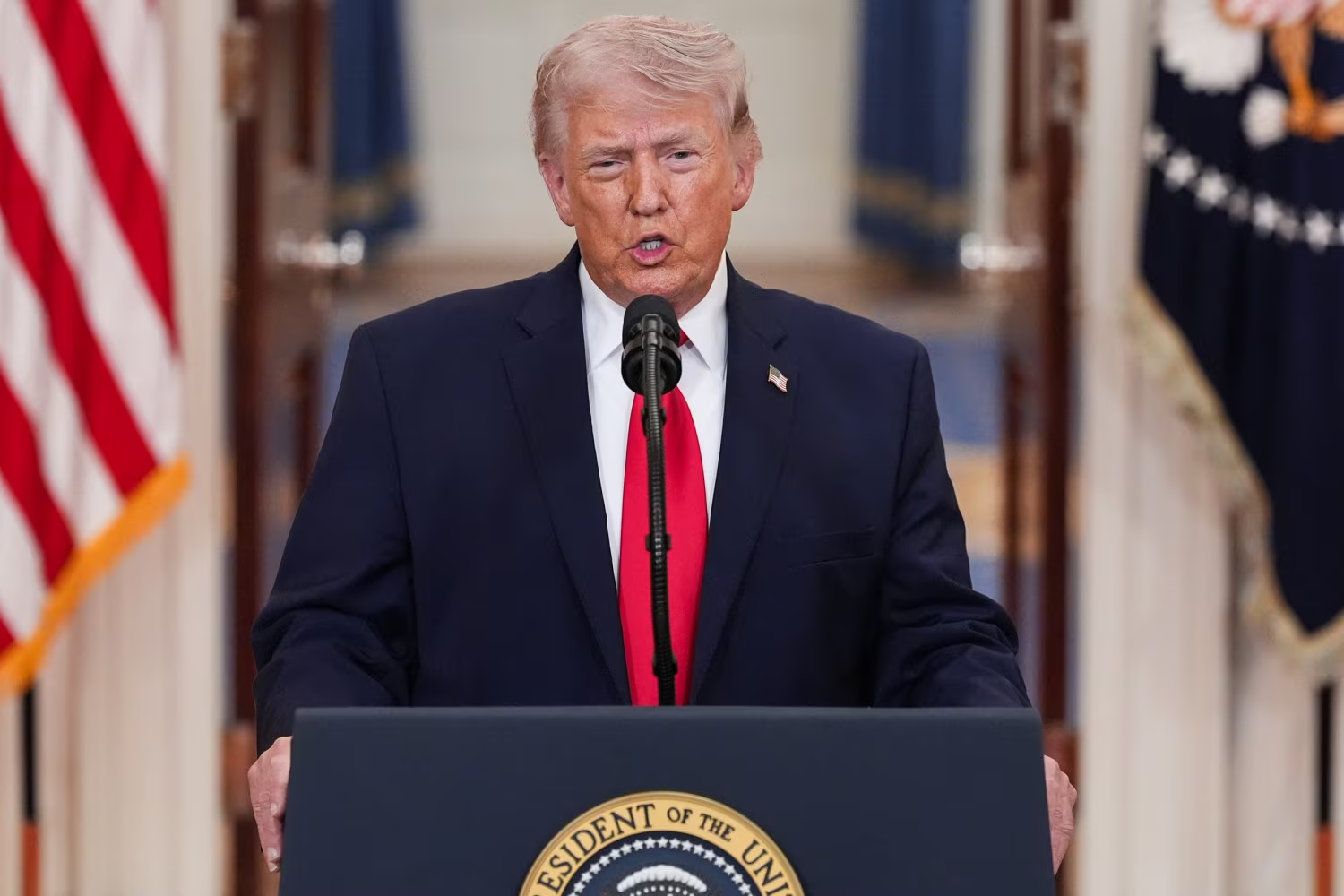
In an address to the nation, Donald Trump said the military conflict with Iran would end “very quickly,” although the Strait of Hormuz, he added, could remain blocked.
At the start of the speech, he said that within the next two to three weeks the United States would deliver an “extremely powerful strike” against Iran and “send them back to the Stone Age.” He claimed that the key strategic objectives had already been “almost achieved” and that the operation was expected to conclude “very quickly.”
By Trump’s account, after 32 days of war Iran was “already destroyed”—the country had “very few missiles left,” its fleet had been “crushed,” and its air force was “in ruins.” He also said that “most of Iran’s leaders are dead,” that a “new, less radical leadership” had emerged, and that “one could say the regime has already changed.”
He separately stressed that the United States had deliberately refrained from striking Iran’s oil infrastructure, even though it was “the easiest target.” At the same time, he warned that if no deal were reached, Washington would hit “every one of their power plants” “very hard”—possibly all at once.
Commenting on the situation around the Strait of Hormuz, Trump said it was not of critical importance to the United States and urged countries dependent on the route to secure it themselves. “Go to the strait, take control of it. Protect it,” he told European states.
As an alternative, he suggested: “Buy your oil from the United States of America—we have plenty of it.”
He added that the rise in fuel prices in the United States was the result of Iran’s actions, but that the American economy was “in good shape” and capable of absorbing such fluctuations. In closing, Trump thanked U.S. allies in the Middle East and stressed that the United States “will not let them suffer or fail in any way.”