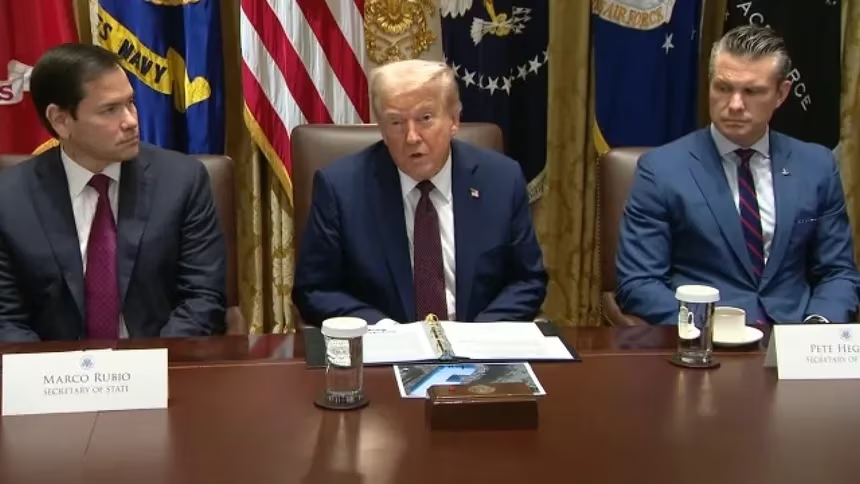
U.S. President Donald Trump delivered mixed signals on whether negotiations with Iran can halt a war that has been ongoing for nearly a month, adding to volatility in global energy markets.
“I say they are bad fighters but excellent negotiators, and they are begging to make a deal,” Trump said Thursday during a cabinet meeting at the White House.
At the same time, he acknowledged uncertainty over the outcome of the talks: “I don’t know if we can do it. I don’t know if we are ready for it,”—and separately threatened an escalation of military action if they fail.
Asked whether he might extend the five-day deadline he had set to reach an agreement, the president responded bluntly: “I don’t know yet.”
According to Trump, special envoys Steve Witkoff and Jared Kushner, along with Vice President J.D. Vance, “will tell him whether they believe the process is moving in the right direction.” He added that “we still have plenty of time” before the deadline announced Monday morning in Washington expires. “It’s one day. In Trump time, one day—you know what that is? It’s an eternity,” he said.
As expectations of a swift resolution to the conflict weakened, oil prices surged: Brent rose by 6% to exceed $108 a barrel, while global equity markets and bonds declined.
Earlier Thursday, Iran, via the Tasnim news agency, confirmed it is awaiting a response after rejecting a U.S. 15-point plan to end the war and putting forward its own conditions. These include guarantees that the U.S. and Israel will not resume attacks, compensation for wartime damage, and recognition of Iran’s control over the Strait of Hormuz.
Tehran is also insisting on a cessation of hostilities across all fronts, which likely includes the parallel war between Israel and the Iran-backed group Hezbollah in Lebanon.
Witkoff confirmed that the 15-point proposal had been delivered to Iran through Pakistani intermediaries, without disclosing details, and struck a more optimistic tone on current contacts, citing “strong and positive signals and negotiations.”
According to sources familiar with the matter, the United States has drawn up a list of roughly a dozen demands, supplemented by three points outlining possible concessions to Iran.
Earlier the same day, Trump warned on social media that Iran “must start behaving seriously very soon,” or “it will end badly.”
The president is under pressure to secure Tehran’s agreement to reopen the Strait of Hormuz to oil and gas shipments—a critical step to ease the global supply shock. On Thursday, Trump said Iran had allowed ten oil tankers to pass through the strait as a gesture of goodwill, while Treasury Secretary Scott Bessent announced that a U.S. insurance program to support shipping in the area would be launched soon.
In parallel, the White House has ordered the deployment of additional troops to the region, some of whom are expected to arrive by the end of the week, underscoring the risk of further escalation. Trump reiterated his previously stated timeline of four—six weeks for the military operation and said U.S. efforts are “ahead of schedule.”
The duration of the military campaign is raising questions, including from lawmakers within the president’s own party ahead of the midterm elections in November.
Republican Senator Lisa Murkowski of Alaska said the administration has not provided clear answers on the scope and objectives of operations against Iran, even in closed briefings. She is working on legislation that would authorize military action and define the campaign’s end goal. “I don’t know what else to do,” she said. “I’m concerned that we’ll adjourn and the president will deploy ground troops with the aim of a full-scale takeover.”