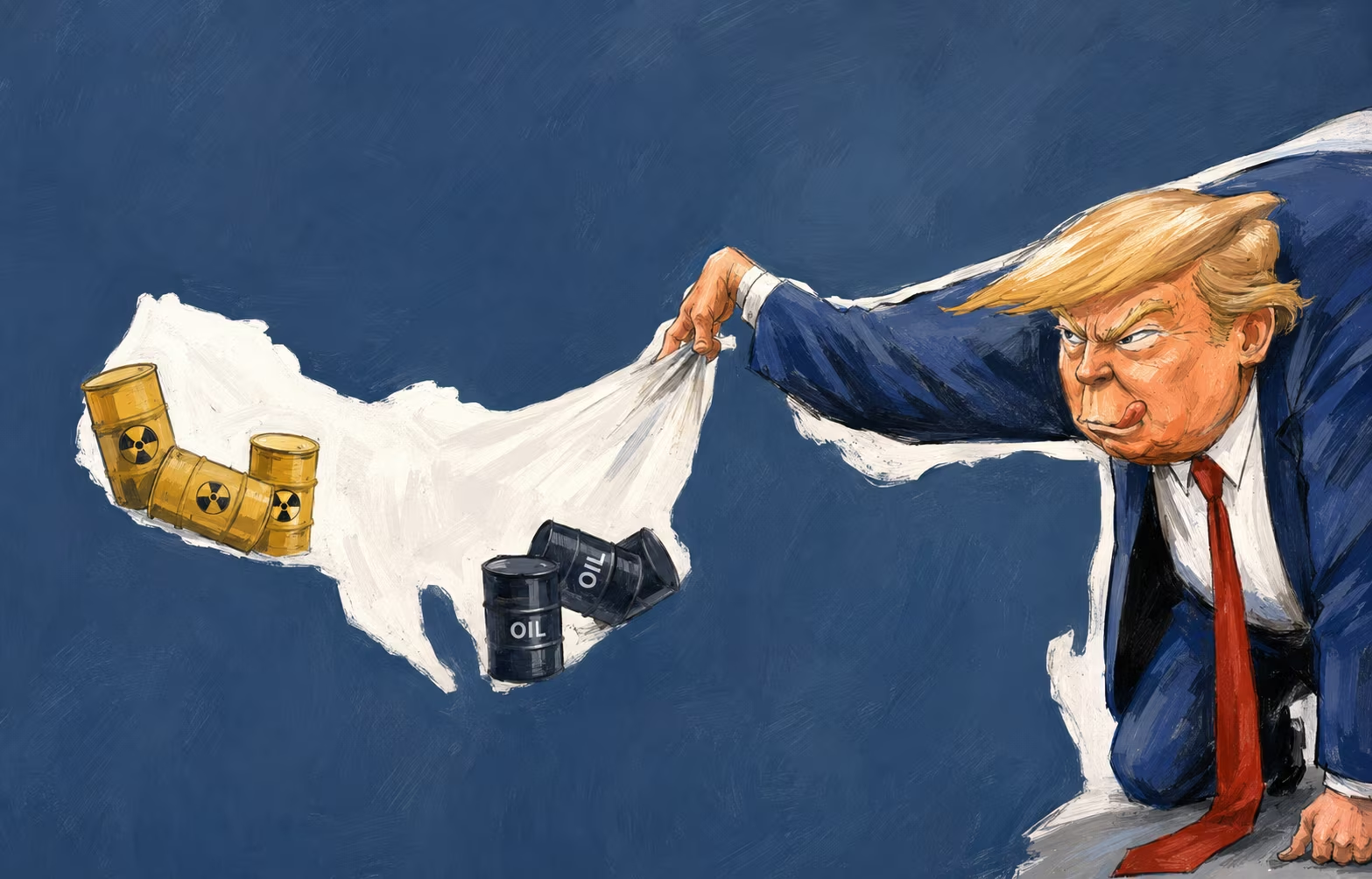
Donald Trump’s negotiations with Iran, launched after the conflict around the Strait of Hormuz, increasingly resemble a deal in which Washington is conceding ground to Tehran under pressure from economic risks.
In The Art of the Deal, Trump once described desperation as the worst possible signal in negotiations. His recent call for Iran to “open the fucking Strait of Hormuz” revealed precisely that vulnerability—especially given that the White House ultimately failed to follow through on its own threats of further escalation.
The main source of leverage in the conflict ended up in Iran’s hands after Tehran effectively demonstrated its ability to shut down the strait—a critical artery for global oil trade. Rising fuel prices in the United States damaged Trump’s approval ratings and intensified pressure on the administration.
Against this backdrop, Washington appears close to an agreement that could ultimately leave Iran in a stronger position than it occupied before the war.
Under the version of the deal currently under discussion, Iran would reopen the strait and refrain from imposing transit fees on shipping. In return, Tehran expects a phased lifting of sanctions and the release of billions of dollars in frozen assets. Iran would also be expected to accept limits on its nuclear program, though the specific parameters would be negotiated later—meaning the central issue remains, in essence, unresolved.
Several Republicans have already criticized the possible agreement. Senator Ted Cruz called it a potentially “catastrophic mistake,” arguing that the deal would allow Iran to preserve both its uranium enrichment capabilities and its pathway toward nuclear weapons while retaining leverage over the Strait of Hormuz.
Senate Armed Services Committee Chairman Roger Wicker said such a deal “isn’t worth the paper it’s written on.”
Israel’s official response has remained restrained, but people close to Benjamin Netanyahu reportedly view the agreement as a major defeat. Israeli leaders had hoped the war would weaken the Iranian regime, destroy its nuclear program, and reduce Tehran’s influence across the Middle East.
Instead, Iran is emerging from the conflict having preserved control over the country, hardened its political line, and retained the opportunity to rebuild both its nuclear program and its regional network of allies.
Eli Groner, Netanyahu’s former chief of staff, said Iran’s demonstrated ability to potentially shut down the Strait of Hormuz at any moment amounted to “a far deeper and more strategic victory than any military success.”
Former U.S. ambassador to Israel Dan Shapiro added that Iran had demonstrated its capacity to control the strait, strike neighboring countries and American bases, and still withstand a war against both the United States and Israel.
At the same time, Trump appears to have few alternatives. Continuing the war risks triggering a global energy crisis and a worldwide recession, while any attempt to fully secure the strait militarily would likely require the deployment of American ground forces and could lead to heavy casualties. Even then, Iran would still retain the ability to attack shipping with missiles and drones.
Trump’s threats to “unleash hell” on Iran never sounded especially convincing—the White House’s reluctance to enter another major ground war or risk retaliatory strikes on Gulf oil infrastructure was too obvious.
The comparison with Barack Obama’s 2015 nuclear deal is difficult to ignore. Trump himself once described that agreement as “one of the worst and most one-sided” in American history.
Now Trump may be forced to sign an agreement that, by many measures, appears even less favorable for Washington—above all because Iran has effectively retained the ability to shut down the Strait of Hormuz again at any moment.