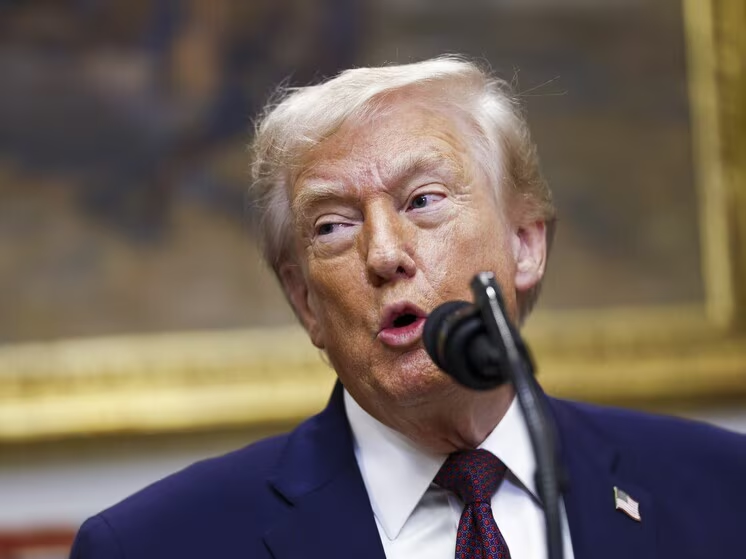
Donald Trump said the Cuban government had entered talks with Washington amid a deep economic crisis gripping the island. According to the president, Secretary of State Marco Rubio is conducting these contacts at a “very high level.”
“The Cuban government is negotiating with us, and they have major problems. They have no money. Right now they have nothing, but they are negotiating with us—and perhaps we will be able to carry out a friendly takeover of Cuba,” Mr Trump told reporters. Notably, the term “friendly takeover” he used is borrowed from corporate jargon and typically refers to a merger carried out with the consent of all parties.
The 79-year-old president described Cuba as a weakening state that is “failing as a nation.” He said he had been watching Cuba’s troubles “since childhood.” “They have no money, they have no oil, they have no food. And the country really is in a dire position right now, and they want our help,” he added.
Havana, however, rejected the premise outright: Cuban authorities said there were no high-level talks of any kind. At the same time, the government stopped short of denying reports of contacts between American officials and Raul Guillermo Rodriguez Castro—the grandson of former president Raul Castro. Axios had previously reported that it was Mr Rubio who was in touch with him.
The current pressure on Havana is unfolding against the backdrop of an energy collapse. After the United States seized Venezuelan leader Nicolas Maduro in January, Mr Trump announced an end to oil and financial flows from Venezuela to Cuba, “strongly advising” Cuban authorities to strike a deal with Washington. The resulting oil blockade triggered a fuel crisis, forcing foreign airlines—including Russian carriers—to suspend flights to the island. In February, the US Treasury announced a partial easing of the regime, allowing the resale of some Venezuelan crude for the benefit of Cuba’s private sector.
Meanwhile, according to reporting by The Wall Street Journal, the Trump administration is deliberately seeking out agents of influence within the Cuban government, aiming to engineer a change of power on the island by the end of 2026.