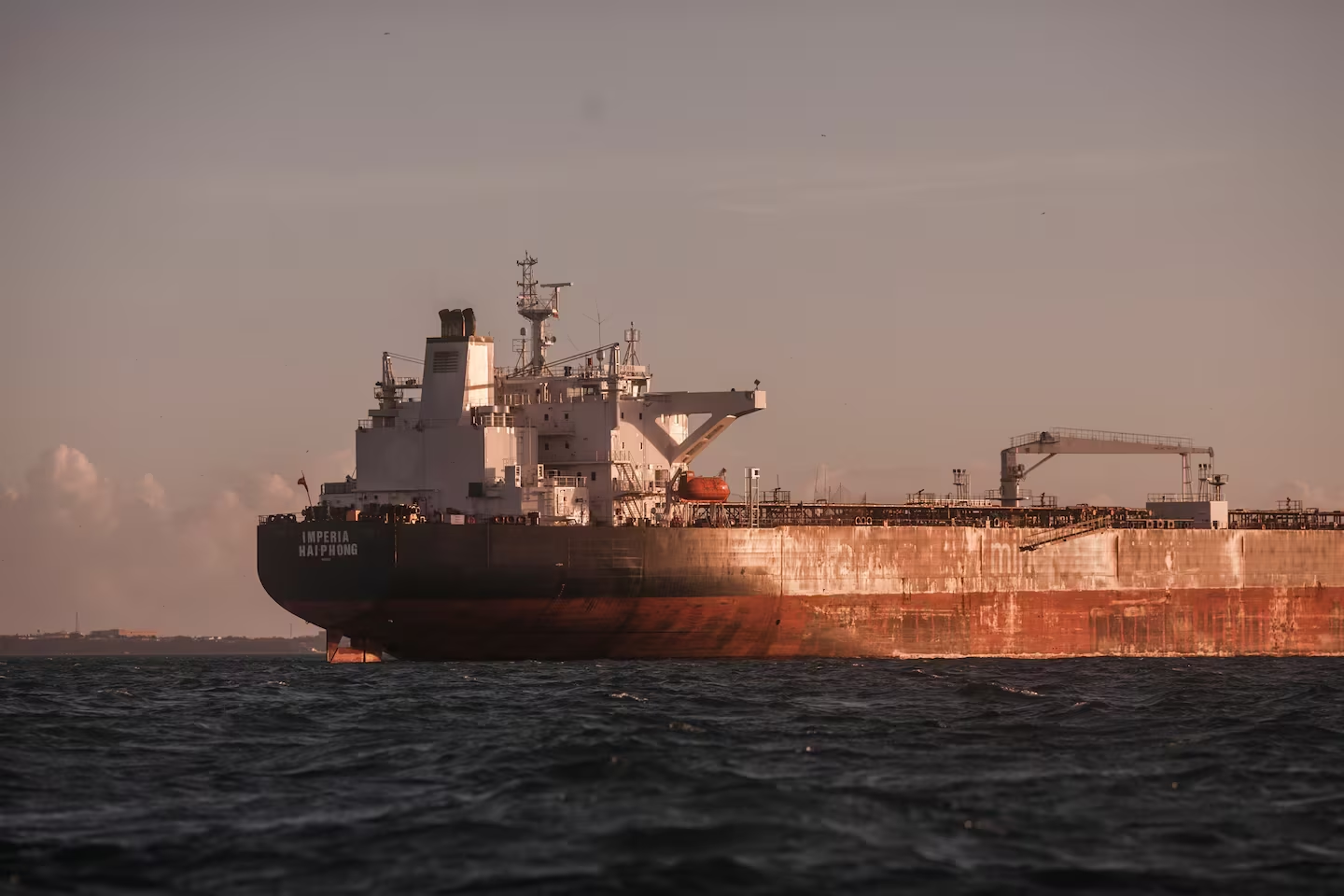
On Tuesday, December 16, Donald Trump designated Venezuela a “foreign terrorist organization” and formally ordered a blockade of all oil tankers under U.S. sanctions that service the country. The move marks another escalation by Washington and is accompanied by the deployment of a large U.S. naval force, intensifying pressure on Nicolás Maduro’s regime and threatening to further cripple an economy already in severe distress. “Venezuela is completely surrounded by the largest armada ever assembled in the history of South America. It will only grow, and the blow to them will be unlike anything they have ever seen before,” Trump wrote on Truth Social.
According to information available to U.S. authorities, around 18 tankers subject to American sanctions and fully loaded with oil are currently in Venezuelan waters. A further eight vessels are classified as Very Large Cargo Container—the same category as the tanker Skipper, which the United States detained last week. It has previously been reported that Washington is tracking the movements of these vessels and intends to seize them as soon as they enter international waters. The Trump administration also plans to expand sanctions by adding more ships to the U.S. government’s “Specially Designated Nationals” list—a practice that began last week. By the estimate of Samir Madani, co-founder of Tanker Trackers, a firm that monitors global oil shipments, roughly 712 vessels worldwide are already on the list. Nearly 40 of them, including 18 carrying Venezuelan crude, are currently located within Venezuela’s territorial waters.
In Caracas, the measures were interpreted as a direct threat. Venezuela’s vice president, Delcy Rodríguez, said on Telegram that the country “in national unity condemns Donald Trump’s military threat and will defend its rights to free trade, navigation, independent development, sovereignty, and national independence.” She also published a statement from Maduro’s ruling party, which said: “On his social networks, he behaves as though Venezuela’s oil, land, and mineral wealth were his personal property. Accordingly, he demands the immediate handover of all of Venezuela’s riches. The president of the United States intends, in a wholly irrational manner, to impose a so-called naval blockade on Venezuela in order to plunder the wealth belonging to our nation.”
Meanwhile, at least two oil companies that previously operated in Venezuela have approached the U.S. government seeking clarity over the fate of roughly 1.9 million barrels of Venezuelan crude seized aboard the tanker Skipper. A source familiar with the discussions declined to identify the companies. The oil on the vessel is valued by experts at approximately $95 million. Last year, a U.S. federal court approved claims totaling $20.8 billion in lawsuits brought by companies against Venezuela, though the source did not specify whether any of them are seeking the oil from the Skipper or the proceeds from its sale.
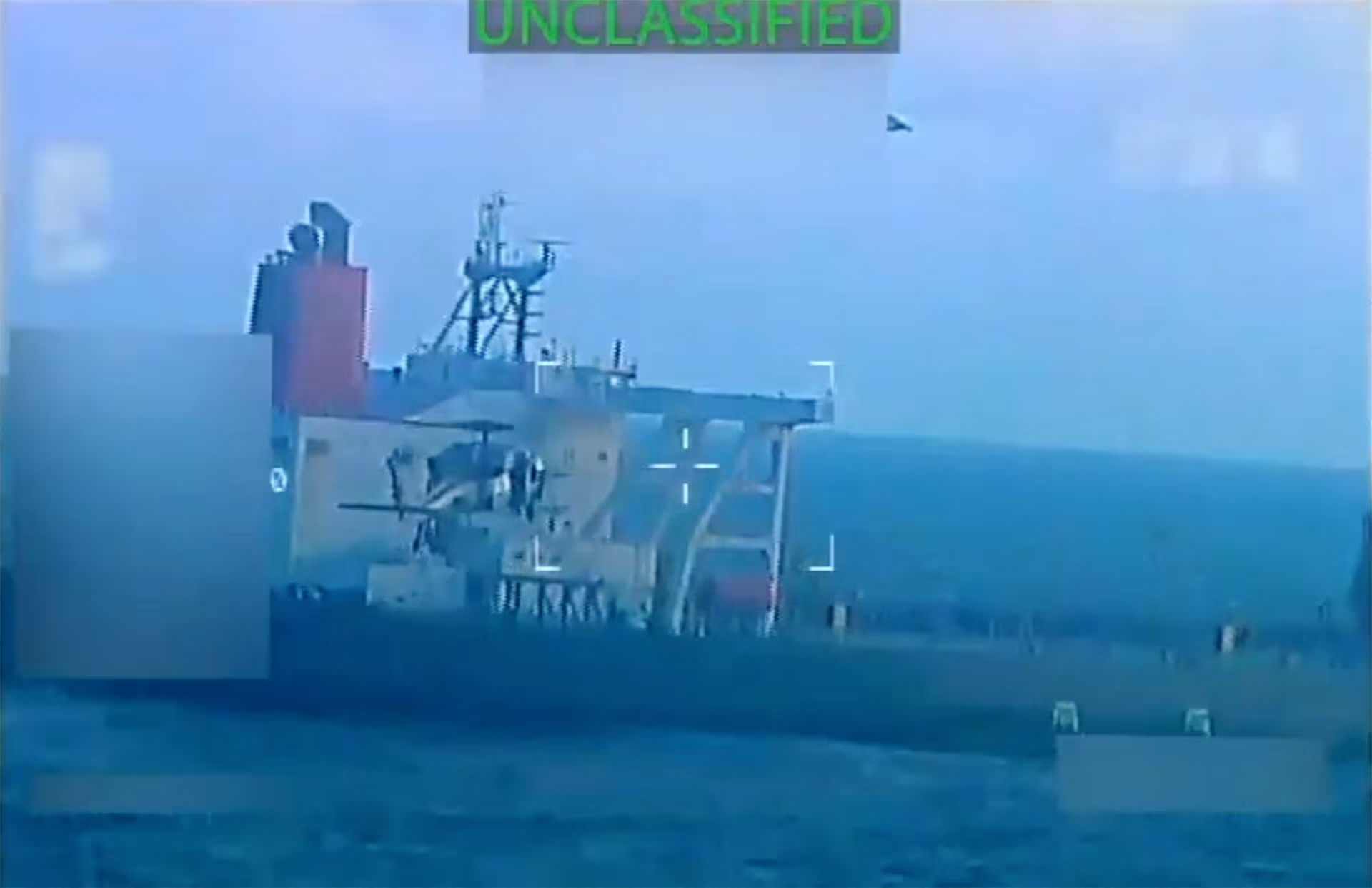
США расширяют кампанию против Венесуэлы, задержав танкер с венесуэльской нефтью
Вашингтон стремится ограничить нефтяные доходы Мадуро, используя перехваченные поставки как рычаг влияния
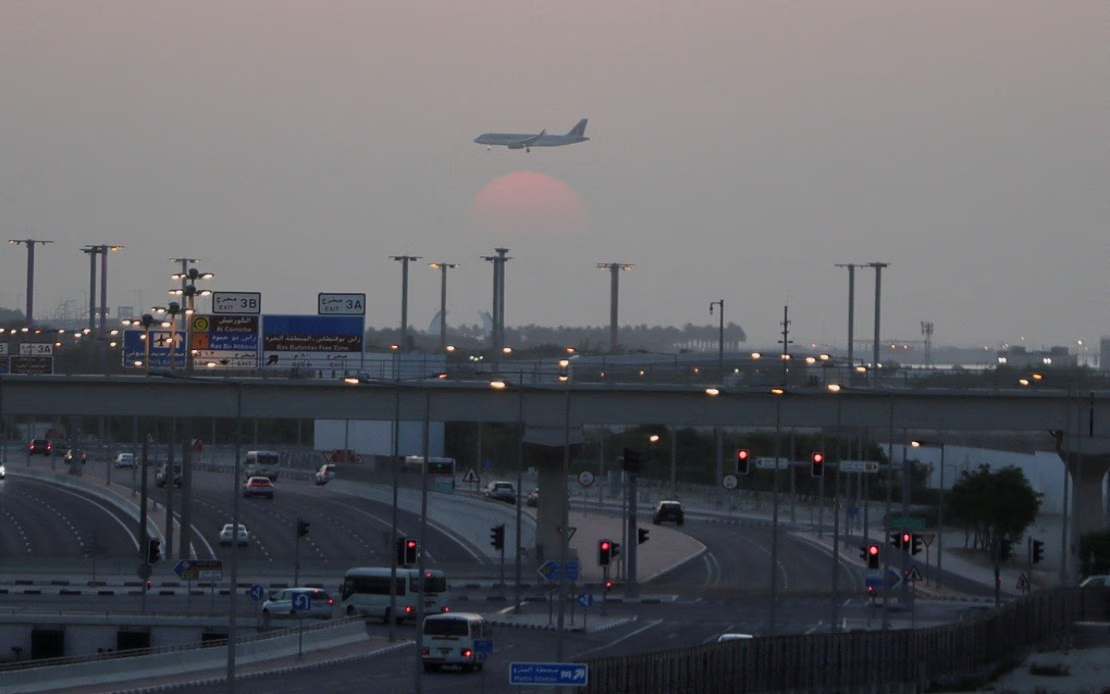
«Всем авиакомпаниям, пилотам, наркоторговцам и торговцам людьми»
Трамп объявил о закрытии неба над Венесуэлой
In his statements, Trump implicitly referred to these claims, asserting that “the illegitimate Maduro regime uses oil from these stolen oil fields to finance itself, narco-terrorism, human trafficking, murder, and kidnappings.” “For the theft of our assets and for many other reasons, including terrorism, drug trafficking, and human trafficking, the Venezuelan regime has been designated a FOREIGN TERRORIST ORGANIZATION,” he wrote. At the same time, Trump inaccurately claimed that Venezuela had stolen “oil, land, and other assets” from the U.S. government.
Designating the Venezuelan government as a “foreign terrorist organization” carries two key consequences. It broadens the formal legal grounds for potential direct U.S. military intervention in Venezuela and makes it easier for American authorities to sanction, halt, or seize any vessels transporting Venezuelan oil. By expert estimates, taking into account both sanctioned and non-sanctioned ships, as much as 11 million barrels of oil may currently be waiting for shipment in Venezuelan waters.
“Once a link is established between oil revenues and a foreign terrorist organization, government lawyers become far more inclined to place such assets on sanctions lists,” said Eddie Fishman, an energy and sanctions expert at Columbia University. By bringing the U.S. armed forces into the enforcement of sanctions, he added, the Trump administration is effectively “turning economic warfare into real military action.”